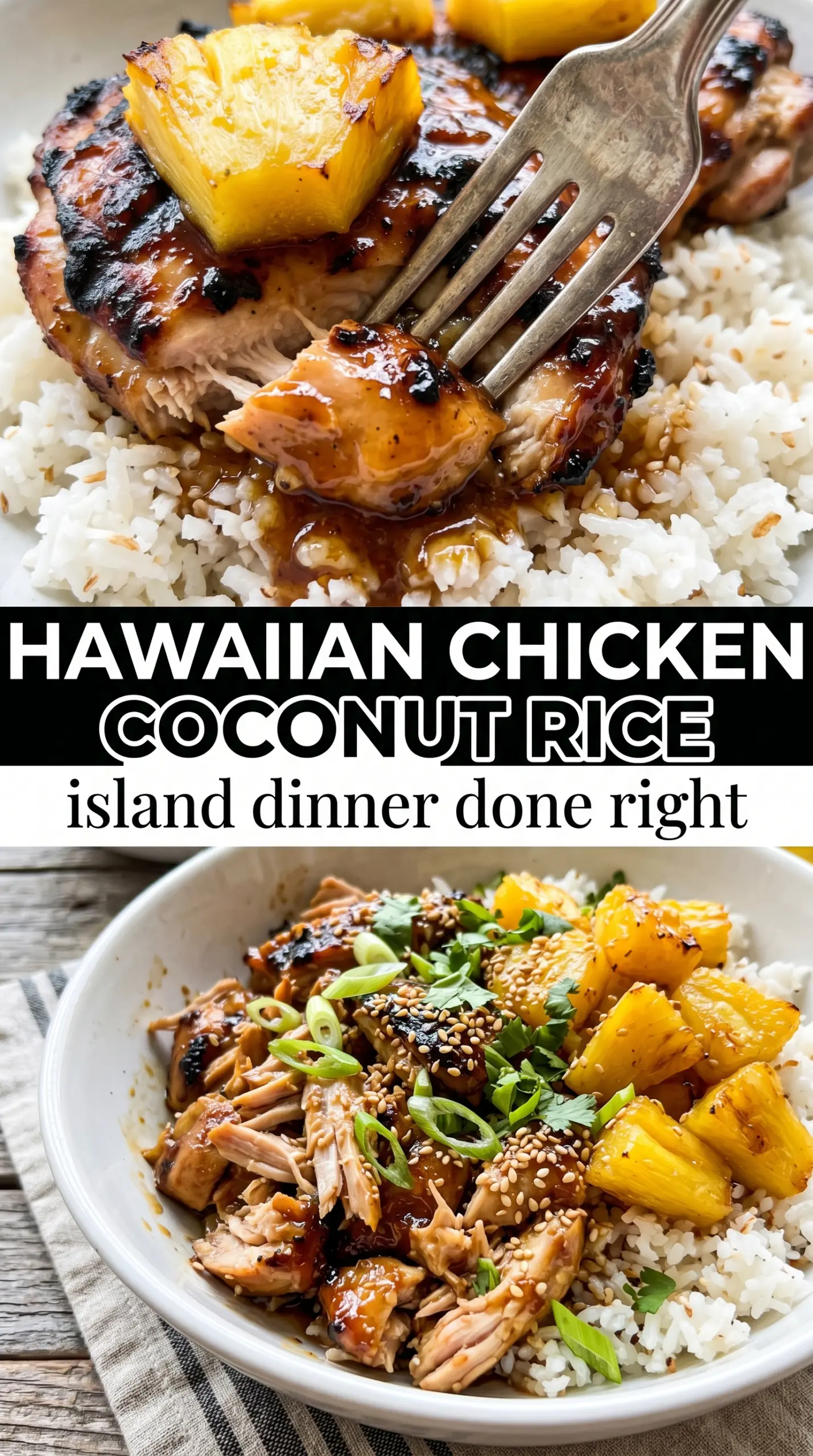
Caramelized Hawaiian chicken over coconut rice is one of those dinners that looks like you worked harder than you did. The chicken gets sticky and glossy at the edges, the pineapple turns deep and smoky on the grill, and the coconut rice underneath stays fluffy enough to soak up every bit of sauce without turning heavy. It’s a full plate with a bright, sweet-savory balance that makes sense from the first bite.
What makes this version work is the split sauce. Half goes on the chicken as a marinade, and the other half stays clean for glazing, which keeps you from brushing raw marinade onto cooked chicken later. The coconut rice matters just as much: using jasmine rice gives you separate, tender grains, while the coconut milk adds richness without needing a lot of extra seasoning.
Below you’ll find the timing that keeps the rice from going mushy, the trick for getting the glaze to caramelize instead of burn, and a few smart swaps if you need to work with what’s already in the pantry.
The chicken caramelized beautifully on the grill and the pineapple kept the whole dish from tasting too sweet. The coconut rice was fluffy and soaked up the extra glaze just right.
Save this Hawaiian chicken with coconut rice for the nights when you want sticky glazed chicken, smoky pineapple, and a full bowl that feels special without extra fuss.
The Marinade Split That Keeps the Glaze Clean
The most common mistake with pineapple chicken is using one bowl of sauce for everything. Once raw chicken has touched that marinade, it can’t safely be brushed on at the end unless it’s been boiled first, and boiling often dulls the fresh ginger-garlic edge you want in the glaze. Splitting it from the start solves both problems.
You also get better color. The reserved half of the sauce stays thin enough to baste with, and because it hasn’t been diluted by chicken juices, it reduces on the grill into a glossy coating instead of a watery puddle. If your glaze is burning before the chicken is done, the heat is too high; medium-high should give you active sizzle, not blackened sugar.
What Each Ingredient Is Doing in This Bowl
- Boneless skinless chicken thighs — Thighs stay juicy under high heat and handle the sweet glaze better than breasts, which dry out faster. If you only have breasts, slice them thinner and shorten the cook time, but expect a less forgiving result.
- Pineapple juice — This brings acidity and sweetness, and it helps the sauce taste like pineapple instead of just brown sugar. Bottled juice works fine here; the fresh fruit matters more for the grilled rings than for the marinade.
- Soy sauce — This is the salt and depth in the glaze. Low-sodium soy sauce works if that’s what you keep around, but don’t swap in a thinner salty sauce and expect the same body.
- Coconut milk — Full-fat coconut milk gives the rice a creamy, rounded finish that water alone can’t mimic. Light coconut milk will work in a pinch, but the rice won’t feel as lush.
- Jasmine rice — Jasmine keeps its fragrance and cooks up separate, which matters when the sauce is bold. Short-grain rice turns softer and stickier, so it changes the whole texture of the bowl.
How to Keep the Chicken Juicy and the Rice Fluffy at the Same Time
Start the Coconut Rice First
Rinse the jasmine rice until the water runs mostly clear, then combine it with the coconut milk, water, salt, and sugar in a saucepan. Bring it to a boil, cover it, and drop the heat to low right away so the bottom doesn’t scorch before the center cooks through. If you lift the lid while it’s simmering, the steam escapes and the rice can end up uneven, with dry grains on top and sticky rice underneath.
Let the Marinade Work Before the Grill Heats Up
Whisk the soy sauce, pineapple juice, brown sugar, ketchup, garlic, and ginger together, then split it in half before the chicken goes in. Marinate the thighs for at least an hour so the seasoning reaches past the surface, but don’t leave them in all day or the pineapple acid can start to soften the texture too much. Pat off any excess marinade before grilling so the sugar doesn’t burn before the chicken cooks through.
Grill for Color, Then Finish for Doneness
Lay the chicken on a medium-high grill and leave it alone long enough to build a good sear. If you try to move it too soon, it sticks and tears, which is usually the first sign the crust hasn’t formed yet. Baste with the reserved glaze during the last few minutes so it tightens into a sticky coating instead of burning into a bitter shell.
Char the Pineapple at the End
The pineapple rings only need a couple of minutes per side, just long enough to pick up grill marks and concentrate their juices. They should look glossy and a little darker at the edges, not collapsed into mush. Put them on after the chicken has started cooking so you’re not juggling everything at once and crowding the grate.
How to Adapt This Bowl Without Losing the Point
Make It Dairy-Free Without Changing Anything
This recipe is already dairy-free as written, which is part of why it works so well for a mixed crowd. Keep the coconut milk full-fat for the rice, since that’s where the richness comes from, and the bowl stays satisfying without needing butter or cream.
Turn It Into a Chicken Bowl Instead of a Grill Meal
If you don’t have a grill, sear the chicken in a hot skillet and finish it over medium heat while brushing on the glaze. You’ll lose a little of the smoky char, but you’ll keep the sticky edges and the same sweet-savory balance.
Use Chicken Breasts for a Leaner Version
Chicken breasts work if that’s what you have, but they need closer attention because they dry out faster than thighs. Pound them to an even thickness and cut the grill time back a few minutes per side so they stay juicy.
Swap the Rice When You Need a Lower-Carb Plate
Cauliflower rice will carry the glaze fine, but it won’t have the same creamy contrast against the chicken. If you go that route, cook it separately and season it lightly with salt so the bowl doesn’t taste flat next to the sweet glaze.
Storage and Reheating
- Refrigerator: Store the chicken, pineapple, and rice separately for up to 4 days. The rice firms up a little, but it loosens again when reheated with a splash of water.
- Freezer: The chicken freezes well for up to 2 months, but the coconut rice is better fresh because the texture changes after thawing. If you freeze the rice, keep it in a flat layer and expect a softer result.
- Reheating: Reheat the chicken gently in a covered skillet or the microwave until just hot. Add a spoonful of water to the rice before reheating so it steams back to life instead of drying out.
Questions I Get Asked About This Recipe

Hawaiian Chicken with Coconut Rice
Ingredients
Equipment
Method
- Combine jasmine rice, coconut milk, water, salt, and sugar in a pot, then bring to a boil. Cover and simmer for 18 minutes until the rice is tender, then turn off the heat.
- Whisk soy sauce, pineapple juice, brown sugar, ketchup, garlic, and ginger until smooth. Reserve half of the mixture for glazing, then set aside.
- Add the chicken thighs to the remaining half and coat thoroughly. Marinate for at least 1 hour.
- Preheat a grill or grill pan to medium-high heat, then grill the chicken thighs for 6-7 minutes per side. Baste with the reserved glaze while cooking until caramelized and cooked through.
- Grill the pineapple rings for 2-3 minutes per side until caramelized. Transfer to a plate as they finish.
- Spoon coconut rice onto bowls and top with the glazed chicken thighs and grilled pineapple rings. Finish with sliced green onions and sesame seeds.