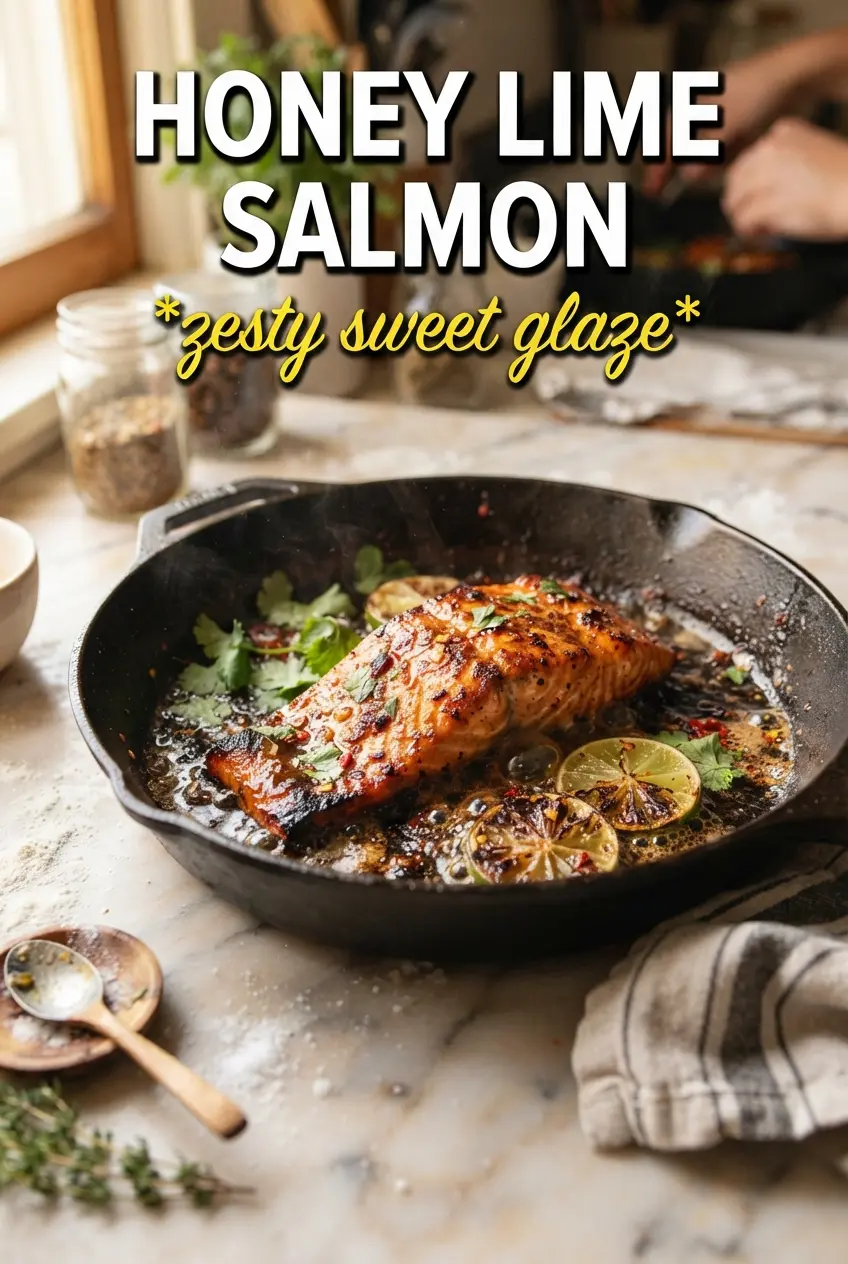
Honey lime salmon lands on the table with a glossy glaze that tastes bright first and savory right behind it. The edges caramelize into those sticky, lightly charred bits that make each bite taste finished, not just cooked. It’s the kind of dinner that looks like you spent a lot longer on it than you did, which is exactly why it earns repeat status.
The trick is keeping the sauce balanced and the heat controlled. Honey brings the shine and helps the glaze cling, but lime juice can turn aggressive fast if the pan is too hot for too long. A quick sear sets the salmon, then the sauce bubbles just long enough to thicken and glaze without turning bitter. The cumin adds a quiet warmth that keeps the citrus from tasting one-note.
Below, I’ve included the part that matters most: how to keep the glaze from burning before the salmon is done, plus a few smart swaps if you want to adjust the sweetness or make it dairy-free, low-carb, or even weeknight-fast with what you already have.
The glaze thickened right in the pan and coated the salmon without turning sticky-sweet. I loved the little char on the lime edges, and dinner was on the table in under 20 minutes.
Save this honey lime salmon for the nights when you want a caramelized glaze and barely any cleanup.
The Reason the Glaze Caramelizes Instead of Turning Watery
Salmon cooks fast, and that works in your favor here because the glaze only needs a short window to tighten up. The common mistake is pouring the sauce in too early and leaving it there too long, which floods the pan and dilutes the honey before it has a chance to catch and glaze. You want the fish nearly done first, then the sauce goes in for the final bubbling minute so it clings instead of simmering away.
The other thing that matters is the pan temperature. If the heat is too low, the salmon steams and the glaze stays thin. If it’s too high, the honey scorches before the lime mellows. Medium-high gives you the sweet spot: a good sear on the fish, then a glossy coating with those deep golden edges that taste a little smoky.
What Each Ingredient Is Actually Doing in This Dish

- Salmon fillets — Rich salmon stands up to the sweet-tart glaze better than a milder fish would. Skin-on fillets are fine and often easier to handle, but the sauce works just as well on skinless pieces if that’s what you have. Pat the fish dry before seasoning or it won’t sear cleanly.
- Honey — This is what gives the glaze its shine and stickiness. A lighter honey keeps the citrus bright; a darker honey adds more depth. Maple syrup can work in a pinch, but it tastes rounder and less floral, so the finish changes noticeably.
- Fresh lime juice and zest — Juice gives the sharp, fresh lift, while zest carries the lime oil that keeps the sauce from tasting flat. Bottled juice won’t ruin the recipe, but it loses that clean edge. Zest the lime before cutting it, and use the juice right away for the brightest result.
- Garlic and cumin — Garlic gives the glaze a savory base, and cumin adds warmth that keeps the sauce from reading like candy. Don’t add extra cumin unless you want that spice to show up more clearly. A small amount is enough to bridge the sweet and tangy parts of the dish.
- Olive oil — A little oil helps the salmon sear and gives the sauce a smooth start in the pan. Any neutral oil works here too, but olive oil brings a subtle richness that fits the citrus and honey well.
Getting the Sear Right Before the Glaze Goes In
Dry the Salmon First
Moisture is the enemy of a good crust. Blot the salmon dry with paper towels, then season it right before it hits the pan so the surface stays ready to brown. If the fillets are damp, they’ll release steam and the glaze won’t have a clean surface to cling to.
Let the First Side Build Color
Place the salmon in hot oil and leave it alone for about four minutes. You’re looking for a deep golden edge where it meets the pan and the flesh turning opaque about halfway up the fillet. If it sticks when you try to move it too soon, give it another minute; it usually releases once the crust forms.
Finish with the Sauce in the Pan
When the salmon is nearly cooked through, pour in the honey-lime mixture and let it bubble around the fish. Spoon the glaze over the tops as it thickens, and stop once it looks syrupy and lightly foamy at the edges. If the pan starts to smoke hard or the glaze turns dark too fast, pull the heat down immediately so the honey doesn’t go bitter.
How to Adapt This for Different Nights and Different Pantries
Dairy-Free and Naturally Gluten-Free
This recipe already works for both without any changes, which makes it handy when you need a dinner that fits a few different tables. Just check your cumin and any packaged ingredients if you’re cooking for someone with a strict gluten intolerance. The texture and glaze stay exactly the same.
Lower-Sugar Version
Cut the honey to 2 tablespoons if you want a less sweet glaze, then let the lime and zest carry more of the flavor. The sauce will still caramelize, just a little less aggressively, so watch the pan closely in the last minute. You’ll get a brighter, sharper finish instead of a sticky-sweet one.
Using a Different Fish
This glaze also works on trout or Arctic char, both of which have enough richness to hold up to the lime and honey. Thinner fillets need less time in the pan, so start checking them early or the glaze will overcook before the fish is done. For a milder fish, reduce the lime just a touch so it doesn’t overpower the finish.
Storage and Reheating
- Refrigerator: Store leftovers in an airtight container for up to 3 days. The glaze will thicken as it chills, and the salmon may lose a little of its crisp edge.
- Freezer: You can freeze cooked salmon, but the texture softens after thawing. Wrap portions tightly and freeze for up to 2 months if you need to, then thaw overnight in the fridge.
- Reheating: Warm it gently in a covered skillet over low heat with a teaspoon of water, or use short bursts in the microwave at reduced power. High heat dries salmon out fast and can make the honey glaze seize and harden.
Answers to the Questions Worth Asking
Honey Lime Salmon
Ingredients
Equipment
Method
- Whisk honey, fresh lime juice, lime zest, minced garlic, olive oil, and cumin until smooth and glossy. The mixture should look pourable and evenly golden-green.
- Season salmon fillets with salt and pepper. Pat lightly so seasoning adheres, then sear in a hot cast iron skillet over medium-high heat for 4 minutes per side until golden and just cooked at the edges.
- Pour honey lime sauce into the pan and let it bubble and caramelize around the salmon while you baste the top for 2–3 minutes. Watch for a translucent golden-green glaze with slightly charred, lime-kissed edges.
- Transfer salmon to plates and garnish with lime slices and fresh cilantro. Serve right away while the glaze is shiny and lightly reduced.