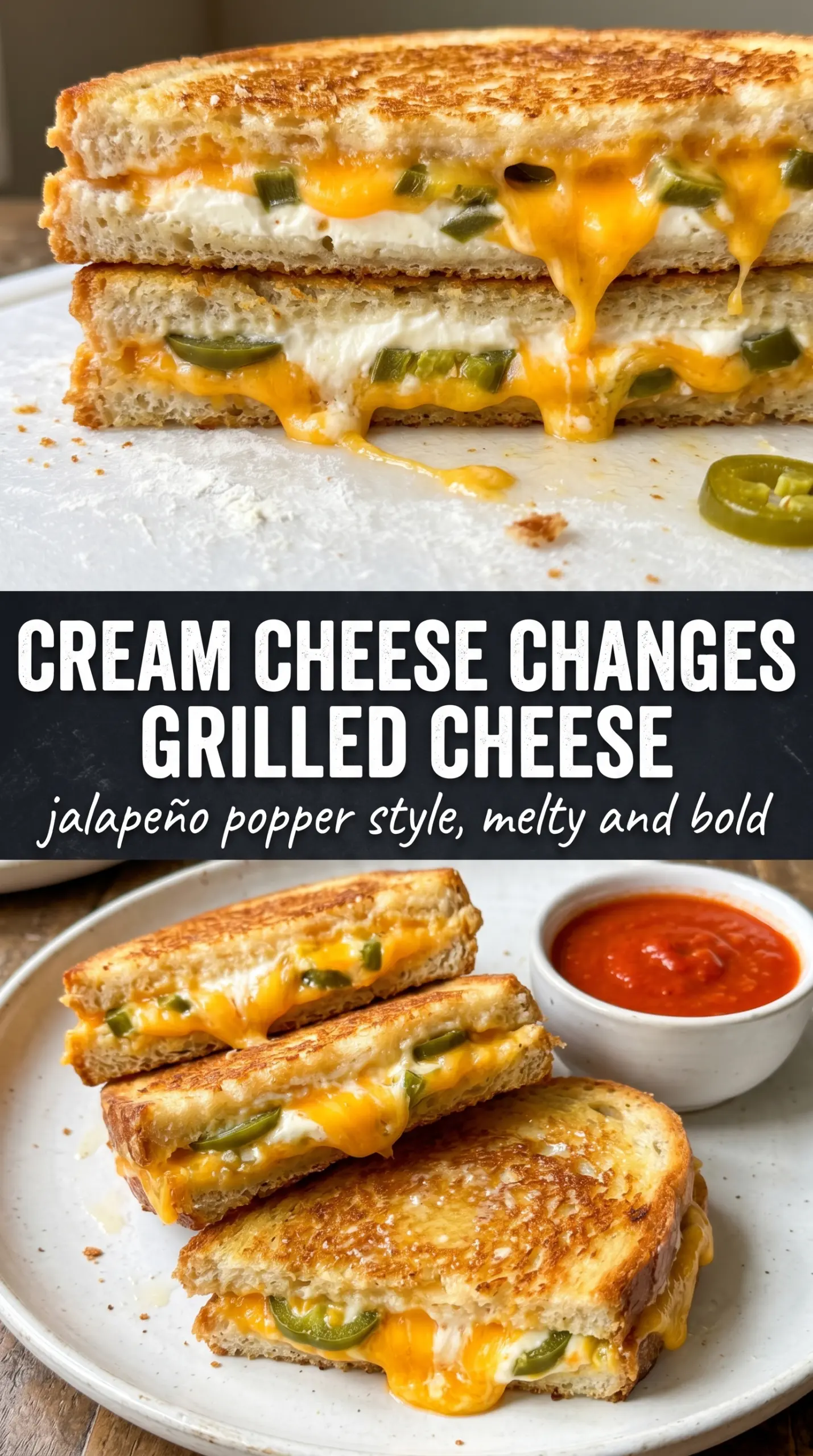
Jalapeño popper grilled cheese gives you everything people love about the appetizer, but tucked into a hot, crisp sandwich that eats like a proper meal. The bread turns deeply golden and shatters a little at the edges, while the center stays creamy, salty, and just spicy enough to keep you going back for another bite. It’s the kind of sandwich that disappears fast because every layer is doing something useful.
The trick here is balance. Softened cream cheese spreads cleanly and melts into the sharper cheddar and Monterey Jack instead of clumping, while the bacon adds enough smoke and salt to keep the filling from tasting one-note. Medium-low heat matters more than speed; if the pan runs hot, the bread browns before the cheese has time to melt through the middle.
Below, I’ve included the small details that make this sandwich work: how to keep the filling from slipping out, how to get the bread evenly toasted, and what to change if you want to make it milder, smokier, or meatless.
The cream cheese stayed smooth and the jalapeños gave it just enough heat without making the sandwich soggy. I cooked it low and slow like you said, and the bread turned perfectly crisp before the cheese finished melting.
Love the molten cream cheese, cheddar, and jalapeño filling? Save this jalapeño popper grilled cheese for the next time you want a crisp, spicy sandwich that melts perfectly.
The Part That Keeps the Filling Inside the Sandwich
The biggest mistake with a sandwich like this is loading it up like a deli melt and expecting the bread to hold everything together. Cream cheese helps because it acts like glue once it softens, but the real key is layering the shredded cheeses around the jalapeños and bacon instead of making one heavy pile in the center. That gives the filling enough structure to melt into itself without squeezing out as soon as you press the sandwich in the skillet.
Medium-low heat is not optional here. High heat gives you dark bread and cold cheese, which is the fastest way to ruin a sandwich that should be gooey all the way through. Let the bread take its time; when the outside is a deep golden brown and the cheese starts to ooze at the edges, the inside is usually ready.
- Thick bread — Thick slices hold up to the creamy filling and give you enough structure to flip without tearing. Soft white bread gives you a classic diner-style sandwich; sourdough brings a little more chew and tang.
- Cream cheese — This is what gives the filling that jalapeño popper texture. Soften it first so it spreads without tearing the bread, and beat it with the garlic powder so it melts smoothly instead of sitting in cold clumps.
- Sharp cheddar and Monterey Jack — Cheddar brings the bold flavor, while Monterey Jack melts into a silkier stretch. If you only use cheddar, the filling can get a little dense; if you only use Jack, it tastes milder and less distinct.
- Bacon — Crisp bacon keeps the sandwich from tasting flat and adds a salty crunch against the soft cheese. Cook it fully before it goes in, or it will steam inside the sandwich and soften the bread.
What Each Ingredient Is Actually Doing in This Recipe
- Primary ingredient (the star) — Quality matters most. Choose the best you can find.
- Cooking medium (oil, butter, or broth) — This carries flavors and prevents dryness.
- Seasonings (salt, pepper, spices, herbs) — Layer flavors so nothing overpowers. Build depth gradually.
- Aromatics (garlic, onion, herbs) — Cook with fat to bloom flavors. Become the foundation.
- Supporting ingredients — Complement the main ingredient without overpowering it.
- Sauce or liquid (if applicable) — Brings flavors together. Balance richness with acid.
- Acid (lemon, vinegar, wine, or other) — Brightens and prevents flat-tasting results.
- Final finish (garnish, glaze, or sauce) — Prevents one-dimensional taste and adds visual appeal.
Building the Melt Before the Bread Browns
Making the Cream Cheese Spreadable
Beat the softened cream cheese with the garlic powder until it looks smooth and fluffy, with no cold lumps left behind. If the cream cheese is too cold, it drags across the bread instead of spreading, and that uneven layer turns into pockets that don’t melt evenly. A spoon or small spatula works fine, but a fork is enough if the cream cheese has fully softened.
Layering for a Clean Melt
Spread the cream cheese on the inside of each bread slice, then build the filling on just two slices so the sandwich isn’t overloaded. Put the cheddar and Monterey Jack in direct contact with the cream cheese, then tuck the jalapeños and bacon into the middle so they stay anchored as the cheese melts. If the jalapeños are left in one big layer, they can slide out when you cut the sandwich.
Toasting Low and Slow
Butter the outsides generously and cook the sandwiches over medium-low heat in a skillet. Pressing gently with a spatula helps the bread make even contact with the pan, but hard pressure squeezes the filling out. Flip when the first side is a deep golden brown and the sandwich feels a little heavier from the melting cheese; if the bread is browning too fast, lower the heat before the cheese has time to catch up.
Cutting for the Best Stretch
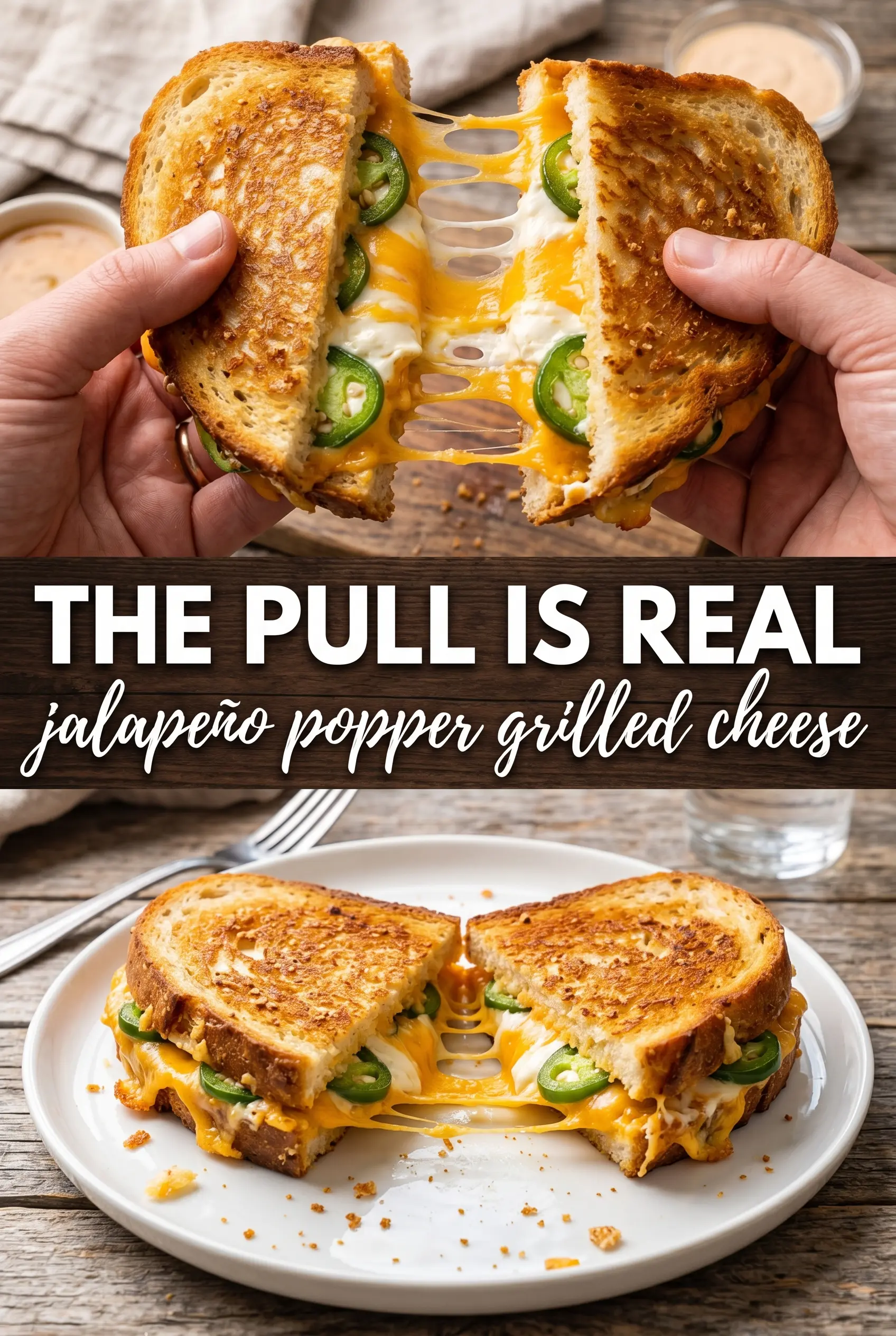
Let the sandwiches sit for a minute after cooking, then slice them diagonally. That short rest keeps the filling from running all over the cutting board, and it helps the cheese stretch instead of spilling. Serve them right away while the crust is crisp and the center still has that molten, jalapeño popper pull.
How to Tweak the Heat, Smoke, or Richness
Make it milder without losing the jalapeño popper vibe
Use fully seeded jalapeños and remove the white ribs too. That keeps the pepper flavor but cuts the heat way down. If you want it even gentler, sauté the slices briefly before adding them so they soften and mellow.
Skip the bacon and keep it vegetarian
Leave out the bacon and add a pinch of smoked paprika to the cream cheese mixture for a little depth. The sandwich loses the salty crunch, so the best replacement is a thin layer of roasted red peppers or sautéed onions for another savory note.
Use gluten-free bread without changing the method
A sturdy gluten-free sandwich bread works here as long as it can hold up to buttering and flipping. Toast it a touch more gently, since many gluten-free breads brown faster before the center heats through. The filling stays the same.
Storage and Reheating
- Refrigerator: Store leftovers for up to 2 days. The bread softens, but the filling still reheats well.
- Freezer: I don’t recommend freezing the finished sandwich; the cream cheese and jalapeños can turn watery after thawing.
- Reheating: Reheat in a skillet over low heat or in a toaster oven until the bread crisps back up and the center warms through. The mistake to avoid is microwaving, which makes the bread limp before the cheese fully loosens.
Questions I Get Asked About This Recipe
Jalapeño Popper Grilled Cheese
Ingredients
Equipment
Method
- Beat the softened cream cheese with garlic powder until smooth and spreadable.
- Spread the cream cheese generously on one side of each bread slice.
- Layer shredded cheddar, shredded Monterey Jack, jalapeño slices, and 2 strips of bacon on two bread slices.
- Top with the remaining bread slices, cream cheese side in.
- Butter the outside of each sandwich generously with softened butter.
- Heat a large skillet over medium-low heat and cook the sandwiches for 4-5 minutes per side, pressing gently with a spatula, until deep golden brown.
- Continue cooking until the cheese is completely melted, then remove from the skillet.
- Slice diagonally and serve immediately so the cheese stretches when cut.