Golden salmon with crisp edges and a foamy lemon garlic butter sauce earns its place in the rotation fast. The fish stays tender in the center, the butter turns savory and bright, and every bite gets that hit of fresh lemon and garlic without tasting heavy. It’s the kind of dinner that looks restaurant-worthy in the pan but comes together before you’ve even had time to set the table.
What makes this version work is the sequence. The salmon gets a proper skin-side sear first, which gives you that clean release and keeps the fillet from steaming in the pan. Then the butter goes in after the fish has already developed color, so it can pick up the browned bits without burning while the lemon juice lifts everything at the end. Garlic only needs a short cook here; leave it in too long and the sauce turns bitter before the salmon is done.
Below you’ll find the timing cues that matter most, plus a few smart swaps if you need to adjust for what’s in your kitchen. If salmon has ever ended up dry or bland for you, the little details here will fix that.
The salmon stayed flaky and moist, and the lemon garlic butter thickened just enough to coat the fish without pooling in the pan. I used the basil-parsley combo and the sauce tasted bright instead of heavy.
Save this lemon garlic butter salmon for a fast skillet dinner with crisp edges and a bright, buttery pan sauce.
The Sear That Keeps the Salmon Juicy Instead of Dry
The biggest mistake with salmon is moving it around too early. Once the fillet hits the hot oil, it needs time to develop a crust and release on its own; if you force the flip, you tear the skin and lose that clean, crisp bottom. Medium-high heat is enough here because salmon cooks quickly and the butter sauce finishes the job at the end.
The fish is done when the flesh flakes at the edges but still looks slightly translucent in the thickest part. By the time the butter, garlic, and lemon have had their short turn in the pan, the carryover heat brings it to perfect doneness. If you keep cooking until it looks fully opaque in the pan, it will be over by the time it reaches the plate.
What Each Ingredient Is Actually Doing in This Sauce
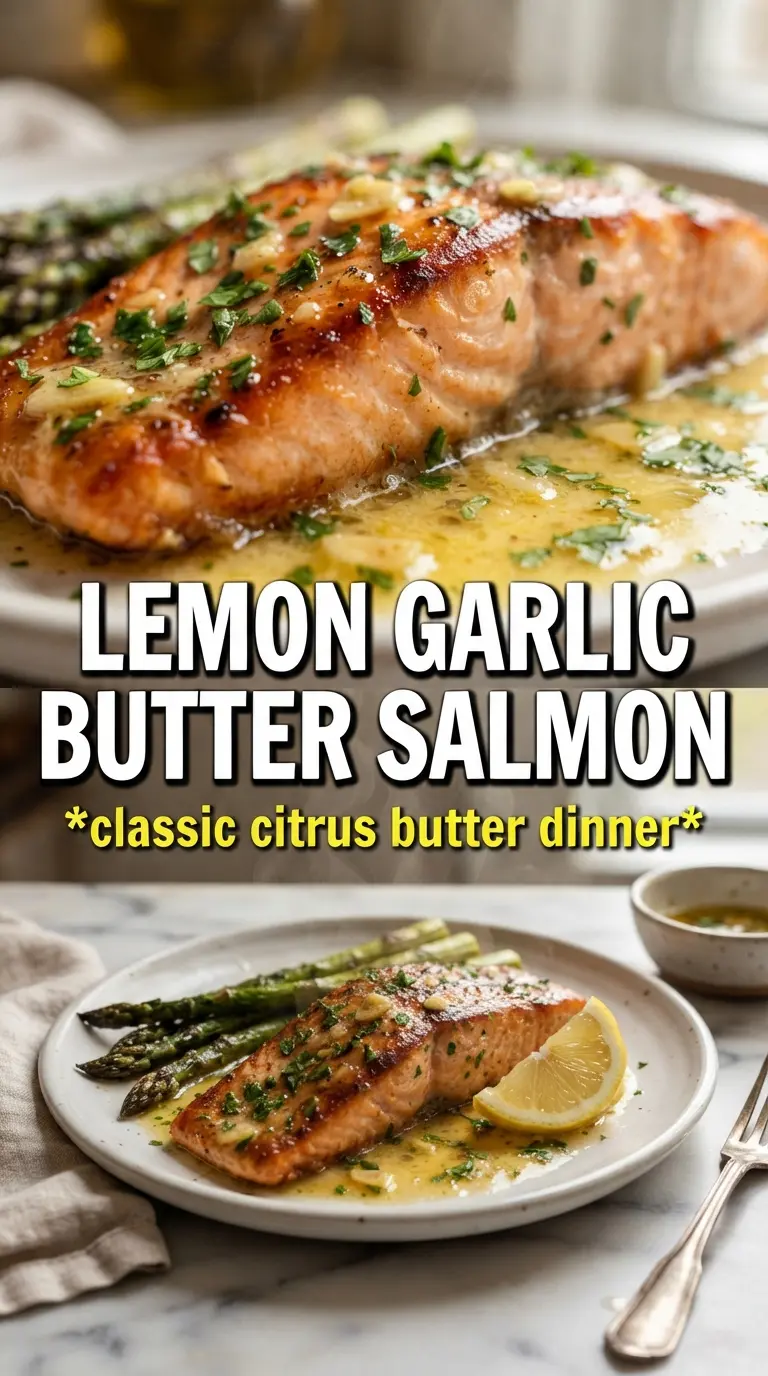
- Salmon fillets — Thick, even fillets hold up best here because they sear cleanly and stay tender while the sauce finishes. Skin-on salmon gives the crispiest base, but skinless works if that’s what you have; just handle it gently when flipping.
- Olive oil — This gives you the high-heat sear before the butter goes in. Butter alone would brown too fast at the start, so use the oil for the first stage and save the butter for the sauce.
- Unsalted butter — This is the body of the sauce. Unsalted butter gives you control, and it’s what lets the lemon and garlic shine instead of getting buried under salt.
- Garlic, lemon juice, and zest — The zest carries the fragrant lemon oil, while the juice cuts through the butter and keeps the sauce from tasting flat. Fresh garlic matters here; jarred garlic tends to taste dull once it hits hot butter.
- Parsley and thyme — Parsley finishes the dish with freshness, and thyme adds a quiet savory note that keeps the sauce from tasting one-dimensional. If you only have one herb, use parsley first; thyme is the supporting player.
Building the Pan Sauce Without Burning the Garlic
Season and Sear the Skin Side
Pat the salmon dry before it hits the pan, then season it well with salt and pepper. Lay it skin-side down in hot olive oil and leave it alone for 4 to 5 minutes, until the skin turns crisp and the salmon lifts easily from the pan. If the fillet sticks, it isn’t ready yet. A rushed flip is how you tear the fish and leave the skin leathery instead of crisp.
Foam the Butter, Then Work Fast
Once the salmon is flipped, add the butter and let it melt until it foams. That foam tells you the water is cooking off and the pan is ready for the aromatics. Add the garlic, thyme, and lemon zest and stir for just 30 seconds. If the garlic starts to brown, the heat is too high and the sauce will taste bitter before the salmon finishes.
Finish With Lemon and Constant Basting
Squeeze in the lemon juice, then tilt the pan and spoon the butter over the salmon for 3 to 4 minutes. The sauce should look glossy and slightly thickened, not greasy. Keep basting until the fish flakes easily at the thickest part. If the liquid looks thin at first, don’t panic; the repeated spooning and the salmon juices help bring it together.
Garnish and Serve Right Away
Scatter the parsley over the top and serve with lemon slices while the sauce is still hot and foamy. This dish loses a little of its magic if it sits under a lid, because the skin softens and the butter sauce tightens up. Plate it straight from the skillet and spoon extra sauce over the top. That last bit is where the flavor lives.
Three Ways to Make This Salmon Fit Your Kitchen
Dairy-Free Version With Olive Oil and Lemon
Swap the butter for an extra 2 to 3 tablespoons of olive oil and finish with a little more lemon zest. You won’t get the same foamy richness, but the sauce will still cling to the salmon and taste bright, clean, and savory. Add the garlic off the heat for a few seconds if you’re worried about scorching it in oil.
Herb Swap for What’s in the Fridge
Parsley and thyme are a great pairing, but dill or chives work well too, especially if you want a more classic salmon finish. Dill makes the dish taste lighter and a little more spring-like, while chives bring a mild onion note. Use fresh herbs if possible, since dried herbs don’t add the same finish at the end.
Cooking From Frozen or Very Thick Fillets
Thaw frozen salmon first if you can, because ice crystals release water and keep the skin from crisping. If your fillets are especially thick, lower the heat slightly after the flip and let the butter sauce do more of the cooking so the outside doesn’t overcook before the center is done. The goal is a flaky center, not a dark crust with a raw middle.
Storage and Reheating
- Refrigerator: Store leftovers in an airtight container for up to 2 days. The skin won’t stay crisp, but the salmon will still be flavorful.
- Freezer: Salmon can be frozen, but the butter sauce and texture both suffer after thawing. I don’t recommend freezing the finished dish.
- Reheating: Warm gently in a covered skillet over low heat with a splash of water or broth. High heat dries out the fish fast, and the sauce can split if it gets too hot.
Answers to the Questions Worth Asking
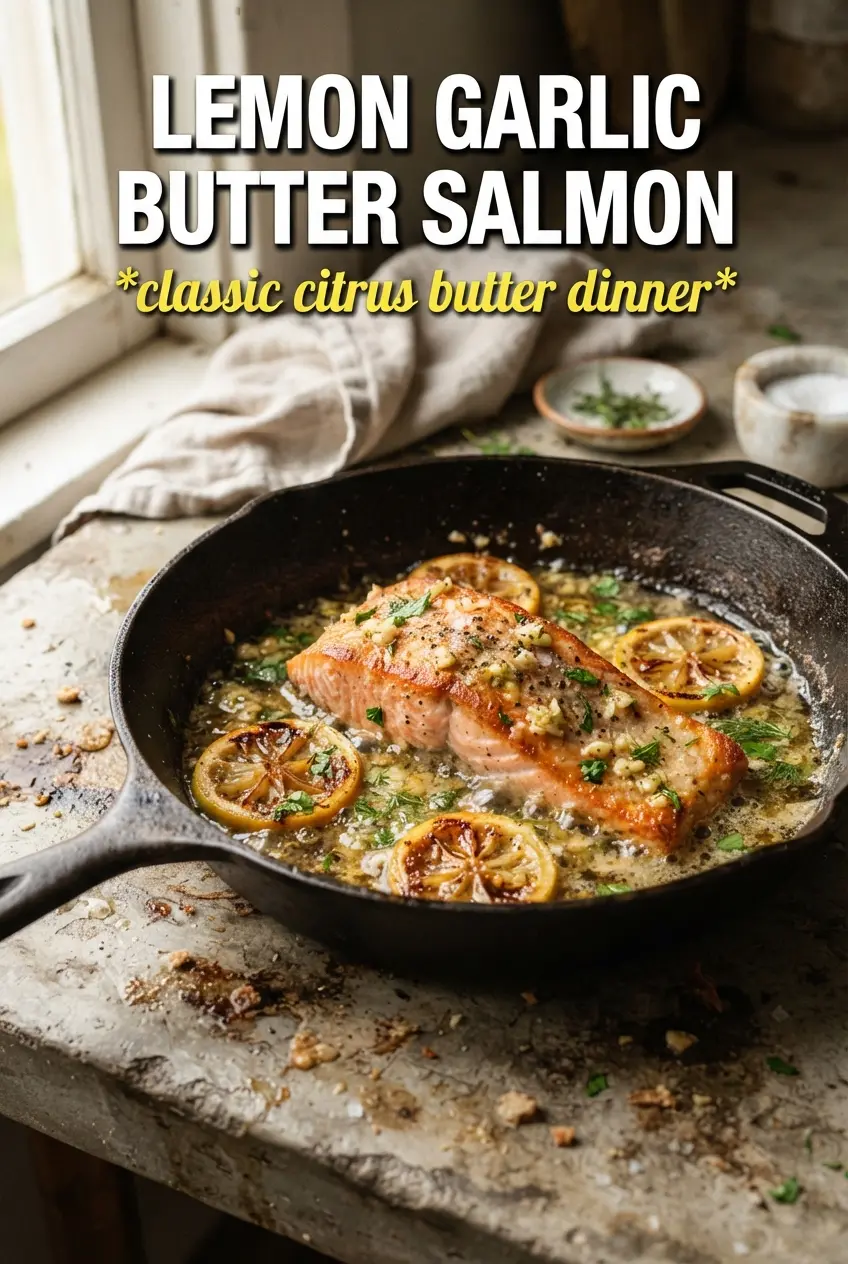
Lemon Garlic Butter Salmon
Ingredients
Equipment
Method
- Season salmon fillets with salt and black pepper, then sear skin-side down in olive oil over medium-high heat for 4–5 minutes until the skin is crispy, with the edges turning golden.
- Flip the salmon and cook briefly while you build the butter, keeping the heat at medium-high so the pan juices are active.
- Add butter to the pan and let it melt and foam, watching for bubbling around the salmon.
- Add minced garlic, thyme leaves, and lemon zest, then cook for 30 seconds until fragrant, with the butter bubbling steadily.
- Squeeze in lemon juice and baste the salmon continuously for 3–4 minutes until cooked through, using the bubbling garlic butter to glaze the surface.
- Garnish with chopped parsley, letting the green flecks sit on top of the glazed salmon for a fresh finish.
- Serve immediately with lemon slices on the side so each bite can be brightened at the table.