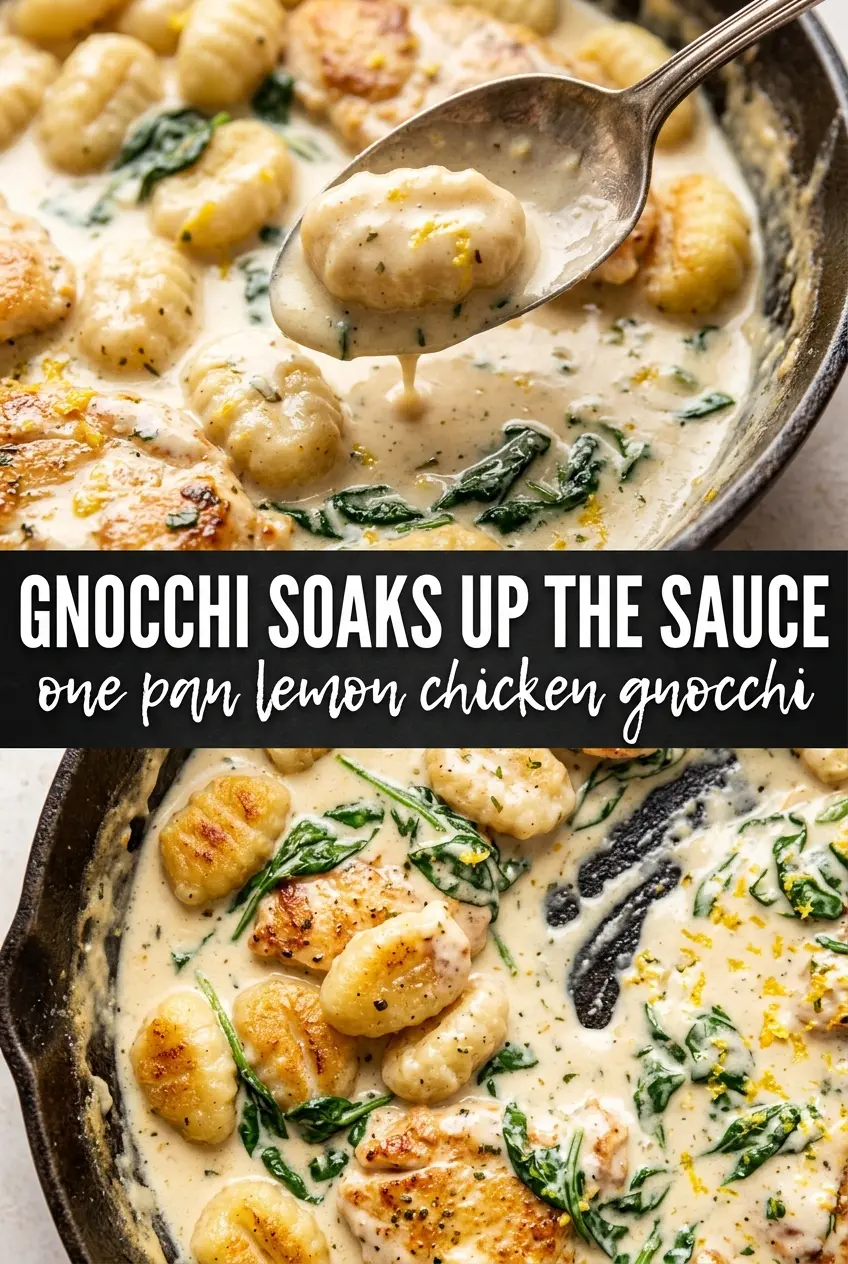
Pillowy gnocchi, golden chicken, and a lemony cream sauce belong together in the same skillet. The gnocchi turn tender in the sauce instead of getting boiled separately, so they soak up the garlic, wine, and Parmesan as they finish. By the time the spinach wilts and the lemon zest goes in, the whole pan tastes bright, rich, and balanced instead of heavy.
What makes this version work is the order. The chicken browns first and leaves behind those sticky bits that become the base of the sauce. Then the cream and broth simmer just enough to thicken before the gnocchi go in, which keeps the sauce silky instead of watery. Lemon juice waits until the end so it wakes everything up without curdling the cream.
Below, I’ll show you the small details that keep the sauce smooth, how to avoid gummy gnocchi, and the easiest swaps if you need to work with what’s in the fridge.
The gnocchi thickened the sauce right in the pan and stayed pillowy, not mushy. I loved how the lemon brightened the cream without making it taste sharp.
Save this one pan lemon chicken gnocchi for a creamy skillet dinner with bright lemon, tender chicken, and no separate pot of pasta to wash.
The Part That Keeps Lemon Cream From Breaking
Most one-pan cream sauces fall apart for one of two reasons: the heat is too high, or the acid goes in too early. This skillet works because the cream gets a short, gentle simmer before the lemon juice is added. That gives the sauce time to thicken around the gnocchi and lets the Parmesan melt in smoothly instead of turning grainy.
The other key move is using the same pan for the chicken and the sauce. Those browned bits on the bottom aren’t residue to scrub away; they’re the flavor base. Once the wine or broth loosens them, the sauce picks up depth that plain cream never has on its own.
- Chicken thighs will work if that’s what you have, and they stay juicier than breasts. Cut them into even pieces so they finish at the same time.
- Dry white wine gives the sauce a cleaner, brighter edge, but chicken broth still works if you want to keep it alcohol-free. Use broth plus an extra squeeze of lemon at the end.
- Parmesan needs to be grated fine enough to melt. Pre-shredded cheese often brings in anti-caking starch that can make the sauce a little dull.
What Each Ingredient Is Actually Doing in the Pan

- Gnocchi are doing double duty here: they cook in the sauce and help thicken it as the potato starch releases. Shelf-stable gnocchi are the easiest choice because they hold together well in a skillet.
- Heavy cream is the body of the sauce. Half-and-half can work in a pinch, but the sauce will be thinner and more likely to look a little loose before serving.
- Fresh lemon juice and zest need to stay separate until the end. The juice brings the brightness, and the zest gives the sauce that lemon smell and taste without thinning it out.
- Baby spinach disappears fast and adds color without taking over. If you use regular spinach, chop it first so the stems don’t hang around in the finished dish.
- Garlic and butter set up the sauce after the chicken comes out. Let the garlic cook just until fragrant; if it browns hard, it turns bitter and the whole pan tastes off.
How to Keep the Sauce Silky While the Gnocchi Finish
Brown the Chicken First
Season the chicken pieces well before they hit the pan, then cook them in hot olive oil until they’re golden on the outside and just cooked through. You want color here, not a pale steam-cooked exterior, because that browning becomes the base of the sauce. Pull the chicken out as soon as it reaches 165°F so it doesn’t go dry while the rest of the dish comes together.
Build the Sauce in the Same Skillet
Lower the heat and melt the butter in the same pan, then stir in the garlic for about 30 seconds. Add the wine or broth and scrape the bottom until the pan looks clean and the liquid smells less sharp. If you rush this part, the sauce can taste flat because the browned bits never get dissolved into the liquid.
Let the Gnocchi Cook in the Cream
Once the cream and broth are simmering, add the gnocchi straight into the pan and stir gently. They’ll float a little and then turn tender as they absorb the sauce, which usually takes about 5 to 6 minutes. If the heat is too aggressive, the sauce can reduce too fast before the gnocchi soften, so keep it at a steady simmer rather than a hard boil.
Finish With Lemon, Cheese, and Greens
Stir in the Parmesan first so it melts into the hot sauce, then add the lemon juice, zest, and spinach. The spinach should wilt in a minute or two, and the sauce should look glossy, not broken or greasy. Return the chicken at the end and toss just until everything is coated; overcooking it from here will dry out the meat and make the gnocchi swell too much.
How to Adapt This Skillet for What You’ve Got
Make It Dairy-Free
Use full-fat canned coconut milk instead of heavy cream and skip the Parmesan or use a dairy-free hard cheese. The sauce won’t taste exactly the same, but it stays creamy and still carries the lemon and garlic well. Keep the heat low so the coconut milk doesn’t separate.
Use Chicken Thighs for a Richer Result
Boneless skinless thighs bring more flavor and stay tender even if you let them go a minute too long. They also handle the simmering step better than breasts, which is handy if you’re juggling the rest of dinner. Cut them to a similar size so they brown evenly.
Swap in Kale Instead of Spinach
Finely chopped kale works if you want a sturdier green, but it needs a few extra minutes to soften. Add it after the gnocchi has cooked for a minute or two so it has time to lose its raw edge. The finished dish will feel a little heartier and less delicate.
Storage and Reheating
- Refrigerator: Store leftovers in an airtight container for up to 3 days. The gnocchi will absorb more sauce as it sits, so the dish gets thicker.
- Freezer: I don’t recommend freezing this one. Cream sauces can separate, and the gnocchi turn soft once thawed.
- Reheating: Warm gently on the stove over low heat with a splash of chicken broth or milk. High heat can break the sauce and make the chicken tough before the center warms through.
Answers to the Questions Worth Asking
One Pan Lemon Chicken Gnocchi
Ingredients
Equipment
Method
- Season the chicken with salt, pepper, and garlic powder. Heat olive oil in a large skillet over medium-high heat and cook the chicken 5-6 minutes, stirring once or twice, until golden and cooked through to 165°F; remove to a plate.
- Melt butter in the same skillet over medium heat, then add minced garlic and cook 30 seconds until fragrant, with the surface sizzling lightly. Pour in the white wine and cook 2 minutes, scraping up browned bits at the bottom until the pan looks glossy.
- Add heavy cream and chicken broth, then bring to a simmer. Add shelf-stable gnocchi directly to the sauce and stir gently so they’re coated, with small bubbles actively breaking at the edges.
- Cook 5-6 minutes, stirring gently, until the gnocchi are tender and the sauce has thickened. The sauce should cling to a spoon while the gnocchi look plump and soft.
- Stir in Parmesan, lemon juice, and lemon zest until the cheese melts and the sauce turns silky. Add baby spinach and toss until it wilts completely, turning deep green.
- Return the browned chicken to the skillet and toss to coat. Keep tossing until everything is evenly heated and the sauce looks smooth and lightly thick.
- Garnish with fresh parsley and extra lemon slices. Serve with lemon zest visible on top and the chicken-gnocchi mixture nestled in the creamy sauce.