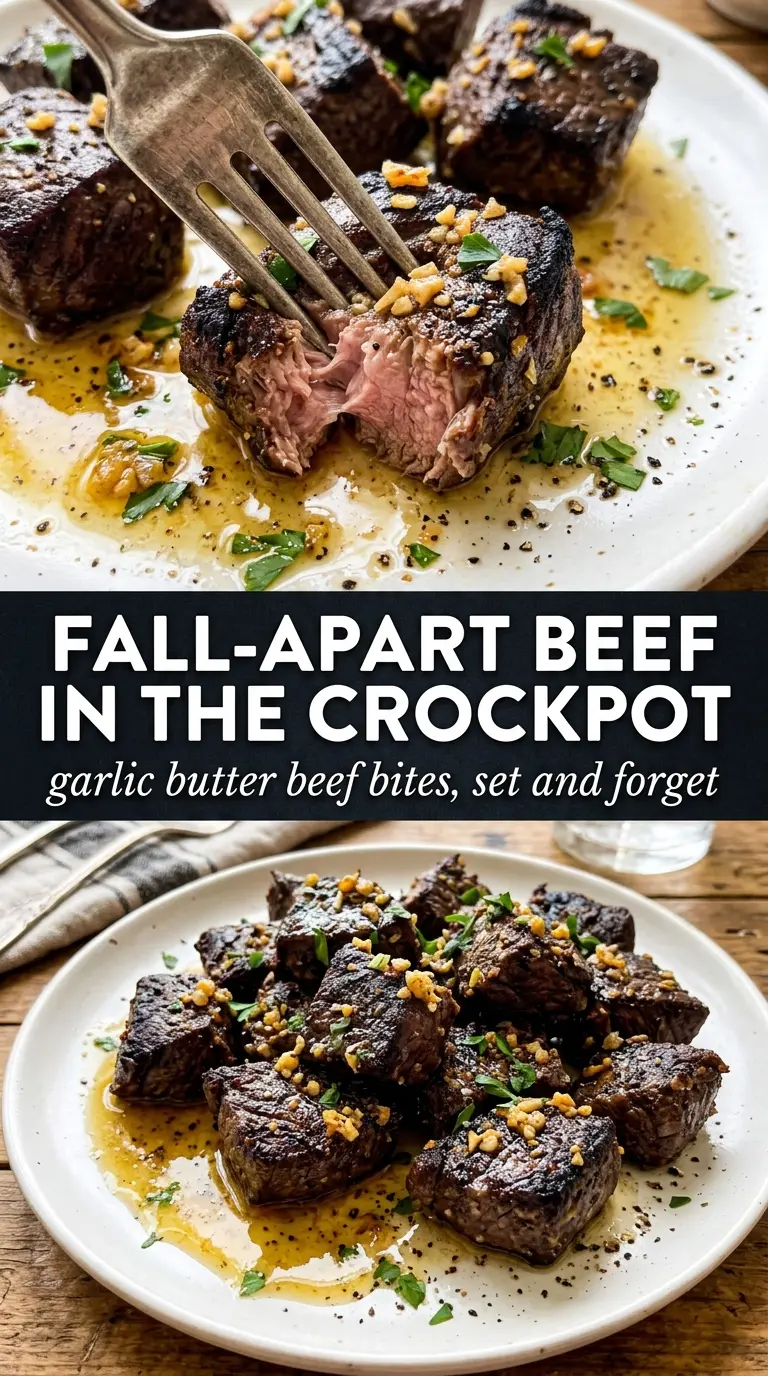
These slow cooker garlic butter beef bites turn into the kind of dinner that disappears fast because the beef gets meltingly tender and the sauce finishes glossy, rich, and just salty enough to want a pile of mashed potatoes underneath it. The seared edges give every bite a deeper, beefier flavor than a straight dump-and-go version ever manages, and the garlic butter reduces into a coating instead of a thin broth.
The difference here is the quick sear and the balance of the sauce ingredients. Browning the beef first builds flavor in the pan, and the soy sauce plus Worcestershire add the savory backbone that keeps the butter from tasting flat. The slow cooker does the gentle work of softening the meat, but it’s the sear and the final stir that make the sauce cling.
Below you’ll find the trick for keeping the garlic from turning bitter, the best way to know when the beef is done, and a few swaps that still keep the sauce rich and spoonable.
The beef came out fork-tender and the garlic butter sauce thickened up beautifully around the edges. I served it over mashed potatoes and my husband asked if we could make it again the next night.
Save these garlic butter beef bites for the night you want tender slow cooker beef with a glossy sauce over mashed potatoes.
The Sear Is What Keeps These Beef Bites From Tasting Flat
If you skip the skillet step, the slow cooker will still make the beef tender, but the flavor will land softer and the sauce won’t have the same depth. High heat browning adds those dark, savory bits that melt into the butter and broth later. That’s the part that makes the finished dish taste like it cooked all day with intention instead of just time.
Another reason this method matters: stew meat and sirloin both benefit from a hard sear before the long cook. You’re not trying to cook the beef through in the pan. You’re building a crust, and if the pieces are crowded or the pan isn’t hot enough, they’ll steam and go gray instead of caramelizing.
- Beef stew meat or sirloin — Stew meat gives you the most forgiving texture after six hours. Sirloin works too and cooks a little faster, but keep an eye on it so it doesn’t dry out at the edges.
- Butter — This is the base of the sauce, so use real butter here. It melts into the broth and carries the garlic and herbs; margarine won’t give you the same round, rich finish.
- Worcestershire and soy sauce — These are doing the savory heavy lifting. Worcestershire brings tang and depth, while soy sauce sharpens the beefiness without making the dish taste overtly Asian.
- Garlic — Fresh garlic matters more than garlic powder in this recipe. It softens in the slow cooker and perfumes the sauce, but it should be added with enough liquid around it so it doesn’t scorch on the edges.
What Each Ingredient Is Actually Doing in This Recipe
- Primary ingredient (the star) — Quality matters most. Choose the best you can find.
- Cooking medium (oil, butter, or broth) — This carries flavors and prevents dryness.
- Seasonings (salt, pepper, spices, herbs) — Layer flavors so nothing overpowers. Build depth gradually.
- Aromatics (garlic, onion, herbs) — Cook with fat to bloom flavors. Become the foundation.
- Supporting ingredients — Complement the main ingredient without overpowering it.
- Sauce or liquid (if applicable) — Brings flavors together. Balance richness with acid.
- Acid (lemon, vinegar, wine, or other) — Brightens and prevents flat-tasting results.
- Final finish (garnish, glaze, or sauce) — Prevents one-dimensional taste and adds visual appeal.
Building the Garlic Butter Sauce Without Letting It Turn Greasy
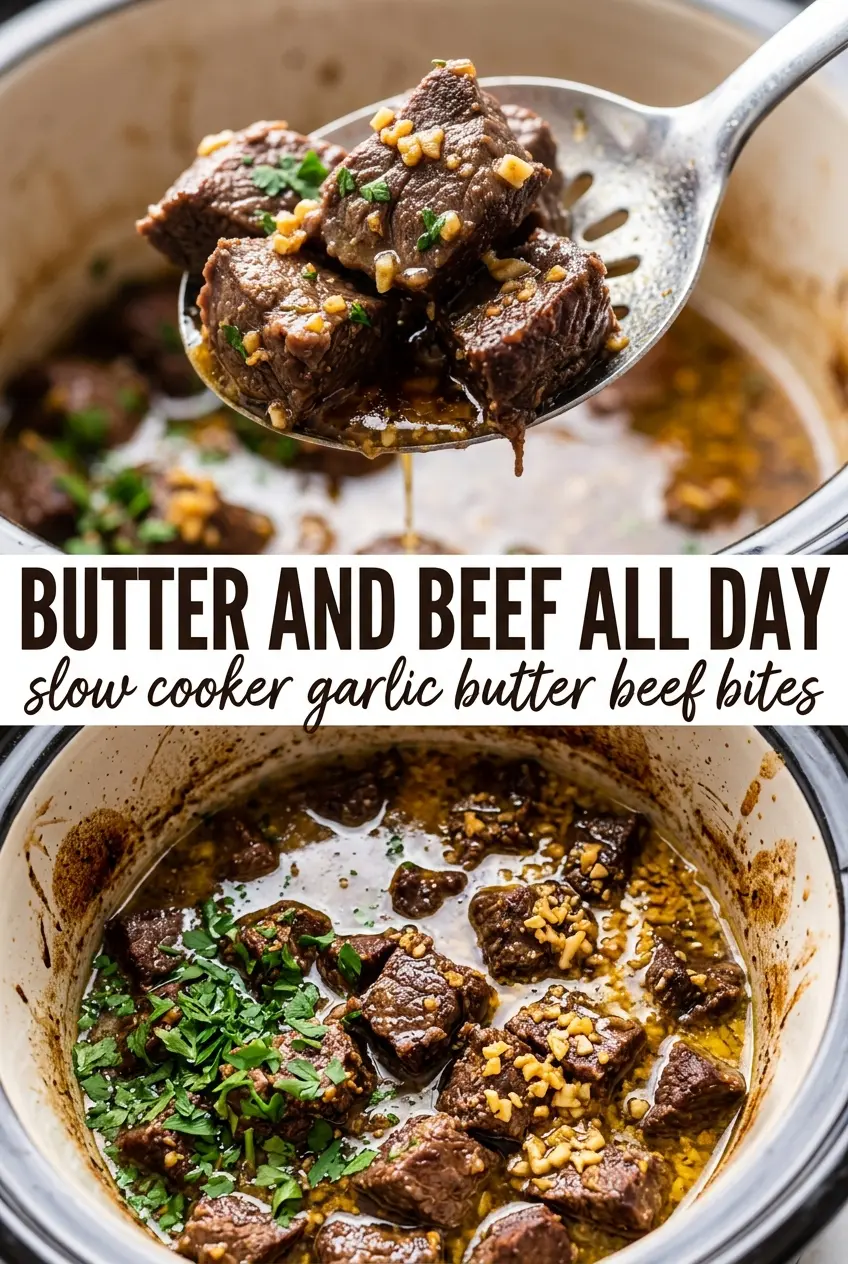
The sauce starts thin, and that’s normal. It thickens as the butter melts, the beef gives off juices, and the liquid concentrates during the long cook. What you’re watching for at the end is not a gravy in the classic sense, but a glossy coating that clings to the beef and pools lightly on the plate.
Seasoning and Searing the Beef
Season the beef well before it hits the pan, because the surface seasoning is what carries through after hours in the slow cooker. Sear in batches over high heat until the outside is deeply browned and the pieces release from the pan without fighting you. If the beef sticks hard, give it another minute; if the skillet gets crowded, lower the heat and the meat will steam instead of sear.
Loading the Slow Cooker
Transfer the browned beef straight into the slow cooker, then add the butter, garlic, Italian seasoning, onion powder, broth, Worcestershire, and soy sauce. The butter can sit on top and melt down during cooking; it doesn’t need to be whisked in first. Keep the broth amount modest, because too much liquid leaves you with stew broth instead of the rich coating this recipe is after.
Cooking Until the Beef Yields
Cook on low for 6 to 7 hours or high for 3 to 4 hours, but go by the texture more than the clock. The beef is ready when a fork slides in easily and the edges look relaxed rather than tight. If you’re using sirloin and it starts to look a little ragged before the time is up, stop there; past that point it can lose its juiciness.
Finishing the Sauce
Stir gently at the end so the beef stays in chunks and the butter coats everything evenly. Taste before serving, since the salt level can change depending on the broth and soy sauce you used. If the sauce looks thin, leave the lid off for 10 to 15 minutes on warm so a little steam escapes and the coating tightens up.
How to Adapt These Beef Bites for Different Dinners
Serve It Over Something Starchy
Mashed potatoes give you the best contrast because the sauce soaks into them and catches in every ridge. Egg noodles work when you want a quicker base, but they won’t hold the sauce as thickly. Rice also works if that’s what you have, though the result is a little less rich on the plate.
Make It Gluten-Free
Use a gluten-free Worcestershire sauce and tamari instead of regular soy sauce. The flavor stays bold and savory, and you won’t lose the glossy finish that makes the sauce work. Serve it with mashed potatoes or rice instead of noodles.
Swap in Chuck Roast for a More Rustic Texture
Chuck roast cut into cubes gives you a slightly more shreddable bite and stands up beautifully to the long cook. It’s a little richer than sirloin and usually cheaper than steak cuts, but the tradeoff is that the pieces can break down more if you cook them past tender.
Storage and Reheating
- Refrigerator: Store leftovers in an airtight container for up to 4 days. The sauce will thicken as it chills, which is normal.
- Freezer: This freezes well for up to 3 months. Cool it completely first, then freeze with some sauce so the beef stays moist when thawed.
- Reheating: Rewarm gently on the stove over low heat or in the microwave at medium power. Add a splash of broth if the sauce looks too tight, and don’t blast it on high heat or the beef can seize up.
Questions I Get Asked About This Recipe
Slow Cooker Garlic Butter Beef Bites
Ingredients
Equipment
Method
- Season the beef generously with salt, pepper, and garlic powder. Visual cue: the cubes look evenly coated with a light seasoning layer.
- Heat olive oil in a hot skillet over high heat and sear the beef in batches for 2-3 minutes per side until deeply browned, then transfer to a slow cooker. Visual cue: browned edges with caramelized color before it goes in.
- Add cubed butter, minced garlic, dried Italian seasoning, onion powder, beef broth, Worcestershire sauce, and soy sauce to the slow cooker. Visual cue: you see melted butter and an amber, fragrant sauce starting to form around the beef.
- Cover and cook on LOW for 6-7 hours or HIGH for 3-4 hours until the beef is fork-tender. Visual cue: the beef easily breaks apart when poked with a fork.
- Stir gently to coat the beef in the garlic butter sauce, then taste and adjust seasoning. Visual cue: the sauce clings to the meat with a glossy look.
- Serve over mashed potatoes or egg noodles and garnish with fresh parsley. Visual cue: parsley flecks on top and sauce pooling slightly around the serving base.