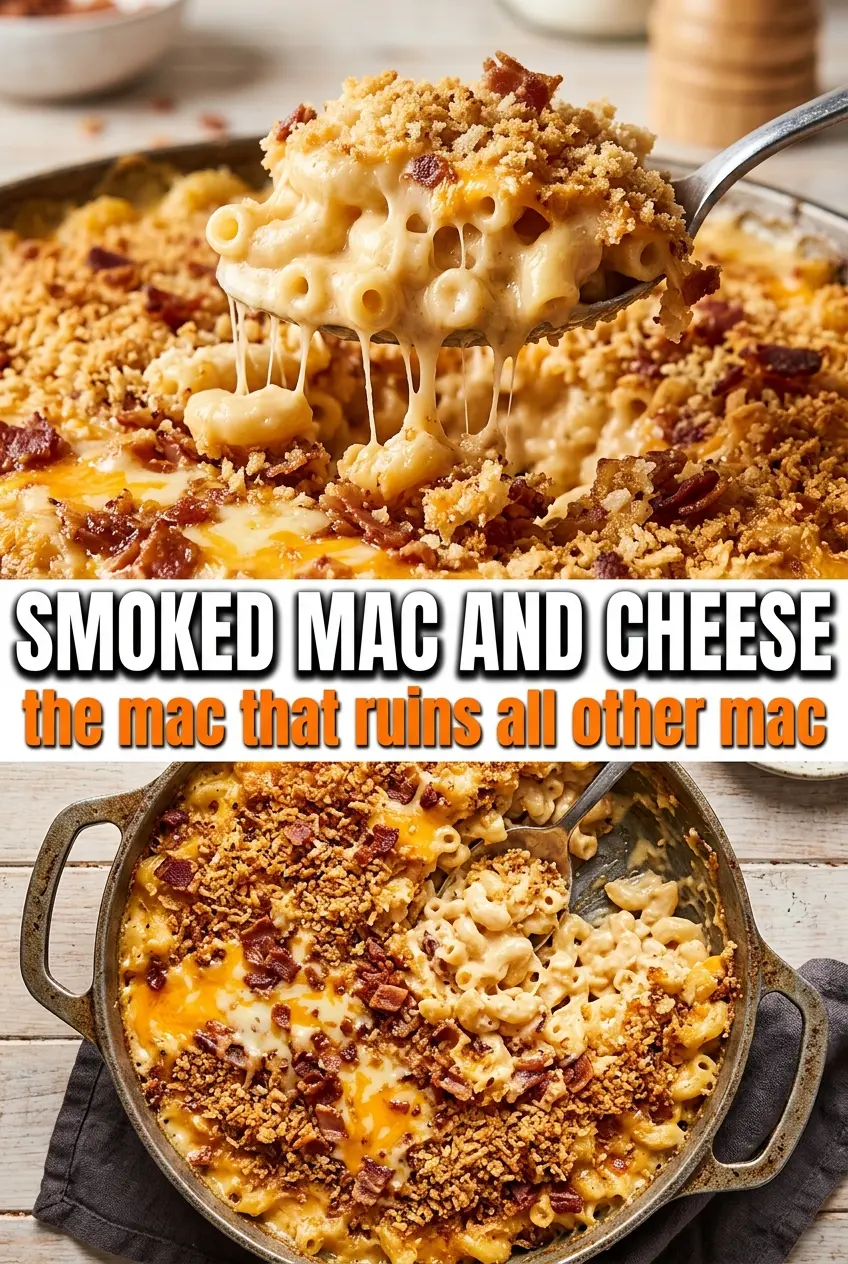
Golden smoked mac and cheese is the kind of side dish that disappears before the main course gets a fair shot. The pasta stays tender, the cheese sauce turns velvety and rich, and the breadcrumb topping picks up just enough smoke to taste like it came off a backyard pit with real intention. Every bite has that balance people chase in smoked macaroni: creamy underneath, crisp on top, and deeply savory all the way through.
The trick is giving the sauce enough body before it ever goes into the smoker. A loose cheese sauce turns oily or separates once it sits in the heat too long, but a properly thickened béchamel holds the cheddar, gouda, and Gruyere in place and keeps the pasta coated instead of swimming. I also like using smoked gouda with sharp cheddar because the flavor lands in layers instead of one flat note of smoke.
Below, I’m walking through the part that matters most: how to keep the sauce smooth, how to get that breadcrumb top crisp without drying out the pasta, and which cheese swaps still give you a strong smoked mac and cheese finish.
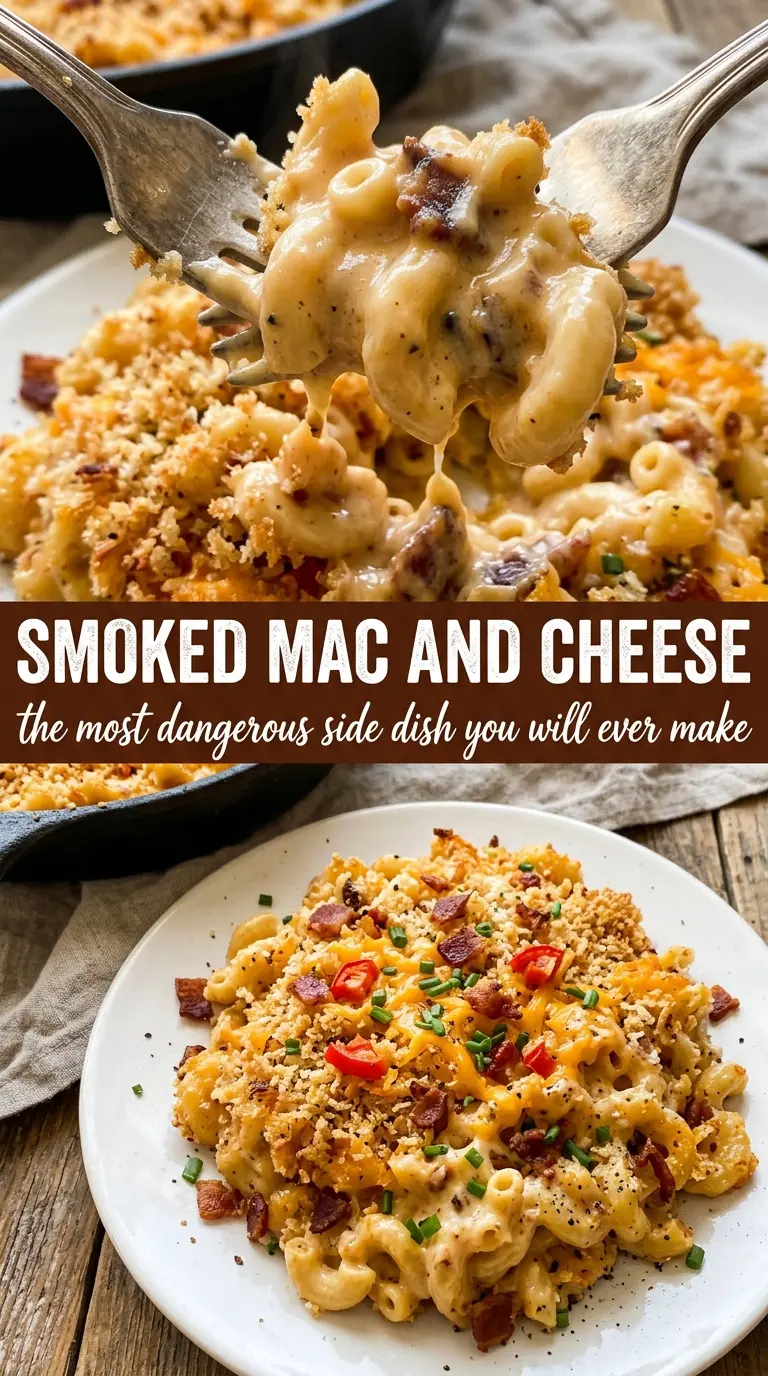
The sauce stayed creamy all the way through the smoke, and the panko topping got that perfect crunch without turning the macaroni dry. I used applewood and my husband kept going back for “just one more spoonful.”
Save this smoked mac and cheese for the days when you want a bubbling cast-iron side with a crisp panko crust and deep wood smoke.
The Part Most People Miss Before the Smoker Even Starts
The biggest mistake with smoked mac and cheese is thinking the smoker will fix a weak sauce. It won’t. If the sauce is thin going in, the cheese can break, the pasta can drink up the liquid unevenly, and the whole dish ends up greasy at the edges and watery in the center. You want the sauce thick enough to coat the back of a spoon before the cheese goes in, because the smoker is there to add flavor and finish, not to rescue the texture.
Another thing that matters here is the pasta itself. Cook it just to al dente, then drain it well. The macaroni keeps cooking in the smoker, and if it starts too soft, it turns mushy fast. That extra little bit of firmness is what keeps the final dish creamy instead of heavy.
- Whole milk and heavy cream — This combination gives the sauce enough richness to stand up to smoke. You can swap in half-and-half in a pinch, but the sauce won’t taste as lush and it won’t hold the same body after an hour in the smoker.
- Sharp cheddar — This brings the most familiar mac and cheese flavor and melts smoothly when it’s shredded fresh. Pre-shredded cheddar can work, but it often has anti-caking starch that makes the sauce a little grainy.
- Smoked gouda — This is where the smoky depth comes from inside the sauce, not just from the smoker. If you can’t find it, use fontina or Monterey Jack plus a little extra smoked paprika, but expect a milder result.
- Gruyere or Colby Jack — Gruyere adds a nutty, savory edge; Colby Jack softens the sharper cheeses and keeps the melt creamy. If you want a more budget-friendly version, Colby Jack is the easiest swap without wrecking the texture.
- Panko breadcrumbs — These stay lighter and crisper than regular breadcrumbs, which matters because the topping sits in moist smoke for a full hour. Stir them with melted butter right before topping so they brown instead of drying out.
How to Keep the Sauce Creamy After an Hour in the Smoker
Building the Roux Without Browning Too Fast
Melt the butter, whisk in the flour, and cook it just long enough to lose the raw flour smell. You want a pale, smooth paste, not a dark roux, because this sauce should stay silky and mild enough for the cheeses to lead. If the roux looks clumpy, the milk will never whisk in cleanly, so keep stirring until it feels like wet sand that starts to loosen. A minute is usually enough.
Thickening the Milk and Cream
Whisk the milk and cream in gradually so the mixture stays smooth. If you dump it all in at once, the flour can seize into lumps and you’ll be chasing them for the next ten minutes. Let it simmer until it coats a spoon and leaves a visible line when you drag a finger through it. That thickness is what protects the sauce during smoking.
Melting the Cheese Off the Heat
Pull the pan off the burner before the cheese goes in. High heat is the fastest way to get a grainy sauce because the cheese proteins tighten and separate. Stir in the cheddar, gouda, and Gruyere a handful at a time until the sauce turns glossy and smooth. If it looks oily, the pan was too hot; take it off the heat and keep stirring gently until it comes back together.
Smoking Until the Top Sets
Fold the macaroni into the sauce, top it with buttered panko, and move the skillet to a 225F smoker. Hickory gives a bolder smoke, while applewood stays a little softer and sweeter. The dish is done when the crumbs are deep golden and the cheese is bubbling around the edges. If the top browns before the center is hot, tent it loosely with foil for the last stretch so the crust doesn’t burn.
What to Change When You Want a Different Kind of Smoked Mac
Dairy-Free Version
Use unsweetened oat milk and a good dairy-free butter, then choose a meltable plant-based cheese that’s designed for sauces, not snacking. The result will be a little less rich and the smoke will taste more pronounced because dairy naturally softens it. Keep the sauce thick before it goes into the smoker or it can separate faster than the dairy version.
Gluten-Free Mac and Cheese
Swap the flour for a gluten-free all-purpose blend that includes a binder like xanthan gum, and use your favorite gluten-free elbow pasta. The sauce will thicken a little differently, so give it an extra minute on the stove before adding cheese. Gluten-free pasta can soften faster in the smoker, so keep a close eye on texture.
Extra Smoky, BBQ-Style Finish
Use hickory and add a pinch more smoked paprika, then swap half the Gruyere for extra smoked gouda. That pushes the dish toward a stronger backyard BBQ flavor without making it taste like liquid smoke. Keep the topping light so the smoke stays balanced instead of heavy.
Make It Ahead for a Crowd
Assemble the mac and cheese up to the point of smoking, then cover and refrigerate it for several hours. When you’re ready, let it sit out just long enough to take the chill off before it goes into the smoker. Starting from cold adds time, and the center can lag behind while the top browns too early.
Storage and Reheating
- Refrigerator: Store leftovers in an airtight container for up to 4 days. The pasta will absorb some sauce, so expect it to firm up as it chills.
- Freezer: It freezes, but the sauce may separate a little after thawing. If you freeze it, portion it into airtight containers and thaw overnight before reheating.
- Reheating: Reheat covered in a 325F oven with a splash of milk stirred in first. The common mistake is blasting it uncovered in the microwave, which dries out the edges before the center is hot.
Questions I Get Asked About This Recipe
Smoked Mac And Cheese
Ingredients
Equipment
Method
- Melt the unsalted butter in a large oven-safe skillet over medium heat until fully liquid, about 1 to 2 minutes, with gentle bubbling around the edges.
- Whisk in the all-purpose flour and cook for 1 minute, stirring constantly until the mixture looks slightly thicker and smells toasty.
- Gradually whisk in the whole milk and heavy cream until smooth, 1 minute, scraping the bottom so no flour lumps remain.
- Simmer until thickened, 5 to 8 minutes, until the sauce coats the back of a spoon.
- Remove the skillet from the heat and stir in the sharp cheddar, smoked gouda, and Gruyere or Colby jack until fully melted and smooth.
- Season with smoked paprika, garlic powder, mustard powder, salt, and pepper, stirring until evenly combined and glossy.
- Fold the cooked elbow macaroni into the cheese sauce until every noodle is coated.
- Top the mixture with panko breadcrumbs tossed with melted butter, spreading into an even layer for a crisp crust.
- Preheat your smoker to 225F, using hickory or applewood, until you see steady smoke rolling.
- Place the skillet on the smoker grates and smoke for 60 minutes, until the top is golden and the sauce is bubbling around the edges with wispy smoke.