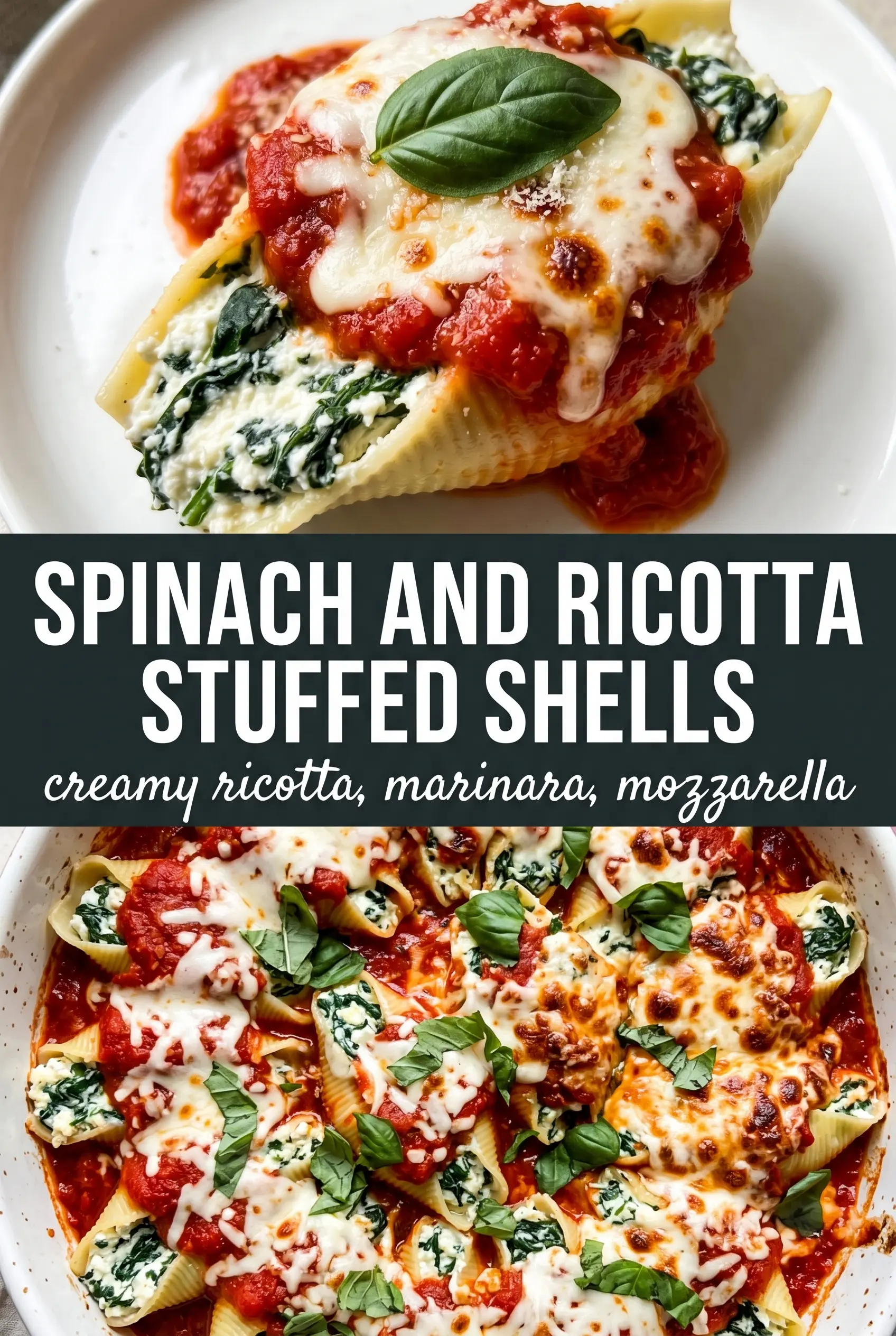
Spinach and ricotta stuffed shells bake into one of those dinners that looks like you spent all afternoon on it, even though the work is mostly in the filling. The shells stay tender, the ricotta turns creamy instead of heavy, and the marinara underneath keeps everything saucy from the first bite to the last. When the mozzarella browns on top and the edges of the pasta catch just a little from the oven, the whole dish lands somewhere between comfort food and a proper Sunday supper.
The key is balancing moisture. Ricotta brings softness, but spinach can turn the filling watery if it isn’t chopped finely and folded in dry enough. A little nutmeg gives the filling that classic Italian-American warmth without tasting sweet, and an egg helps the mixture set so the shells hold their shape after baking. The marinara under and over the pasta keeps the shells from drying out while the foil traps enough steam for the filling to heat through before the top browns.
Below you’ll find the little details that matter most: how to keep the shells from tearing, how to keep the filling thick, and what to do if you want to make this vegetarian dinner a little richer or a little lighter.
The filling stayed thick enough to stuff the shells cleanly, and after the foil came off the cheese browned beautifully without drying out the ricotta. My husband went back for seconds before I even sat down.
Save these spinach and ricotta stuffed shells for the nights when you want a bubbling baked pasta with a creamy filling and golden mozzarella on top.
The Part That Keeps Stuffed Shells from Turning Watery
Most stuffed shell recipes fall apart for one simple reason: the filling is too loose before it ever hits the oven. Ricotta already carries moisture, and spinach adds more if it hasn’t been chopped small enough or squeezed dry after cooking. Once that filling loosens up, it leaks into the sauce, the shells slide around, and you lose that neat, stuffed look that makes the dish feel special.
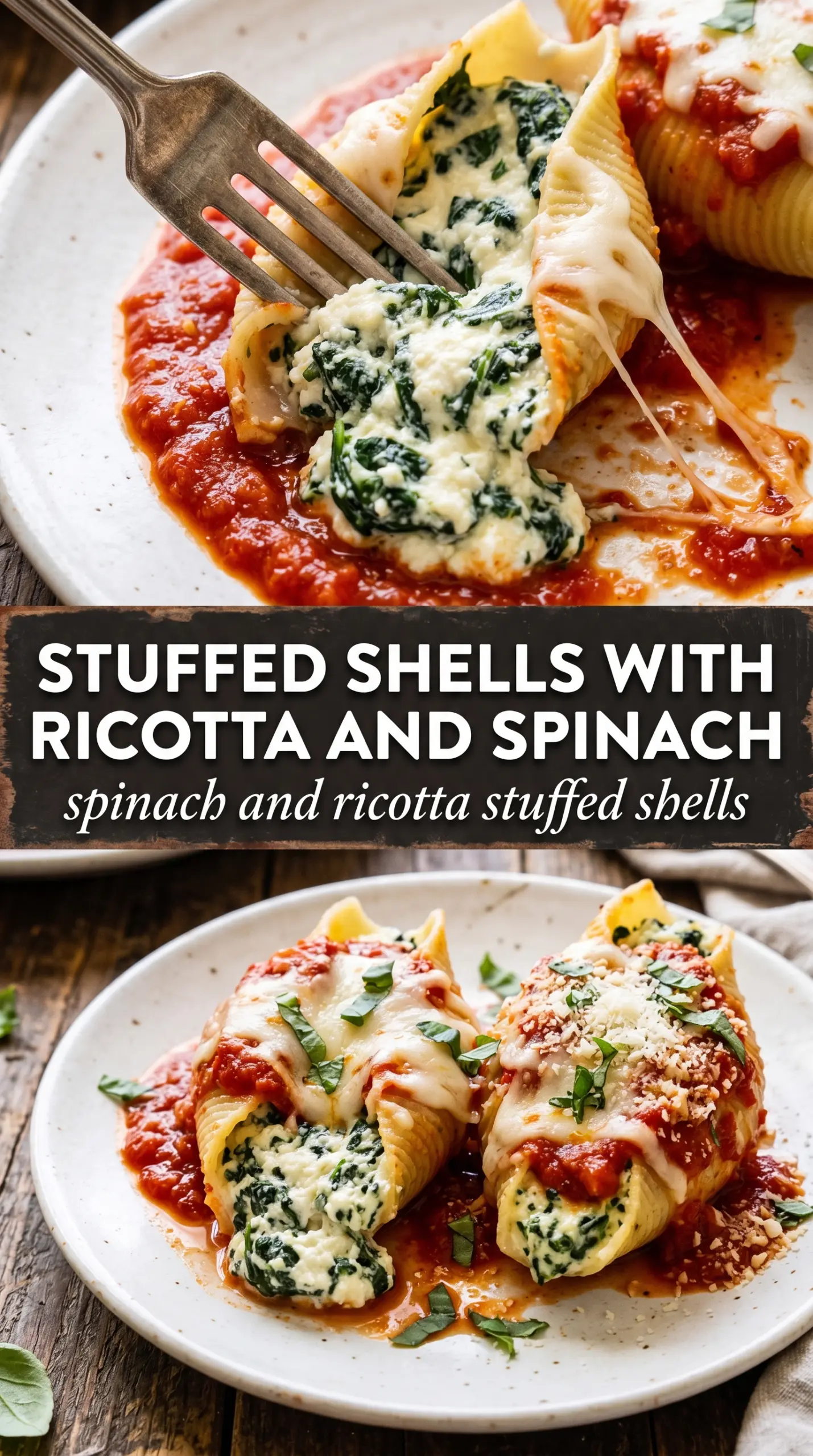
This version stays put because the filling is built to be thick from the start. Egg binds the ricotta, Parmesan adds body, and a modest amount of mozzarella melts into the mixture without making it runny. The sauce under the shells matters too. It keeps the pasta from sticking to the pan, and it steams the bottoms of the shells just enough to finish cooking them without turning them mushy.
- Ricotta — Whole-milk ricotta gives the filling a richer, smoother texture. Part-skim works, but it can taste a little grainier and drier. If your ricotta looks wet in the tub, drain it in a fine mesh sieve for 15 to 20 minutes before mixing.
- Spinach — Fresh baby spinach keeps the flavor mild and the color bright. Chop it finely so it blends into the filling instead of clumping. If you use frozen spinach, thaw it completely and squeeze it dry in a kitchen towel or the shells will weep into the pan.
- Nutmeg — This is the quiet ingredient that makes the filling taste round and classic. You only need a little. Skip it and the dish still works, but the ricotta filling loses some warmth.
- Marinara — Use a sauce you like eating on its own, because the shells soak up a lot of it as they bake. A thicker marinara is best here; thin, watery sauce can make the bottom layer taste diluted.
What Each Ingredient Is Actually Doing in This Recipe
- Primary ingredient (the star) — Quality matters most. Choose the best you can find.
- Cooking medium (oil, butter, or broth) — This carries flavors and prevents dryness.
- Seasonings (salt, pepper, spices, herbs) — Layer flavors so nothing overpowers. Build depth gradually.
- Aromatics (garlic, onion, herbs) — Cook with fat to bloom flavors. Become the foundation.
- Supporting ingredients — Complement the main ingredient without overpowering it.
- Sauce or liquid (if applicable) — Brings flavors together. Balance richness with acid.
- Acid (lemon, vinegar, wine, or other) — Brightens and prevents flat-tasting results.
- Final finish (garnish, glaze, or sauce) — Prevents one-dimensional taste and adds visual appeal.
Building the Filling and Baking It So the Shells Hold Their Shape
Mix the Filling Until It Looks Thick, Not Spreadable
Stir the ricotta, spinach, cheeses, egg, garlic, seasoning, nutmeg, salt, and pepper until everything is evenly combined. Stop as soon as the mixture looks uniform. If you beat it too long, the ricotta can turn loose and grainy instead of creamy. The finished filling should mound on a spoon and hold its shape when you scoop it.
Fill the Shells Generously but Don’t Overpack Them
Cook the shells just until al dente so they stay sturdy enough to fill without tearing. Spoon the filling into each shell and press it in gently; don’t jam it in so hard that the pasta splits. A slightly underfilled shell looks sad, but an overstuffed one bursts open in the oven and spills the filling into the sauce.
Cover, Bake, Then Brown the Top at the End
Foil is doing real work here. The covered bake heats the filling through and softens the pasta the rest of the way without drying out the top. Once you uncover the dish, the mozzarella should melt into glossy patches and pick up a few golden spots. If the sauce isn’t bubbling around the edges, give it a few more minutes before you pull it out; bubbling is the sign that the center is hot too.
Ways to Change the Dish Without Losing What Makes It Work
Make It Ahead for a Busy Night
Assemble the shells in the baking dish, cover tightly, and refrigerate for up to 24 hours before baking. The pasta will absorb a little sauce as it sits, so add a few extra spoonfuls around the edges if the dish looks dry. Bake straight from the fridge, adding about 10 minutes to the covered baking time.
Dairy-Free Version
Use a dairy-free ricotta-style cheese and swap in your favorite melting mozzarella alternative. The texture will be a little softer and less rich, but the shells still bake up well if the filling stays thick. Choose a dairy-free Parmesan substitute with some saltiness so the filling doesn’t taste flat.
Extra-Cheesy, Restaurant-Style Shells
Add a small handful of provolone or fontina to the filling for a stretchier center and more savory depth. Keep the total cheese amount close to the original so the filling doesn’t become greasy. This version tastes a little more indulgent and browns beautifully under the foil.
Storage and Reheating
- Refrigerator: Store leftovers in an airtight container for up to 4 days. The shells soften a bit as they sit, but the flavor holds up well.
- Freezer: These freeze well. Assemble and freeze before baking for the best texture, or freeze baked leftovers in a tightly wrapped container for up to 2 months.
- Reheating: Cover with foil and reheat at 350°F until hot in the center, usually 20 to 25 minutes from the fridge. If you use the microwave, the filling heats unevenly and the pasta turns tough at the edges, so the oven gives a better result.
Questions I Get Asked About This Recipe
Spinach and Ricotta Stuffed Shells
Ingredients
Equipment
Method
- Preheat oven to 375°F, then spread 1 cup marinara on the bottom of a 9x13 baking dish with a thin even layer.
- In a mixing bowl, combine ricotta, chopped spinach, 1 cup mozzarella, Parmesan, egg, garlic, Italian seasoning, nutmeg, salt, and pepper until well mixed.
- Fill each cooked shell generously with the spinach ricotta mixture and arrange them in the baking dish in a single even layer.
- Pour remaining marinara over the stuffed shells, then top with remaining 1/2 cup mozzarella for a full cheesy cover.
- Cover tightly with foil and bake for 30 minutes, until the marinara is hot and the filling is set.
- Remove foil and bake another 10 minutes at 375°F until the cheese is golden and the sauce is bubbling with visible edges.
- Garnish with fresh basil and serve while hot so the mozzarella stays stretchy.