Lacquered, sticky bourbon chicken skewers come off the grill with a deep mahogany glaze that clings to every piece instead of sliding off onto the grates. The chicken stays juicy in the middle while the edges pick up those dark, caramelized spots that taste a little smoky, a little sweet, and fully worth the extra minute at the grill.
What makes this version work is the balance in the marinade and the timing of the glaze. The bourbon brings warmth, the soy sauce gives the chicken backbone, and the brown sugar plus ketchup reduce into a shiny coating that thickens on the heat instead of burning right away. The vinegar keeps the sweetness from turning flat, and using chicken thighs gives you enough fat to handle direct grilling without drying out.
Below, I’ll show you how to keep the glaze from turning bitter, how to get that sticky finish without scorching the sugars, and the one swap I use when I want the same flavor in the oven.
The glaze reduced into this thick, shiny coating and didn’t just drip off the chicken. I got those caramelized edges on the grill, and the thighs stayed tender even after the second round of basting.
Like this sticky bourbon chicken? Save it to Pinterest for the nights when you want glossy grilled skewers with a caramelized glaze and almost no cleanup.
The Part Most People Get Wrong: Reducing the Glaze Before It Hits the Grill
If you brush raw marinade straight onto the chicken and expect it to turn sticky on the grill, it usually ends up thin, sugary, and a little bitter. The reserved sauce needs a few minutes in a saucepan first so the water cooks off and the sugars concentrate into something that can actually lacquer the meat. That short simmer is what turns this from “chicken with sauce” into glazed skewers with real shine.
The other trap is heat. Bourbon and brown sugar can scorch fast if the grill is blasting too hard, especially once the glaze goes on. Medium-high heat gives you enough energy for color without burning the outside before the thighs cook through. If the glaze starts to smell sharp or look black in spots instead of deep amber, pull the skewers to a cooler part of the grill for the final minute.
What the Chicken, Bourbon, and Brown Sugar Are Each Doing Here
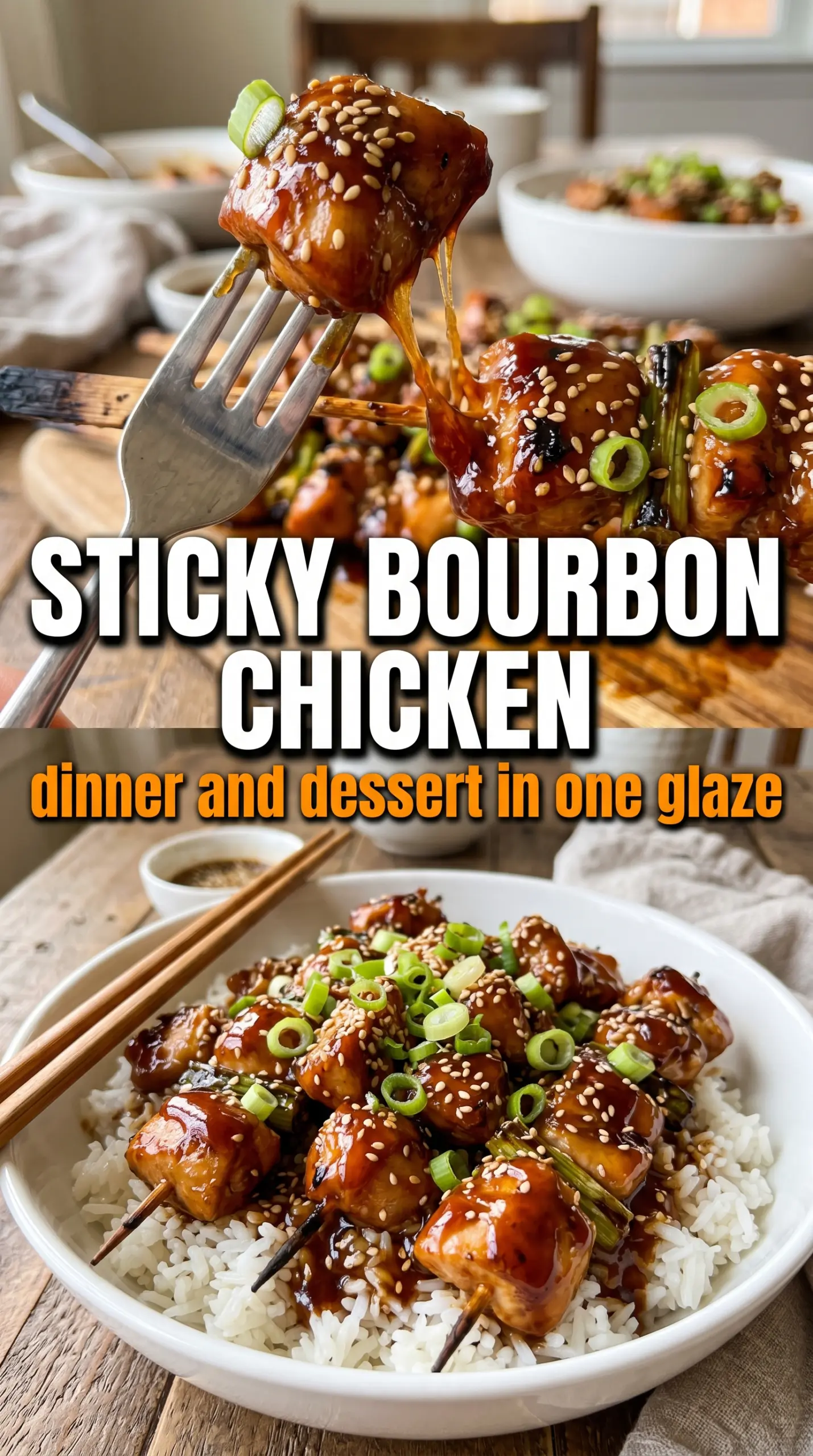
- Chicken thighs — Thighs stay tender on high heat and hold onto the glaze better than breast meat. If you swap in chicken breast, cut the pieces a little larger and watch the grill closely so they don’t dry out before the sugars caramelize.
- Bourbon — You don’t need an expensive bottle, but you do want something you’d actually cook with, because the spirit’s warm oak note is part of the finished glaze. The alcohol cooks down during the simmer, leaving behind depth rather than a boozy bite.
- Brown sugar and ketchup — This is the sticky backbone. Brown sugar adds the gloss and caramel edge, while ketchup brings tomato body and a little acidity so the glaze doesn’t taste one-note sweet.
- Apple cider vinegar — This keeps the marinade from becoming candy-sweet and helps the glaze taste balanced once it reduces. Lemon juice can work in a pinch, but it tastes brighter and less rounded.
- Smoked paprika, garlic, and ginger — These are the seasoning notes that make the skewers taste built, not just sweet. Fresh garlic and ginger matter here because they bring a sharpness that survives the grill better than powders alone.
How to Get the Sticky Finish Without Burning the Sugars
Building the Marinade
Whisk the bourbon, soy sauce, brown sugar, ketchup, vinegar, garlic, ginger, smoked paprika, and black pepper until the sugar starts dissolving. Reserve a third before the chicken goes in so you have a clean glaze later. If you skip that step and try to use the raw marinade as a baste, you’ll be painting uncooked chicken drippings back onto the meat, and that’s not worth the risk or the muddier flavor.
Marinating the Chicken
Let the chicken sit in the remaining marinade for at least an hour. That gives the salt and acid time to season the meat all the way through without turning it mushy. Longer is fine up to about 8 hours, but don’t leave it overnight; the vinegar starts working too hard and the texture goes a little soft at the edges.
Reducing the Reserved Sauce
Bring the reserved marinade to a steady simmer in a small saucepan and cook it for about 5 minutes until it looks syrupy and lightly coats a spoon. You’re not trying to make caramel here, just concentrate the flavors enough that the glaze clings. If it starts to foam aggressively or darken too fast, lower the heat immediately — that’s the sugars telling you they’re about to tip from glossy to burnt.
Grilling and Basting
Thread the chicken onto soaked skewers and grill over medium-high heat for 6 to 7 minutes per side. Save the thick glaze for the last 4 minutes so it can set on the surface instead of burning early. Turn the skewers with the least amount of flipping you can manage; every extra turn tears at the glaze before it has time to caramelize into that sticky shell.
Oven-Baked Skewers
Set the skewers on a lined sheet pan and bake at 425°F, then finish under the broiler for a minute or two to get the glaze bubbling at the edges. You won’t get the same smoky grill marks, but you keep the same sticky coating and the chicken cooks evenly without babysitting an open flame.
Gluten-Free Version
Use tamari or a certified gluten-free soy sauce in place of regular soy sauce. The glaze still reduces the same way, and the flavor stays deep and savory without changing the texture of the coating.
Dairy-Free and Naturally Rich
This recipe is already dairy-free, which is part of why it works so well for grilling. The chicken thighs provide enough richness on their own, so you don’t need butter or cream to round out the glaze.
Making It Less Sweet
Cut the brown sugar back by a tablespoon and add an extra teaspoon of vinegar. You’ll get a glaze with a sharper, more savory edge, which is useful if you’re serving the skewers with rice, slaw, or grilled vegetables that already bring sweetness.
Storage and Reheating
- Refrigerator: Store leftovers in an airtight container for up to 3 days. The glaze will tighten up as it chills, which is normal.
- Freezer: The cooked chicken freezes well for up to 2 months, though the glaze loses a little shine after thawing. Freeze the skewers without garnishes, then thaw overnight in the fridge.
- Reheating: Warm gently in a 325°F oven, covered loosely with foil, until heated through. High heat dries out the thighs and hardens the glaze, so skip the microwave unless you’re fine with softer edges.
Answers to the Questions Worth Asking
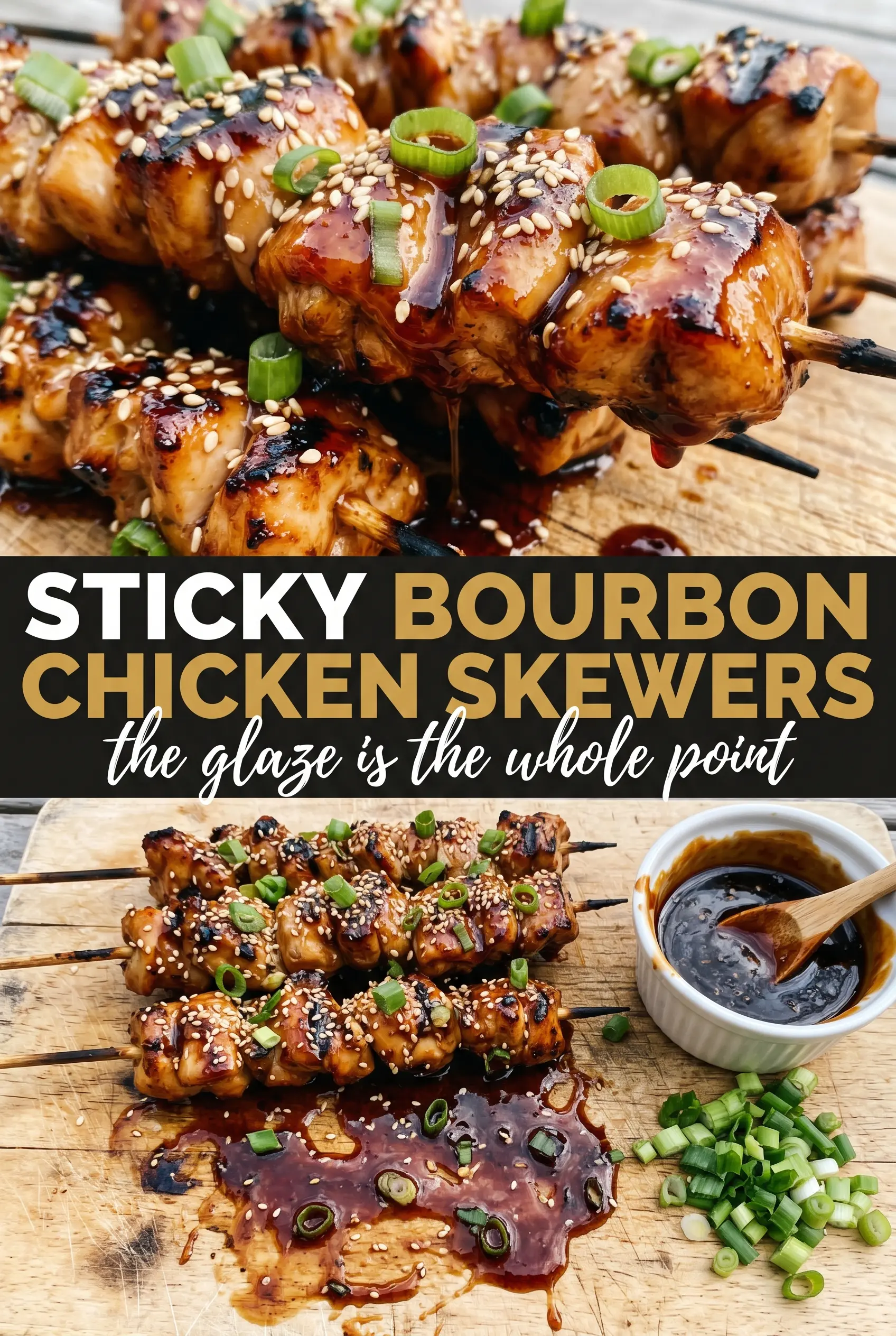
Sticky Bourbon Chicken Skewers
Ingredients
Equipment
Method
- In a bowl, combine bourbon, soy sauce, brown sugar, ketchup, apple cider vinegar, garlic, ginger, smoked paprika, and black pepper, then reserve 1/3 of the mixture for glazing. Stir until the sugar dissolves and the marinade looks evenly colored.
- Marinate the chicken pieces in the remaining sauce for at least 1 hour. Cover and refrigerate until the chicken looks lightly coated and glossy.
- Soak wooden skewers for 30 minutes. Drain well so they don’t burn on the grill.
- Thread the marinated chicken onto the skewers. Leave a little space between pieces so they cook evenly and char at the edges.
- Simmer the reserved marinade in a small saucepan over medium heat for 5 minutes until reduced and syrupy. Look for a thick, syrup-like consistency that coats the back of a spoon.
- Grill the skewers over medium-high heat for 6-7 minutes per side, turning once. Baste generously with the reduced glaze in the last 4 minutes so it caramelizes.
- Continue grilling until the glaze looks lacquered and deeply caramelized with sticky mahogany sheen. The chicken should be cooked through and the surface should cling to the glaze.
- Transfer the skewers to a serving platter. Garnish immediately with sesame seeds and sliced green onions.