Spaghetti coated in garlic olive oil and tossed with caramelized zucchini, burst cherry tomatoes, and sweet corn hits that sweet spot between fresh and satisfying. The vegetables stay bright, the pasta gets glossy from a little starchy water, and the shaved Parmesan melts just enough to cling to every strand without turning the whole bowl heavy.
What makes this version work is the order. The zucchini needs time in the pan to take on color before the tomatoes go in, and the pasta water turns the olive oil and lemon into a light sauce instead of a slick puddle at the bottom of the bowl. That little bit of browning on the vegetables gives the dish depth without taking away the fresh, garden-fresh feel.
Below, I’ve added the small details that matter most: how to keep the vegetables from turning soft and watery, what to watch for when you toss in the pasta water, and a few easy swaps if you want to adapt the dish for what’s in your kitchen.
The zucchini actually browned instead of steaming, and the lemon made the whole pan taste fresh without overpowering the tomatoes. I added a little extra pasta water and it turned glossy instead of dry.
Like this summer garden pasta? Save it for the nights when you want a light, lemony dinner with caramelized zucchini and burst tomatoes.
The Trick to Keeping Summer Vegetables from Turning Watery
The biggest mistake with a pasta like this is crowding the skillet and rushing the vegetables. Zucchini throws off moisture as it cooks, and if the pan is too crowded or the heat is too low, you get soft slices in a puddle instead of browned edges and concentrated flavor. A wide skillet and medium-high heat give the moisture a chance to cook off before it has time to dilute the sauce.
Tomatoes need the same kind of attention. Add them after the zucchini has picked up some color, then let them sit long enough to blister and burst before tossing. That keeps the pasta from tasting like steamed vegetables folded into oil and instead gives you a skillet sauce that tastes built, not dumped together.
What Each Ingredient Is Actually Doing in the Pan
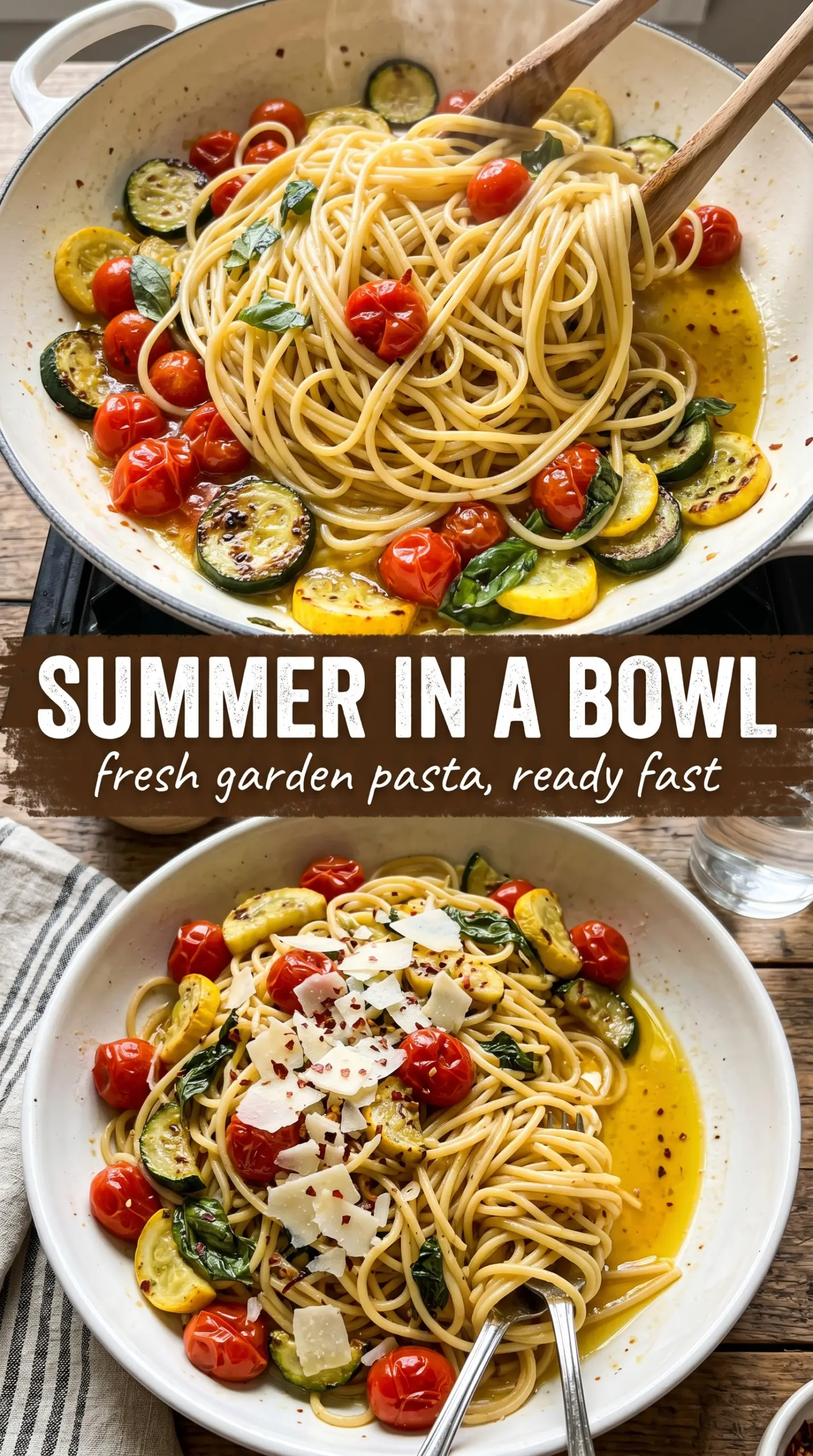
- Spaghetti or linguine — Long noodles work best because they catch the olive oil, garlic, and lemon in a thin coating. Short pasta will still taste good, but it won’t carry the vegetables the same way.
- Olive oil — This is the base of the sauce, so use one that tastes good on its own. You don’t need the fanciest bottle, but thin, flavorless oil will make the whole dish feel flat.
- Garlic — Sliced garlic gives you little sweet, toasted bits instead of a harsh paste. Keep the heat moderate; once it turns deep gold, it goes bitter fast.
- Zucchini — Dice it into even pieces so it browns instead of collapsing. If your zucchini is extra large and seedy, scoop out the center before cooking for a better texture.
- Cherry tomatoes — They burst into the pan and become the loose sauce for the pasta. If you use larger tomatoes, cut them small and expect a wetter pan.
- Corn — Fresh corn brings the sweetest flavor, but frozen works well here because it cooks fast and stays bright. Add it straight from frozen; thawing first just adds unnecessary moisture.
- Parmesan — The shaved cheese gives salty, nutty bites that finish the dish without burying the vegetables. Use a wedge if you can, since pre-shredded cheese doesn’t melt as cleanly.
- Lemon juice and zest — The zest adds fragrance while the juice sharpens the whole pan at the end. Add both off the heat so the citrus stays clean and bright instead of cooked down.
Building the Sauce Without Letting the Pasta Dry Out
Blooming the Garlic
Warm the olive oil first, then add the sliced garlic and watch it closely. You want fragrant garlic that just starts to turn pale gold at the edges, not dark brown slices that taste bitter. If the garlic browns before the vegetables go in, lower the heat immediately and move fast with the next ingredients.
Giving the Zucchini Time to Brown
Add the zucchini in a single layer if you can, and leave it alone long enough to make contact with the pan. Stirring too often keeps it from developing those caramelized spots that give the dish its depth. The pieces should look tender but still hold their shape when you poke them with a spoon.
Letting the Tomatoes Burst
Once the zucchini has color, add the tomatoes and corn and keep cooking until the tomatoes wrinkle and split. You want juices collecting in the skillet, not a full flood of liquid. If the pan looks dry before the tomatoes burst, the heat is too high; add the pasta water later instead of letting the vegetables scorch.
Finishing with Pasta Water and Lemon
Add the drained pasta directly to the skillet and toss hard so the starch from the noodles starts binding with the oil. Add pasta water a splash at a time until the sauce looks glossy and lightly clings to the spaghetti, then pull the pan off the heat before adding lemon juice, zest, basil, and Parmesan. That off-heat finish keeps the sauce from going greasy and keeps the basil tasting fresh.
Three Smart Ways to Bend This Pasta to What You Have
Make It Dairy-Free
Leave out the Parmesan and finish with an extra drizzle of olive oil plus a little more lemon zest. You lose the salty nuttiness, so taste the pasta at the end and add a pinch more salt to keep the flavors balanced.
Use What’s in the Market Basket
Yellow squash can stand in for some or all of the zucchini, and diced fresh bell pepper can replace the corn if that’s what you have. The flavor shifts slightly sweeter and less creamy, but the method stays the same: brown the vegetables first, then build the sauce in the skillet.
Make It Gluten-Free
Swap in your favorite gluten-free spaghetti, but cook it just to al dente and handle it gently when tossing. Some gluten-free pastas absorb liquid fast, so keep extra pasta water nearby and add it in small splashes to keep the sauce loose and glossy.
Add Protein Without Weighing It Down
Toss in grilled shrimp, shredded rotisserie chicken, or white beans at the end. Keep the portions modest so the vegetables still feel like the main event; too much protein makes the pasta lose the light, quick-cooked character that makes it work.
Storage and Reheating
- Refrigerator: Keeps for 3 days in a sealed container. The pasta will absorb some of the sauce as it sits, so expect it to be less glossy the next day.
- Freezer: I don’t recommend freezing this one. The zucchini and tomatoes turn soft and watery after thawing, and the basil loses its fresh finish.
- Reheating: Warm it gently in a skillet with a splash of water or olive oil over medium-low heat. Microwaving it hard dries out the pasta and makes the vegetables mushy before the center is hot.
Questions I Get Asked About This Recipe
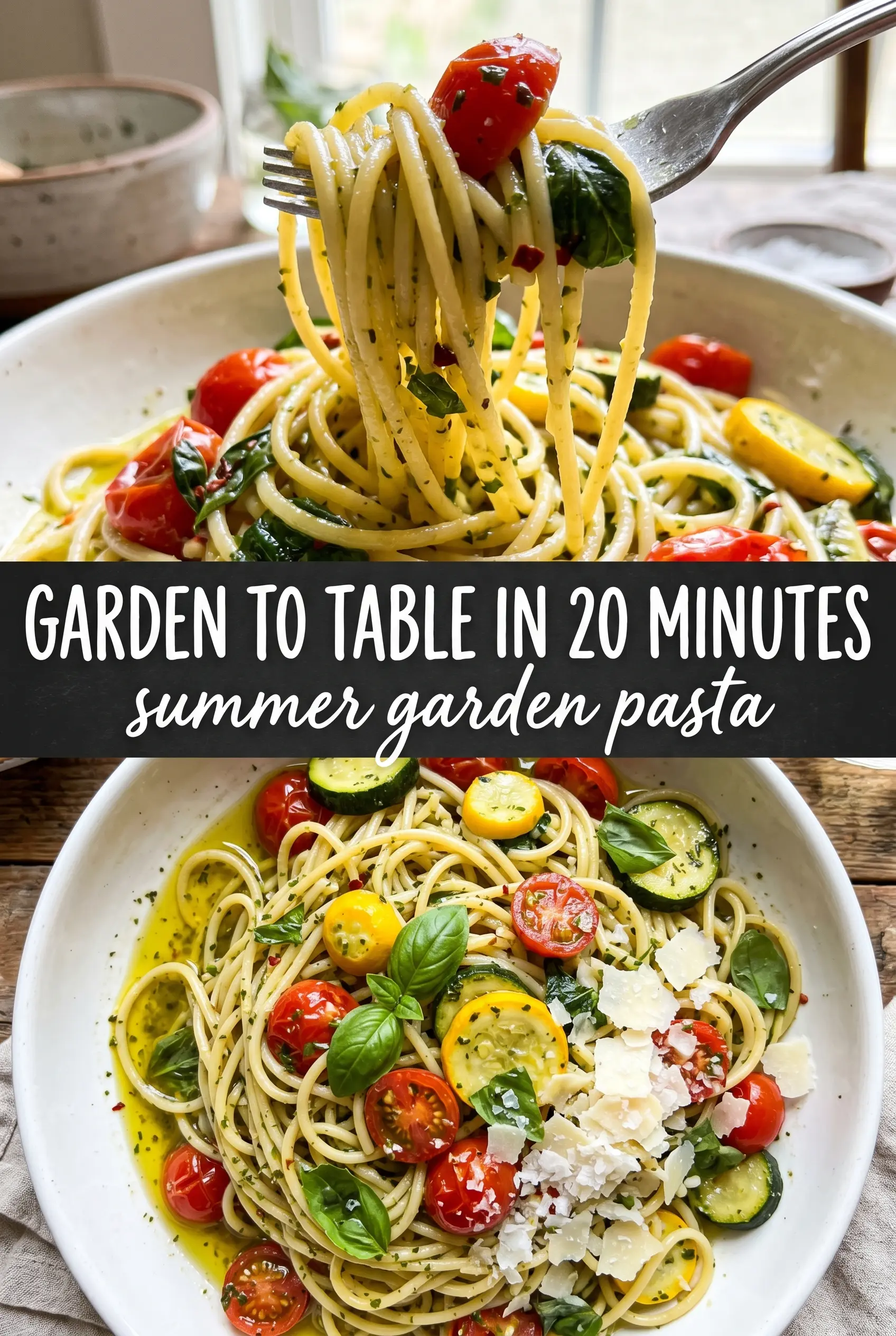
Summer Garden Pasta
Ingredients
Equipment
Method
- Bring a large pot of well-salted water to a rolling boil and cook the spaghetti until al dente, about 8–10 minutes (check the package). Reserve 1 cup of pasta water before draining.
- Heat the olive oil in a large skillet over medium-high heat until shimmering. Add the garlic and cook for 30 seconds until fragrant.
- Add the zucchini and cook for 4–5 minutes, stirring occasionally, until golden. Add the cherry tomatoes and corn and cook for another 3–4 minutes until the tomatoes burst.
- Season the skillet with red pepper flakes, salt, and pepper to taste. Add the cooked pasta directly to the skillet.
- Toss and stir the pasta with the vegetables, adding reserved pasta water a splash at a time until a light sauce forms. Stir in the lemon juice and lemon zest.
- Turn off the heat and scatter the shaved Parmesan and torn basil over the top. Serve immediately.