Massaged kale takes on a softer, silkier bite when it gets a little time with the dressing, and that matters here because the peaches, blueberries, and goat cheese bring plenty of contrast on their own. The salad ends up bright, juicy, and sturdy enough to sit on the table without collapsing into a soggy pile. Every forkful has crunch from the pecans, sweetness from the fruit, and just enough tang from the cheese and lemon to keep it from feeling one-note.
The part that makes this version work is the two-stage dressing. A little goes on the kale first, which breaks down the leaves and seasons them from the inside out, and the rest gets added after the fruit and cheese go in so everything stays glossy instead of drenched. The honey helps the lemon and Dijon round out into a balanced vinaigrette, and the garlic stays in the background where it belongs.
Below, I’m walking through the one step that changes kale from tough to tender, plus a few swaps that still keep the salad sharp and fresh. There’s also a storage note for the rare case you have leftovers, because this salad holds up better than most mixed greens.
The kale softened up beautifully after the massage, and the peaches stayed sweet and juicy without making the whole bowl watery. I loved the way the honey-lemon dressing clung to every leaf.
Save this Summer Peach Blueberry Kale Salad for the days when you want crisp fruit, tender greens, and a honey-lemon dressing that clings instead of pooling.
The Step That Keeps Kale From Eating Like Hay
Kale needs more than dressing to become pleasant in a salad. It needs pressure. The massage breaks down the stiff ribs in the leaves, softens the texture, and turns the color deeper green, which tells you the leaves are ready to eat. If you skip that step, the dressing mostly slides around on top and the salad feels rough even if everything else is perfect.
The other mistake is rushing the rest time. Those ten minutes give the salt, acid, and fat time to work into the leaves, and that’s when kale stops tasting sharp and starts tasting balanced. You’re not waiting for decoration. You’re giving the greens enough time to absorb what’s already in the bowl.
- Massage until the leaves darken. That color change is the cue. The kale should look glossy, darker, and slightly collapsed, not bruised or wet.
- Rest it after the first drizzle of dressing. This keeps the leaves from staying stiff in the center, which is what usually makes kale salads feel chewy and hard to finish.
- Slice the kale thinly. Thin ribbons are easier to soften evenly and easier to eat with the fruit, cheese, and pecans in one bite.
What Each Ingredient Is Actually Doing in This Salad

The kale is the backbone, so use a bunch that feels fresh and sturdy, not limp. Curly or lacinato both work, but lacinato gives you softer ribbons and a slightly less rugged bite. The stems need to come out either way because they stay woody no matter how much you massage the leaves.
Peaches and blueberries are the reason the salad feels alive. Ripe peaches should smell fragrant and yield just slightly at the stem end; hard fruit won’t give you much juice and the salad will taste flatter. Blueberries don’t need any special treatment, but they should be dry so they don’t water down the dressing.
Goat cheese brings the tang, and candied pecans bring sweetness plus crunch. If you need a substitute for the cheese, feta is the closest swap for salt and bite, while toasted almonds can stand in for the pecans if that’s what you have. Red onion should be sliced thin enough that it sharpens the salad without taking over every mouthful.
- Olive oil — This carries the dressing and helps the kale soften. Use one you like the taste of, since there’s nowhere for a harsh oil flavor to hide.
- Lemon juice — Fresh lemon keeps the salad bright and keeps the fruit from tasting overly sweet. Bottled lemon juice won’t give the same clean edge.
- Honey and Dijon — Honey rounds out the acid, while Dijon helps the dressing emulsify so it clings to the kale instead of separating in the bowl.
- Garlic — One clove is enough. It adds background savoriness, but too much will bully the peaches and blueberries.
Building the Bowl in the Right Order
Whisking the Dressing Until It Clings
Start with the dressing before anything else touches the bowl. Whisk the olive oil, lemon juice, honey, Dijon, garlic, salt, and pepper until it looks slightly thickened and no streaks of oil remain. If it looks broken, keep whisking for another few seconds; the Dijon is doing the work of pulling it together. A smooth dressing coats the kale evenly and keeps the fruit from slipping to the bottom.
Softening the Kale by Hand
Put the sliced kale in a large bowl and add just two tablespoons of dressing first. Use clean hands and massage firmly for 2 to 3 minutes, rubbing and squeezing the leaves until they darken and feel less rigid. If the kale still snaps instead of folding, it hasn’t gone far enough. Let it rest for 10 minutes so the dressing can finish its job before you add the fruit.
Layering in the Fruit and Crunch
Add the peaches, blueberries, onion, and candied pecans after the kale has softened. Toss gently so the peaches hold their shape and the blueberries don’t burst into the dressing. Then add the remaining dressing and fold again just until everything looks lightly coated. The salad should look glossy, not soupy.
Finishing With Goat Cheese
Crumble the goat cheese over the top at the end so it stays in visible little pockets instead of dissolving into the bowl. That way you get bright hits of tang instead of a fully mixed-in dairy layer. Serve right away while the peaches are still firm and the pecans still have their snap.
How to Adapt This Salad Without Losing the Balance
Make it dairy-free
Skip the goat cheese and add sliced avocado or a handful of toasted sunflower seeds for richness. You’ll lose the tangy edge, so keep the lemon dressing bright and don’t skimp on black pepper.
Use what you have for the fruit
Nectarines or plums can stand in for the peaches, and raspberries can replace the blueberries if you want a softer, more tart finish. The salad still works best when one fruit is juicy and the other leans brighter or more acidic.
Make it nut-free
Leave out the pecans and use pumpkin seeds or crisped chickpeas for crunch. You’ll still get texture, but you’ll want a little extra salt because the candied pecans normally carry part of the sweet-salty balance.
Stretch it into a fuller meal
Top the salad with grilled chicken or chickpeas if you want it to eat like lunch instead of a side. The dressing already has enough acidity to stand up to both, so you don’t need to change anything else.
Storage and Reheating
- Refrigerator: Store leftovers for up to 2 days. The kale holds up well, but the peaches will soften and the pecans will lose some crunch.
- Freezer: Don’t freeze this salad. The fruit and greens turn mushy once thawed.
- Reheating: No reheating needed. If it’s been chilled, let it sit at room temperature for 10 to 15 minutes so the olive oil loosens and the flavors wake up again.
Answers to the Questions Worth Asking
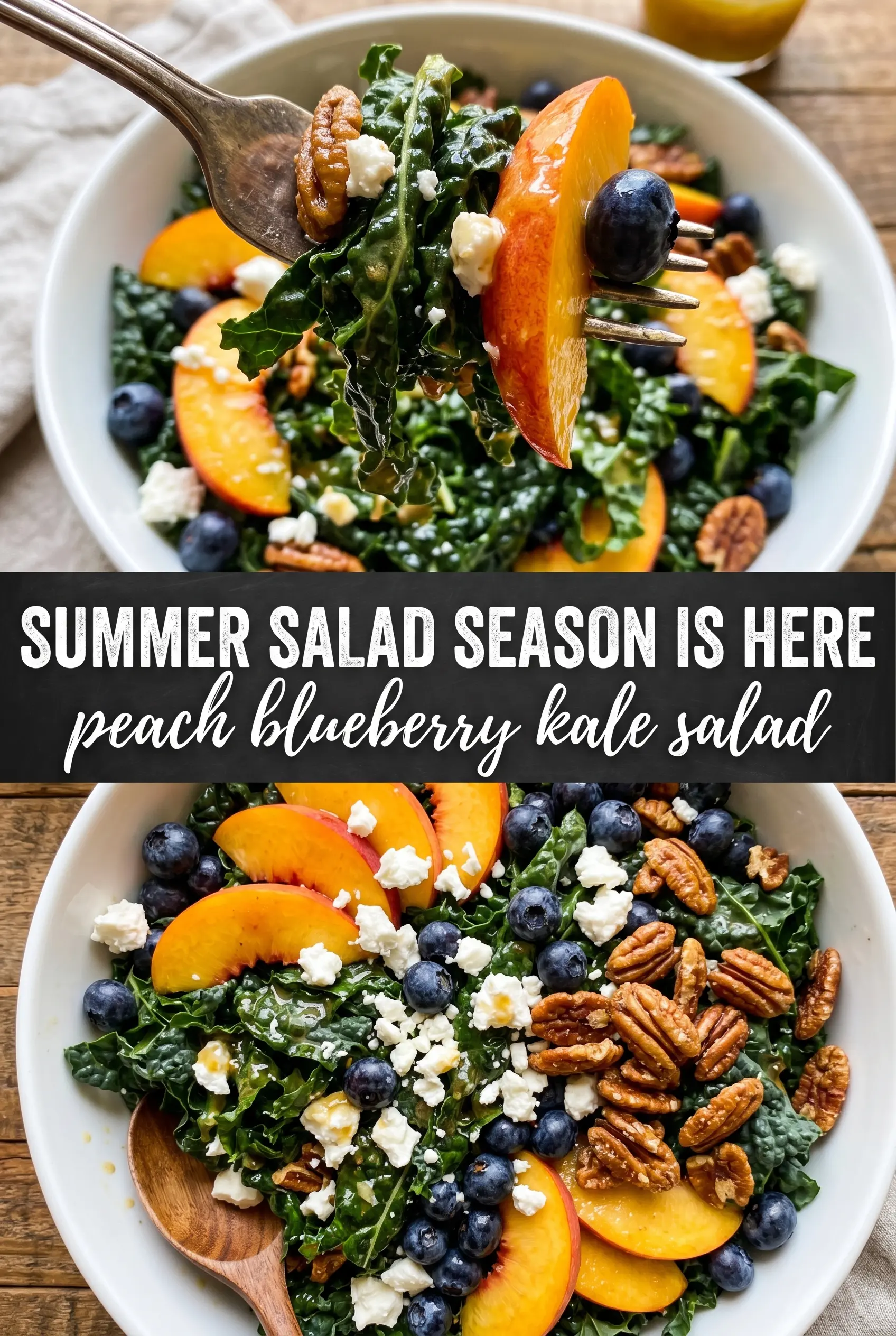
Summer Peach Blueberry Kale Salad
Ingredients
Method
- Whisk together olive oil, lemon juice, honey, Dijon mustard, minced garlic, salt, and cracked black pepper until emulsified. Keep whisking until the dressing looks uniform and glossy.
- Place the thinly sliced kale in a large bowl and drizzle with 2 tablespoons of the dressing. Massage firmly with your hands for 2-3 minutes until the leaves soften and darken with a ribbon-like texture.
- Let the massaged kale rest for 10 minutes at room temperature. The kale should look slightly wilted and glossy after resting.
- Add the sliced peach, fresh blueberries, thinly sliced red onion, and candied pecans to the massaged kale. Gently fold so the fruit stays intact and evenly distributed.
- Drizzle the remaining dressing over the salad and toss gently to coat. You should see dressing clinging to the kale leaves without breaking the fruit.
- Top with crumbled goat cheese. Scatter it evenly so each bite gets a salty, creamy finish.
- Serve immediately. The salad is best right away while the kale is tender but still bright.