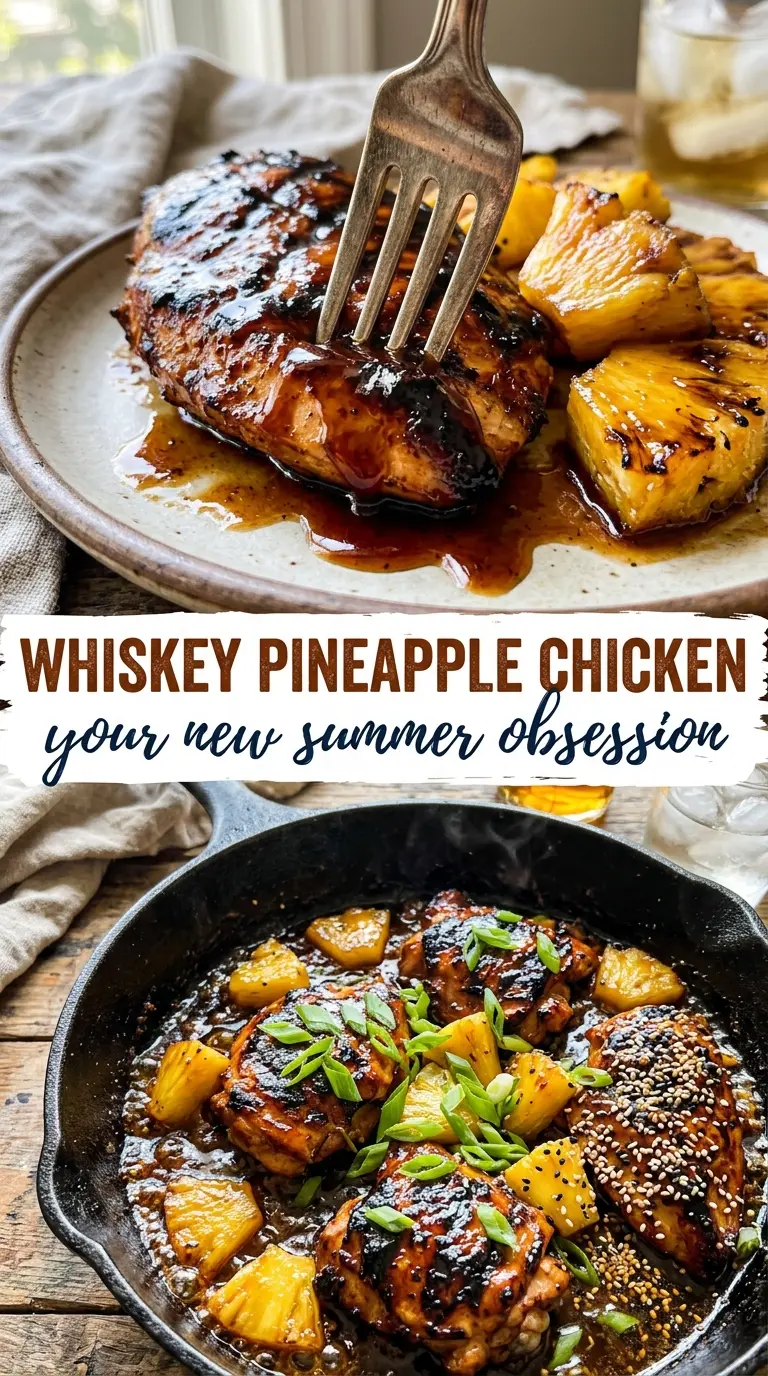
Caramelized whiskey pineapple chicken lands on the plate with sticky edges, smoky grill marks, and enough bright pineapple sweetness to keep the whole dish from feeling heavy. The chicken gets deeply glazed, the outside turns glossy and bronzed, and the grilled pineapple rings pick up just enough char to taste like part of the main event instead of a side note.
The trick here is splitting the sauce before the chicken goes in. One portion marinates the thighs, while the reserved portion gets simmered down for basting, which keeps you from brushing raw marinade onto cooked chicken and gives you a glaze that actually clings. Bone-in, skin-on thighs hold up best on the grill because they stay juicy through the high heat and give you enough fat in the skin to carry the sugar without drying out.
Below, I’ll walk you through the timing that keeps the glaze from burning, plus a few smart swaps for when you want more smoke, less sweetness, or a version that works without a grill.
The glaze thickened up beautifully and didn’t burn on the grill. I basted in the last few minutes like you said, and the pineapple rings were the first thing gone.
Save this whiskey pineapple chicken for the nights when you want sticky grilled chicken with a smoky-sweet glaze and caramelized pineapple on the side.
The Glaze Needs Two Jobs, Not One
The mistake most people make with sticky grilled chicken is using one sauce for everything. If that same mixture touches raw chicken and then goes straight back over direct heat, it can taste flat, scorch fast, or turn greasy before it ever gets glossy. Separating the marinade from the basting glaze solves all three problems.
This recipe also depends on balance. Pineapple juice brings acidity and sugar, whiskey adds warmth and a little edge, and soy sauce keeps the whole thing from tipping into candy territory. Brown sugar and ketchup help the glaze reduce into something thick enough to coat a spoon, but the key is restraint on the grill: you want a lacquer, not a crust that burns before the chicken is cooked through.
What Each Ingredient Is Actually Doing in the Pan
- Bone-in, skin-on chicken thighs — These stay juicy under high heat and give you the best chance at browned, crackly edges. Boneless thighs work, but they cook faster and won’t hold as much glaze on the skin.
- Pineapple juice — This is the backbone of the marinade. Fresh or canned both work, but use 100% juice without added sugar so the glaze doesn’t turn cloying before it reduces.
- Whiskey or bourbon — This brings depth and a faint caramel note. Bourbon reads sweeter; whiskey leans a little sharper. Either one works as long as you keep the amount measured and let it simmer a few minutes so the alcohol cooks off.
- Soy sauce — This gives the glaze salt and color. Low-sodium soy is the easiest swap if you’re sensitive to salt, but don’t replace it with plain salt alone or you’ll lose the darker, rounded flavor.
- Brown sugar and ketchup — These help the glaze thicken and cling. Ketchup sounds odd until you taste the finished sauce; it adds body, acidity, and the kind of cooked tomato note that plays well with smoke.
- Ginger and garlic — Fresh is worth it here. Powdered versions can work in a pinch, but the marinade tastes brighter and less muddy when you grate and mince them fresh.
- Pineapple rings — Grill them while the chicken rests on the cooler side of the heat. You want caramelized edges and a little squeeze left in the center, not mush.
How to Keep the Glaze Sticky Instead of Burnt
Building the Marinade
Whisk the pineapple juice, whiskey, soy sauce, brown sugar, ketchup, garlic, ginger, and smoked paprika until the sugar dissolves and the mixture looks smooth. Pull off one-third before the chicken goes in; that reserved portion is your basting sauce, and it stays clean because it never touches raw meat. If you skip that separation, you’ll either have to throw the sauce away or risk brushing raw marinade onto chicken over open heat.
Marinating for Flavor, Not Mush
Coat the chicken thighs and let them sit at least an hour, or overnight if you want the flavor deeper. Don’t push it much past that with a very acidic marinade, or the surface can start to soften too much and lose that good grilled texture. Before the chicken hits the grill, let excess marinade drip off so the sugars don’t blacken too quickly.
Reducing the Basting Sauce
Simmer the reserved sauce in a small pan for about five minutes until it looks a little thicker and glossy on the spoon. You’re not making caramel; you’re concentrating it just enough so it coats the chicken instead of running straight off the grates. If it starts to catch on the bottom, lower the heat immediately and stir, because burnt sugar here will taste harsh all the way through the finished glaze.
Grilling and Finishing
Cook the chicken over medium-high heat for 7 to 8 minutes per side, basting during the last 6 minutes so the glaze has time to set without scorching. The skin should darken to a deep amber-brown, and the juices should run clear when the thickest part reaches 165°F. Grill the pineapple rings for the last few minutes too; they only need enough time to pick up char and turn aromatic.
Make It Spicier
Add a pinch of cayenne or a spoonful of chili garlic sauce to the marinade. The heat plays nicely with the pineapple and whiskey, and it keeps the glaze from leaning too sweet. Start small; the sugar in the sauce makes spice build faster than you’d expect.
Use Chicken Breasts Instead
Boneless breasts work if that’s what you have, but they dry out faster and need closer attention. Grill them over slightly lower heat and pull them as soon as they hit temperature, then spoon the reduced glaze over the top instead of basting hard in the final minutes.
Make It Gluten-Free
Use tamari or a certified gluten-free soy sauce. Everything else in the recipe is naturally gluten-free, so this swap keeps the same sweet-smoky balance without changing the texture of the glaze.
Storage and Reheating
- Refrigerator: Store leftovers in an airtight container for up to 3 days. The glaze will thicken as it chills, and the skin won’t stay crisp.
- Freezer: The cooked chicken freezes well for up to 2 months, though the pineapple is best made fresh. Wrap portions tightly and thaw overnight in the fridge.
- Reheating: Rewarm covered in a 325°F oven until heated through. A hot skillet works too, but use low to medium heat so the sugar in the glaze doesn’t burn before the center warms.
Questions I Get Asked About This Recipe
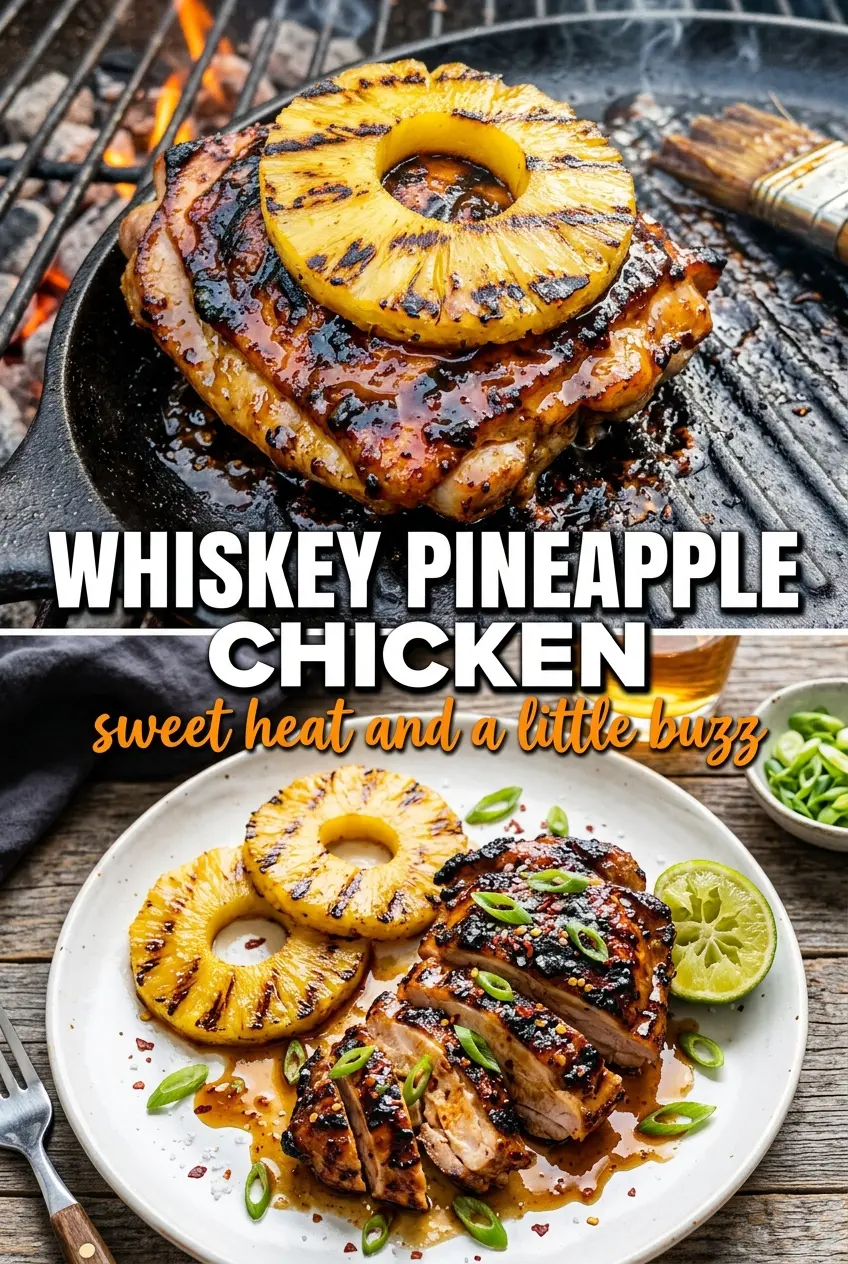
Whiskey Pineapple Chicken
Ingredients
Equipment
Method
- Whisk pineapple juice, whiskey, soy sauce, brown sugar, ketchup, garlic, ginger, and smoked paprika together until smooth, then reserve 1/3 of the mixture for basting.
- Marinate the chicken in the remaining sauce for at least 1 hour or overnight in the refrigerator, covered.
- Simmer the reserved basting sauce in a small saucepan for 5 minutes until slightly thickened.
- Preheat the grill to medium-high heat, then place chicken on the grill and cook 7-8 minutes per side, basting generously with reduced glaze in the last 6 minutes.
- Add pineapple rings to the grill and cook 2-3 minutes per side until caramelized and lightly charred.
- Rest the chicken for 5 minutes so juices redistribute, then serve with grilled pineapple rings and fresh cilantro.