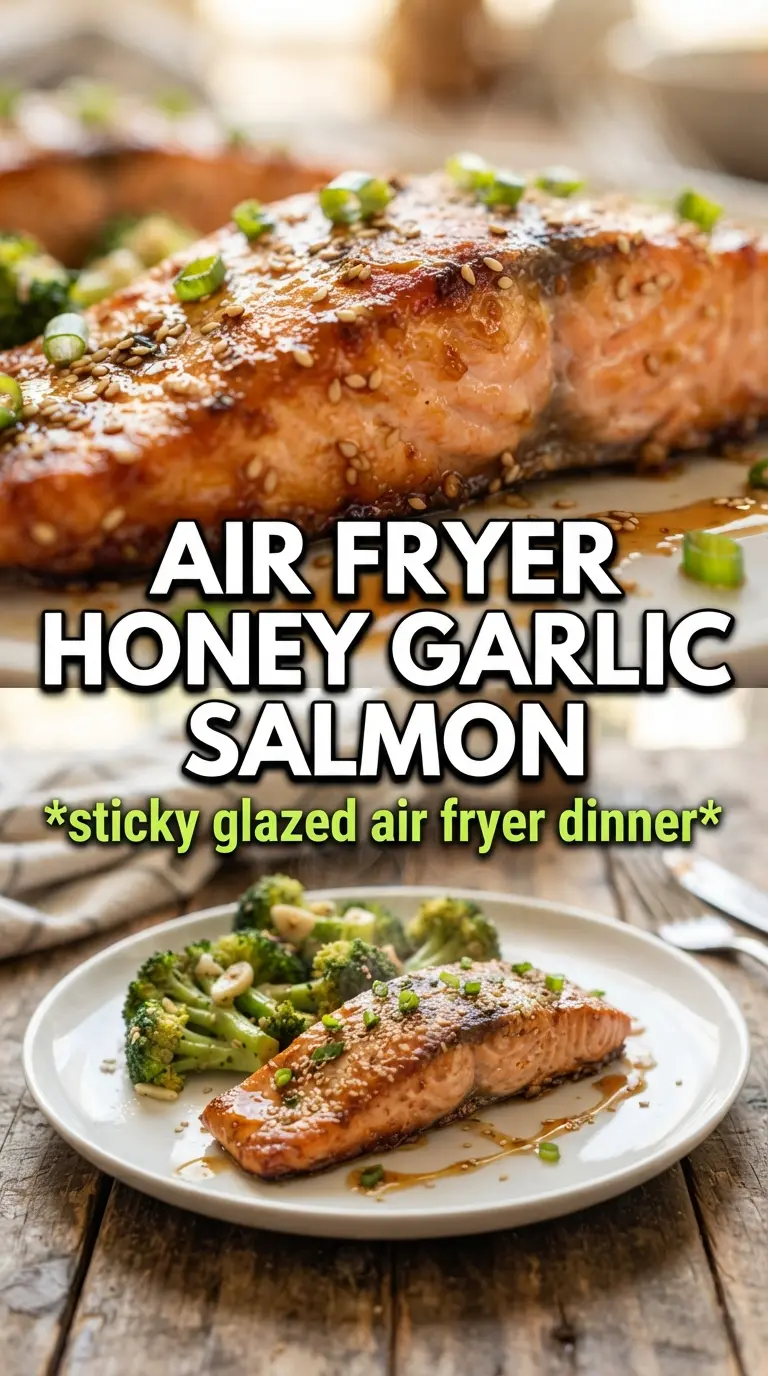
Sticky honey garlic salmon is one of those dinners that looks like you put in a lot more effort than you did. The glaze turns glossy and deep amber in the air fryer, the edges pick up a little caramelized bite, and the salmon stays tender in the center instead of drying out. It’s fast enough for a weeknight, but it still feels like a real meal when it lands on the plate.
What makes this version work is the balance in the glaze and the heat. Honey brings the shine and the caramelization, soy sauce adds salt and depth, lemon keeps the sweetness from getting heavy, and sesame oil gives the whole thing that takeout-style finish. The salmon cooks skin-side down and never needs flipping, which keeps the glaze where you want it and helps the fillet hold together.
Below, I’ve included the small details that keep the salmon juicy and the glaze from burning, plus a few smart swaps if you need to work with what’s in the kitchen.
The glaze caramelized beautifully in 9 minutes, and the salmon stayed flaky and moist. I loved that I didn’t have to flip it, and the sesame seeds on top gave it the perfect finish.
Save this air fryer honey garlic salmon for a fast dinner with caramelized glaze and crisp edges.
The Trick to Keeping the Glaze Sticky Instead of Burnt
The biggest mistake with honey garlic salmon is treating the glaze like a sauce that can sit in high heat for too long. Honey darkens fast in the air fryer, and if the basket runs too long or too hot, the edges can go from lacquered to bitter before the fish finishes cooking. The fix is simple: use a thin, even coating and cook just until the salmon flakes and the glaze looks set and shiny.
Skin-side down matters here because it shields the flesh from direct air and keeps the fillet stable while the sugars caramelize on top. If your salmon pieces are thinner than 1 inch, start checking early. Thicker center-cut fillets can take the full 10 minutes, but smaller pieces can be done closer to 8.
What Each Ingredient Is Actually Doing in This Dish
- Salmon fillets — Center-cut fillets cook most evenly, but any fillet around 6 ounces will work. If the pieces are much thinner, shorten the cook time so the glaze doesn’t overcaramelize before the fish is done.
- Honey — This is what gives the salmon its sticky finish and amber color. Maple syrup can stand in, but it browns a little differently and tastes less floral.
- Garlic — Fresh minced garlic gives the glaze bite and aroma. Jarred garlic works in a pinch, but fresh is sharper and less dull after air frying.
- Soy sauce — It supplies salt and depth so the glaze doesn’t taste like plain sweet honey. Low-sodium soy sauce is the easiest swap if you want a little more control over the seasoning.
- Lemon juice — A small amount keeps the glaze bright and helps cut the richness of the salmon. Don’t skip it unless you replace it with another acid, or the sauce can taste flat.
- Sesame oil — This isn’t just background flavor; it gives the glaze that toasted finish people notice right away. Use it sparingly, because too much can take over the whole dish.
How to Keep the Salmon Moist While the Glaze Caramelizes
Mix the Glaze First
Stir the honey, garlic, soy sauce, lemon juice, and sesame oil together before the salmon hits the basket. That lets the garlic distribute evenly, which matters because raw garlic clumps can scorch in one spot while the rest of the glaze cooks fine. The mixture should look loose and glossy, not thick like frosting.
Brush, Don’t Drench
Coat the salmon generously, but leave the glaze as a thin layer instead of pooling under the fish. Too much sauce in the basket can steam the salmon and make the bottom soft instead of lightly set. A basting brush gives you control and helps the top caramelize without flooding the air fryer.
Cook Skin-Side Down and Leave It Alone
Set the salmon skin-side down in a preheated 400°F air fryer and don’t flip it. Flipping can tear the fillet and drag the glaze off before it has time to set. At 8 minutes, start checking for opaque edges and a center that flakes with a fork but still looks juicy.
Finish Before the Sugars Turn Dark
The glaze should look shiny, sticky, and deep amber when the salmon comes out. If it’s getting too dark at the edges, the air fryer is running hot and the fish is likely done or almost there. Garnish immediately with sesame seeds and green onions so they cling to the glaze while it’s still tacky.
How to Adapt This for a Different Dinner Plan
Gluten-Free Version
Swap the soy sauce for tamari or a certified gluten-free soy sauce. The glaze keeps the same salty-sweet balance, and the salmon still caramelizes the same way.
Lower-Sugar Option
Use 2 tablespoons honey instead of 3 and add an extra teaspoon of lemon juice to keep the glaze from tasting flat. You’ll get a lighter coating and slightly less browning, but the salmon still comes out flavorful.
No Sesame Oil
Leave it out and add a small drizzle of neutral oil to help the glaze spread. The salmon will still cook well, but you’ll lose that toasted finish that makes the sauce taste deeper.
Storage and Reheating
- Refrigerator: Store leftovers in an airtight container for up to 3 days. The glaze will firm up a little, but the salmon stays good for lunch the next day.
- Freezer: It freezes, but the texture is better fresh. If you do freeze it, wrap the cooked fillets tightly and thaw in the refrigerator overnight before reheating.
- Reheating: Warm it gently in the air fryer at 300°F for 3–4 minutes or in a low oven until just heated through. High heat dries salmon out fast, and it will also darken the glaze too much.
Answers to the Questions Worth Asking
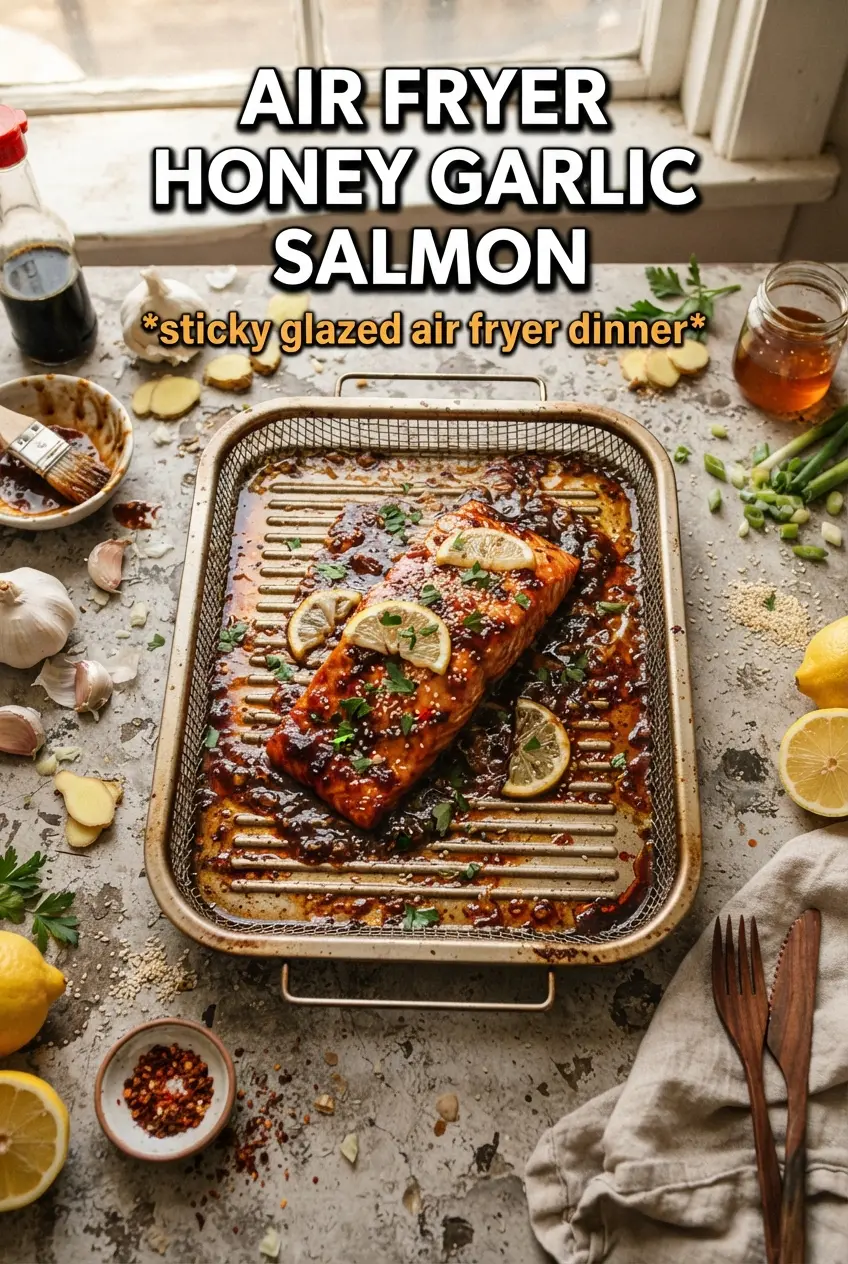
Air Fryer Honey Garlic Salmon
Ingredients
Equipment
Method
- Mix honey, minced garlic, soy sauce, lemon juice, and sesame oil in a bowl until smooth and glossy.
- Set the bowl aside while you season the salmon.
- Season salmon fillets with salt and black pepper, then brush generously with the honey garlic sauce.
- Preheat the air fryer to 400°F.
- Place salmon in the basket skin-side down and air fry for 8–10 minutes, until cooked through and the glaze is caramelized, with golden, lightly crisped edges—no need to flip.
- Garnish with sesame seeds and green onions, then serve immediately.