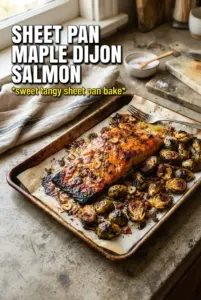
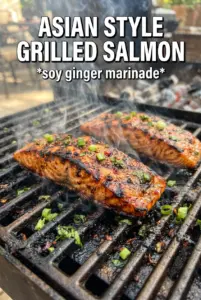
Glistening salmon with caramelized edges and a glossy soy-ginger glaze is the kind of main dish that looks polished without asking much from the cook. The flavor lands in a smart middle ground: savory from soy sauce, bright from lemon, warm from ginger, and just sweet enough to help the top bronzed skin and surface turn sticky over high heat. It’s elegant enough for company, but straightforward enough for a regular dinner when you want something that feels a little special.
The short marinating time matters here. Fifteen minutes gives the Dijon and soy time to season the fish and help the glaze cling, but it keeps the lemon juice from starting to cure the salmon before it hits the grill. Skin-side down on foil is another useful move, because it gives you a stable base, protects the fillet, and makes the transfer to the platter much easier. You’re aiming for salmon that flakes in large, moist pieces and still looks juicy in the center.
Below, I’ve laid out the part that actually makes this recipe work on a grill or under the broiler, plus the ingredient choices that matter most if you want that same glossy finish and clean, centered flavor.
The glaze caramelized beautifully under the broiler and the salmon stayed moist in the middle. I served it right on the foil like the recipe says, and it slid onto the platter in perfect pieces.
Save this soy-ginger grilled salmon for the nights when you want a glossy, restaurant-style main dish with almost no cleanup.
The Marinade Trick That Keeps the Salmon Glossy, Not Overpowered
The biggest mistake with glazed salmon is letting the marinade turn into a mask. Salmon needs enough seasoning to taste complete, but it still has to taste like salmon. Here, Dijon acts like an emulsifier, helping the soy, honey, ginger, and lemon cling to the fish instead of sliding off the surface, and the short rest gives you a lacquered top instead of a cured texture.
Heat matters just as much as time. Whether you use a grill or the broiler, the goal is fast caramelization on the surface before the center overcooks. If the fish sits too long in the marinade, the lemon starts to firm the outside and the finished texture turns tight. Fifteen minutes is the sweet spot.
What Each Ingredient Is Actually Doing in This Salmon
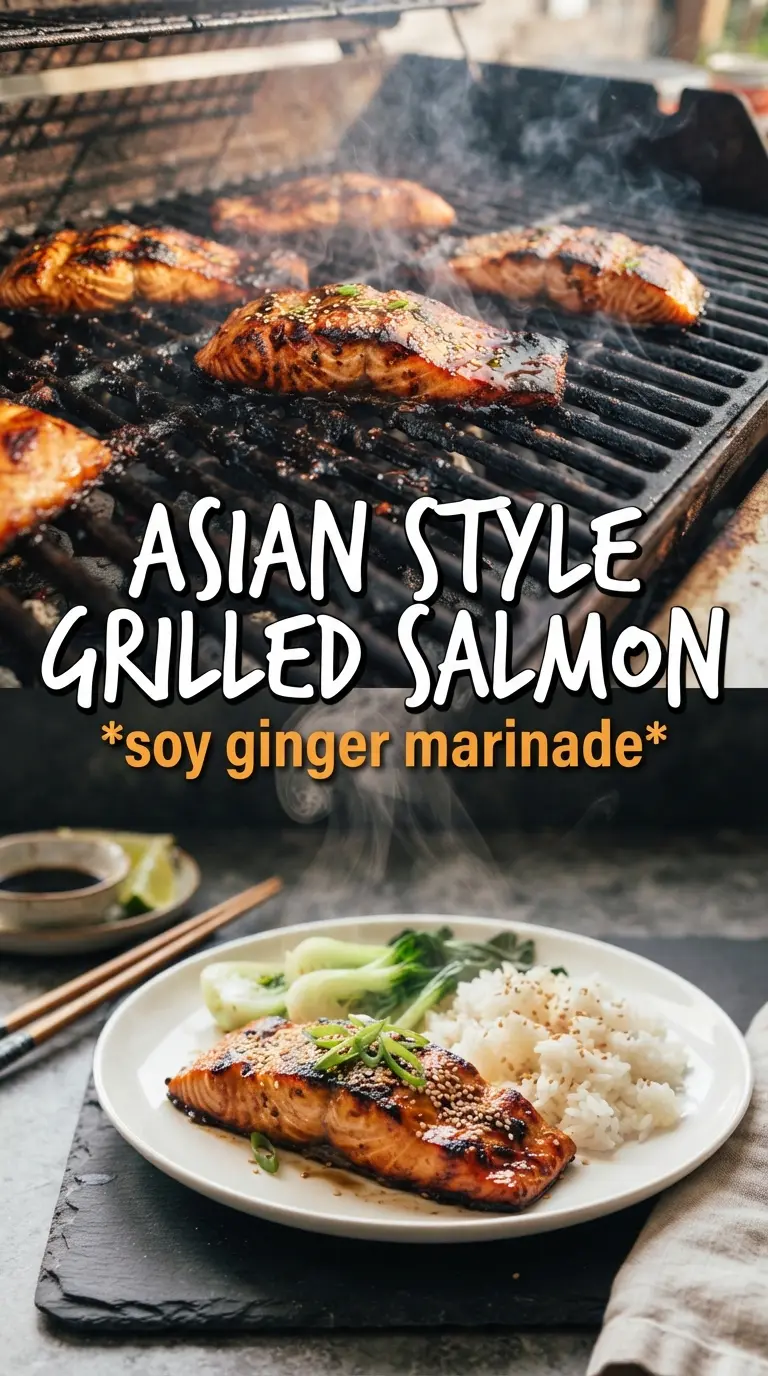
- Whole salmon fillet — A larger fillet gives you a dramatic presentation and stays juicier than smaller portions. Skin-on is worth keeping because it helps the fish hold together on the grill or under the broiler and gives you a built-in barrier against sticking.
- Dijon mustard — This is what makes the glaze stay put. You can swap in another mustard in a pinch, but Dijon has the sharpness and body that play best with soy and honey.
- Soy sauce — This brings salt and depth at the same time. Use a regular soy sauce here unless you need a lower-sodium version, because the glaze is built to taste full and balanced.
- Fresh ginger and garlic — Fresh is the move. Ground ginger tastes flat in a marinade like this, and minced garlic gives the glaze a warm, savory edge that shows up after grilling.
- Honey and lemon juice — Honey helps the top caramelize, while lemon keeps the glaze from tasting heavy. If you need to use bottled lemon juice, it’ll work, but fresh juice keeps the finish brighter.
- Sesame oil — A small amount adds a nutty aroma that makes the whole dish taste more layered. Don’t replace it with neutral oil unless you have to; you’d lose one of the key notes in the glaze.
The Part That Matters Once the Salmon Hits the Heat
Brushing on the Glaze
Lay the salmon skin-side down on foil and brush the marinade over the top in a thick, even layer. Don’t drown the fish in excess liquid; you want the surface coated, not swimming, or the top will steam before it browns. The foil gives you an easy transfer and helps keep the glaze where it belongs.
Grilling or Broiling to the Right Point
Cook over high heat until the top looks caramelized and the fish flakes at the thickest point but still looks moist in the center. If you’re broiling, position the rack close enough to brown the top quickly, but not so close that the sugars in the honey scorch before the salmon cooks through. A little char on the glaze is good; blackened garlic is not.
Serving It Without Losing the Juices
Let the salmon rest briefly, then move it to a platter and slice at the table. That keeps the fillet from falling apart on the way over and makes the presentation feel generous. Finish with sesame seeds and green onions right before serving so they stay fresh and sharp against the warm glaze.
How to Adapt This Asian Grilled Salmon Without Losing the Point
Broiler Version for Rainy Days
If grilling isn’t an option, use the oven broiler on high and place the salmon on a foil-lined sheet pan. The broiler gives you the same fast caramelization, but keep an eye on it because the honey in the marinade can go from bronzed to burned in a minute.
Gluten-Free Swap
Use a certified gluten-free soy sauce or tamari. The flavor stays close, and the glaze still gets the same salty-sweet balance, which matters more here than any one exact brand of soy sauce.
Lower-Sugar Finish
Cut the honey back a little if you want a less sweet glaze, but don’t remove it entirely. The honey isn’t only for sweetness; it helps the top brown and gives the sauce that glossy look when it hits the heat.
Storage and Reheating
- Refrigerator: Store leftovers in an airtight container for up to 3 days. The glaze will set a bit in the fridge, but the salmon stays tasty for lunches or grain bowls.
- Freezer: You can freeze cooked salmon, but the texture softens after thawing. Wrap portions tightly and freeze for up to 2 months if you don’t mind a less delicate finish.
- Reheating: Warm gently in a low oven or covered skillet just until heated through. High heat dries salmon out fast, and microwaving tends to make the glaze split and the fish toughen at the edges.
Questions I Get Asked About This Recipe
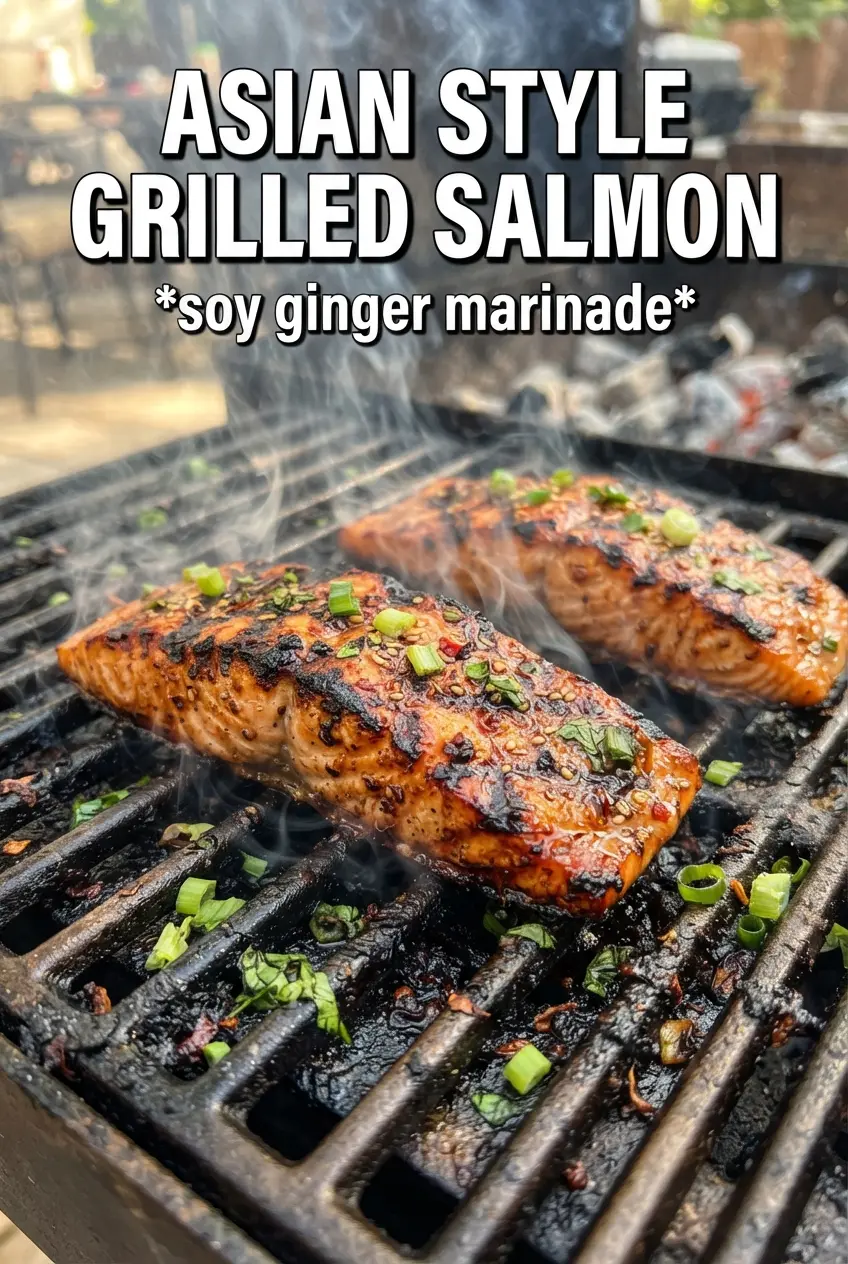
Ina Garten's Asian Grilled Salmon
Ingredients
Equipment
Method
- Whisk together Dijon mustard, soy sauce, garlic, ginger, sesame oil, honey, and fresh lemon juice until smooth and glossy.
- Place the salmon skin-side down on foil and brush generously with the marinade.
- Let the salmon marinate 15 minutes at room temperature, so the glaze clings to the surface.
- Preheat the grill or oven broiler to high.
- Grill or broil the salmon 12–15 minutes, until just cooked through and caramelized on top with visible browning.
- Garnish with sesame seeds and green onions.
- Serve directly from the foil on a platter, slicing at the table for neat presentation.