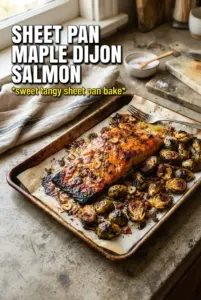
Sticky maple Dijon salmon pulls off the rare weeknight trick of tasting polished without asking much from you. The glaze turns glossy and caramelized in the oven, the salmon stays tender in the center, and the vegetables pick up just enough browned edges to taste like they belonged there the whole time.
What makes this version work is the balance in the glaze and the way the pan is staged. Maple syrup brings the sweetness and sheen, Dijon gives sharpness, whole grain mustard adds texture and a little bite, and soy sauce keeps the glaze from tasting flat. Roasting the Brussels sprouts and sweet potato first gives them a head start so they can caramelize instead of steaming once the salmon goes on the pan.
You’ll find the timing that keeps the salmon from drying out, plus a few smart swaps if you want to use different vegetables or adjust the glaze to what’s in your kitchen.
The glaze thickened right on the salmon and the Brussels sprouts got those caramelized edges I usually only get when I roast them by themselves. My husband went back for the last piece before I even sat down.
Save this sheet pan maple Dijon salmon for a glossy, caramelized dinner with roasted Brussels sprouts and sweet potatoes.
The Secret to Keeping the Maple Glaze Sticky Instead of Burning
The biggest mistake with maple-glazed salmon is putting the glaze on too early and too wet. Maple syrup can go from glossy to scorched fast, especially in a hot oven, so the trick is to give the vegetables a head start and add the salmon once the pan is already hot and active. That way the glaze has enough time to bubble and cling without spending the whole cook time exposed to direct heat.
Another small but important detail is the balance of the glaze itself. Dijon brings acidity and bite, whole grain mustard adds body, and soy sauce keeps the sweetness in check. If the glaze tastes sharp before it goes on the fish, that’s a good sign; it mellows as it bakes and turns into a sticky coating instead of a sugary crust that tastes one-note.
What Each Ingredient Is Doing in This Sheet Pan Dinner
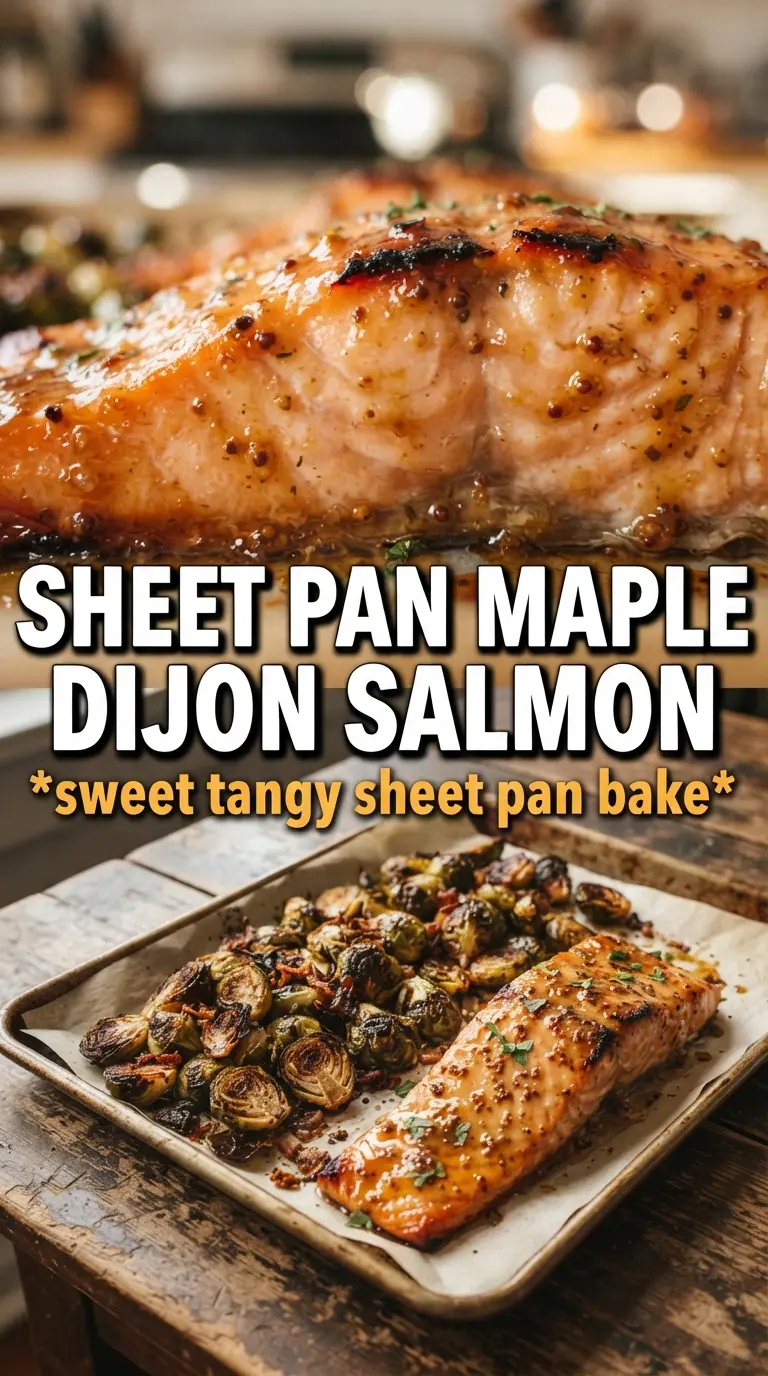
- Salmon fillets — Use fillets that are similar in thickness so they finish at the same time. Skin-on works well here because it helps protect the fish from drying out, but skinless is fine if that’s what you have.
- Maple syrup — Pure maple syrup gives the glaze its deep amber color and sticky finish. Pancake syrup won’t behave the same way and usually tastes flatter and sweeter without the same caramel note.
- Dijon mustard and whole grain mustard — Dijon melts into the glaze and sharpens it, while whole grain mustard adds little bursts of texture. If you only have Dijon, use it all, but the glaze will be smoother and a little less interesting.
- Soy sauce — This adds salt and a savory base so the glaze doesn’t taste like dessert. Use low-sodium if you’re watching salt; the flavor still comes through.
- Brussels sprouts and sweet potato — This combination handles the oven well and gives you a mix of crisp edges and soft centers. Cut the sweet potato into even cubes so it softens at the same rate as the sprouts caramelize.
The Timing That Gives You Caramelized Vegetables and Moist Salmon
Roasting the Vegetables First
Start the Brussels sprouts and sweet potato on the sheet pan before the salmon goes anywhere near it. They need that extra 10 minutes to begin browning, and if you crowd them too tightly they’ll steam instead of roast. Spread them out in a single layer with a little breathing room so the cut sides can actually touch the hot pan.
Mixing the Glaze
Stir the maple syrup, Dijon, whole grain mustard, and soy sauce until the mixture looks smooth and glossy. It should coat a spoon and smell sharp, sweet, and savory all at once. If it tastes too sweet, add a touch more Dijon; if it tastes too aggressive, a splash more maple brings it back into balance.
Finishing the Salmon on the Pan
Push the vegetables aside and place the salmon in the open space so the heat can move around it. Brush on a generous layer of glaze, then roast just until the fish flakes at the edges and still looks a little translucent in the center when you check it. If you bake it until it looks fully opaque all the way through, it’ll be dry by the time it hits the table.
The Last Minute That Makes It Look Finished
Pull the pan when the glaze is bubbling and the vegetables have browned edges. Let the salmon rest for a couple of minutes before serving so the juices settle and the coating stays on the fish instead of running across the pan. A few thyme leaves over the top give the whole dish a fresh finish without getting in the way of the glaze.
How to Adapt This Maple Dijon Salmon for What’s in Your Kitchen
Make It Dairy-Free and Gluten-Free
This recipe is naturally dairy-free, and it can be gluten-free if you use a gluten-free soy sauce or tamari. The flavor stays the same, but tamari usually tastes a touch rounder and less sharp than standard soy sauce.
Swap the Vegetables Without Losing the Sheet Pan Rhythm
Broccoli, cauliflower, carrots, or cubed butternut squash all work in place of the Brussels sprouts and sweet potato. Just keep the pieces close in size and choose vegetables that roast in roughly the same time, or you’ll end up with a mixed pan of mushy and underdone bites.
Use Honey Instead of Maple Syrup
Honey gives you a similar sticky finish, but the flavor is a little brighter and less woodsy than maple. It still caramelizes well, so the salmon will glaze nicely, but the finished dish will taste more floral and less deep.
Storage and Reheating
- Refrigerator: Store leftovers in an airtight container for up to 3 days. The salmon will firm up a little, and the vegetables will soften, but the flavor holds up well.
- Freezer: The cooked salmon can be frozen, but the roasted vegetables lose some texture after thawing. Freeze portions tightly wrapped for up to 2 months if you don’t mind softer veggies.
- Reheating: Warm gently in a 300°F oven until just heated through, covered loosely with foil so the glaze doesn’t dry out. The main mistake is blasting it in the microwave or a hot oven, which turns the salmon chalky fast.
Questions I Get Asked About This Recipe
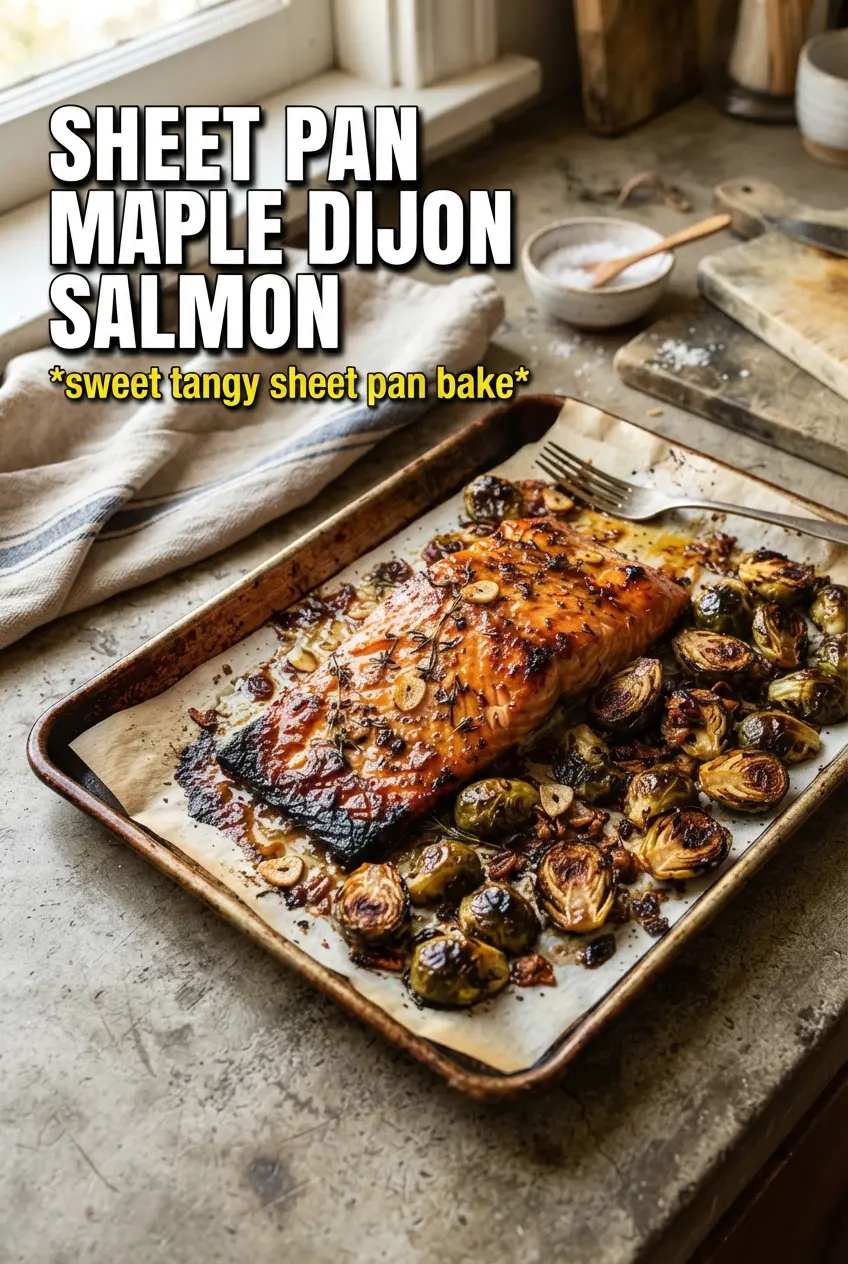
Sheet Pan Maple Dijon Salmon
Ingredients
Equipment
Method
- Preheat oven to 400°F and toss Brussels sprouts and sweet potato with olive oil, salt, and pepper on a large sheet pan until evenly coated, leaving them in a single layer for browning.
- Roast at 400°F for 10 minutes to start caramelizing the cut sides.
- Mix pure maple syrup, Dijon mustard, whole grain mustard, and soy sauce until smooth and glossy.
- Push vegetables to the sides, place salmon fillets in the center, and brush salmon generously with maple Dijon glaze so it clings to the surface.
- Roast at 400°F for 15–18 more minutes, until salmon is cooked through and vegetables are caramelized, with the glaze looking glistening and slightly sticky.
- Garnish with fresh thyme and let sit for 2 minutes before serving for cleaner slices and better glaze set.