Golden caramelized peaches on top and a tender, buttery crumb underneath is the kind of dessert that disappears fast, especially when the fruit softens into the brown sugar layer and turns glossy at the edges. The best part is the contrast: sticky, jammy peaches on the bottom of the pan become a stunning top once the cake is flipped, and the whole thing slices cleanly while still warm.
This version leans on a simple but important trick: the peaches go over melted butter and brown sugar before the batter, which creates the caramel sauce as the cake bakes. A little cinnamon in both the topping and the batter keeps the peach flavor from tasting flat, and the choice between milk or sour cream gives you a little control over the crumb. Milk keeps it lighter; sour cream makes it richer and a touch sturdier.
Below, I’ve laid out the part that matters most for an upside-down cake: how to keep the fruit layer intact when you turn it out. There’s also a note on peach prep, because ripe peaches behave differently than firmer ones, and that changes how neatly the cake releases.
The peaches held their shape and the brown sugar layer turned into a perfect caramel instead of running all over the plate. I used sour cream in the batter and the cake came out extra tender without getting heavy.
Like this caramelized peach upside-down cake? Save it to Pinterest for the kind of dessert that flips out with glossy peaches and a tender brown sugar crumb.
The Part That Keeps the Peach Layer From Sticking
The topping has to start with melted butter and brown sugar, not softened butter creamed with the batter. That layer is what turns into the caramel, and it needs to sit directly against the pan so it can bubble and thicken as the cake bakes. If you scatter the peaches over a dry pan or rush the process, you end up with fruit that welds itself to the skillet instead of releasing in one clean, glossy layer.
The other thing that matters is the flip. This cake needs a 10-minute rest, not a long cool-down. Too soon and the caramel runs everywhere; too long and it sets hard in the pan. That short rest gives the structure enough time to firm up while the sugar stays loose enough to release.
What Each Ingredient Is Doing in the Pan
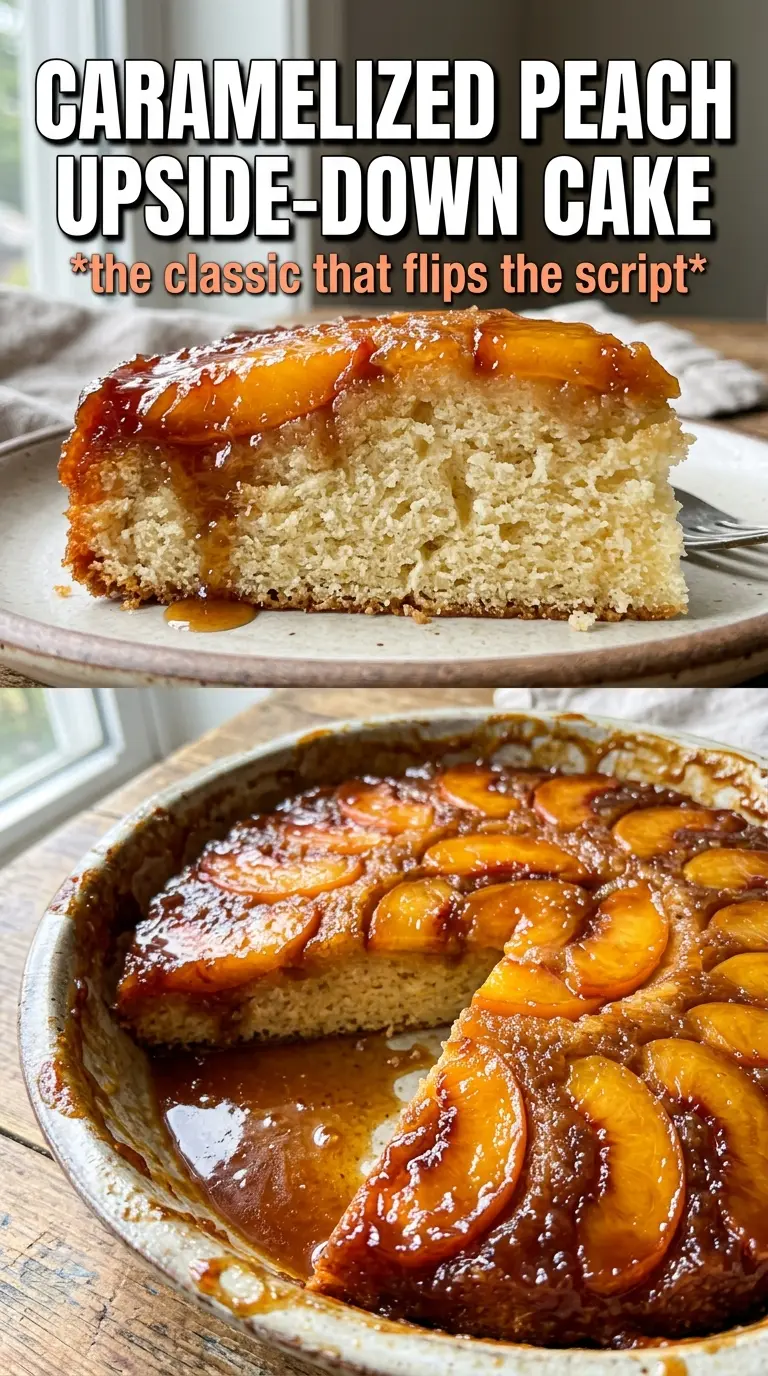
- Peaches — Use ripe peaches with a little give, but not the kind that collapse when you slice them. Very soft peaches melt into the topping and can look messy when the cake is flipped; firmer ripe fruit holds the pretty rings and still softens in the oven.
- Brown sugar — This is the caramel layer. Packed brown sugar gives the topping its deep color and sticky finish, and there isn’t a substitute that behaves the same way in the pan.
- Butter — The butter under the sugar helps the caramel form evenly and keeps the fruit from grabbing the pan. Salted butter works in a pinch, but unsalted gives you more control.
- Sour cream or whole milk — Whole milk makes a lighter cake, while sour cream adds tenderness and a slightly tighter crumb that slices neatly under the fruit. If you use sour cream, stir it in gently so the batter stays smooth instead of overworked.
- Cinnamon — A small amount in both layers keeps the peach flavor warm and rounded. More than this and it starts to dominate the fruit instead of supporting it.
Building the Cake So the Topping Stays Stunning
Starting the Caramel Layer
Melt the butter in the oven right in the cake pan or skillet, then swirl it so the bottom is coated from edge to edge. Sprinkle the brown sugar and cinnamon over the butter in an even layer; you want a sandy-looking surface, not dry patches. If the sugar clumps in one spot, those areas can bake into hard little lumps instead of a smooth caramel.
Arranging the Peaches
Lay the peach slices in overlapping circles, starting at the outside and working inward. The slices should touch, because gaps leave bare spots in the finished topping. Don’t press them down hard; just nestle them into the sugar so they stay in place without sinking through the butter layer.
Mixing the Batter Just Enough
Beat the softened butter and granulated sugar until the mixture looks pale and fluffy, then add the eggs and vanilla. Alternate the dry ingredients with the milk or sour cream, stopping as soon as the batter comes together. Overmixing at this stage builds a tougher crumb, and that’s the fastest way to lose the soft, bakery-style texture this cake should have.
Flipping Without Losing the Fruit
After baking, rest the cake for exactly 10 minutes. Run a thin knife around the edge if it looks stuck, place a serving plate over the pan, and flip in one confident motion. If you wait too long, the caramel hardens and the peaches stay behind in the pan; if you flip too early, the cake can split under the weight of the fruit.
Three Ways to Change the Cake Without Losing What Makes It Good
Make it dairy-free
Use plant-based butter in both the topping and the cake, then choose unsweetened oat milk for the batter. The crumb stays close to the original, though the caramel layer will be a little less rich and glossy than the butter version.
Swap in sour cream for a tighter crumb
Use sour cream instead of milk if you want the cake to slice neatly and feel a little more plush under the fruit. It bakes up slightly denser, which is a good tradeoff when you want clean wedges and a richer finish.
Use a cast iron skillet for deeper caramel
A 9-inch cast iron skillet gives the sugar a little more heat retention, which deepens the caramel flavor and helps the edges turn extra amber. The downside is faster browning, so start checking the cake a few minutes early.
Storage and Reheating
- Refrigerator: Store covered for up to 4 days. The topping will firm up, but the cake stays moist.
- Freezer: Freeze individual slices wrapped tightly for up to 2 months. Thaw in the refrigerator overnight before reheating.
- Reheating: Warm slices in a 300°F oven for about 10 minutes or microwave briefly in short bursts. Don’t overheat it or the peaches turn loose and the crumb dries out.
Questions I Get Asked About This Recipe
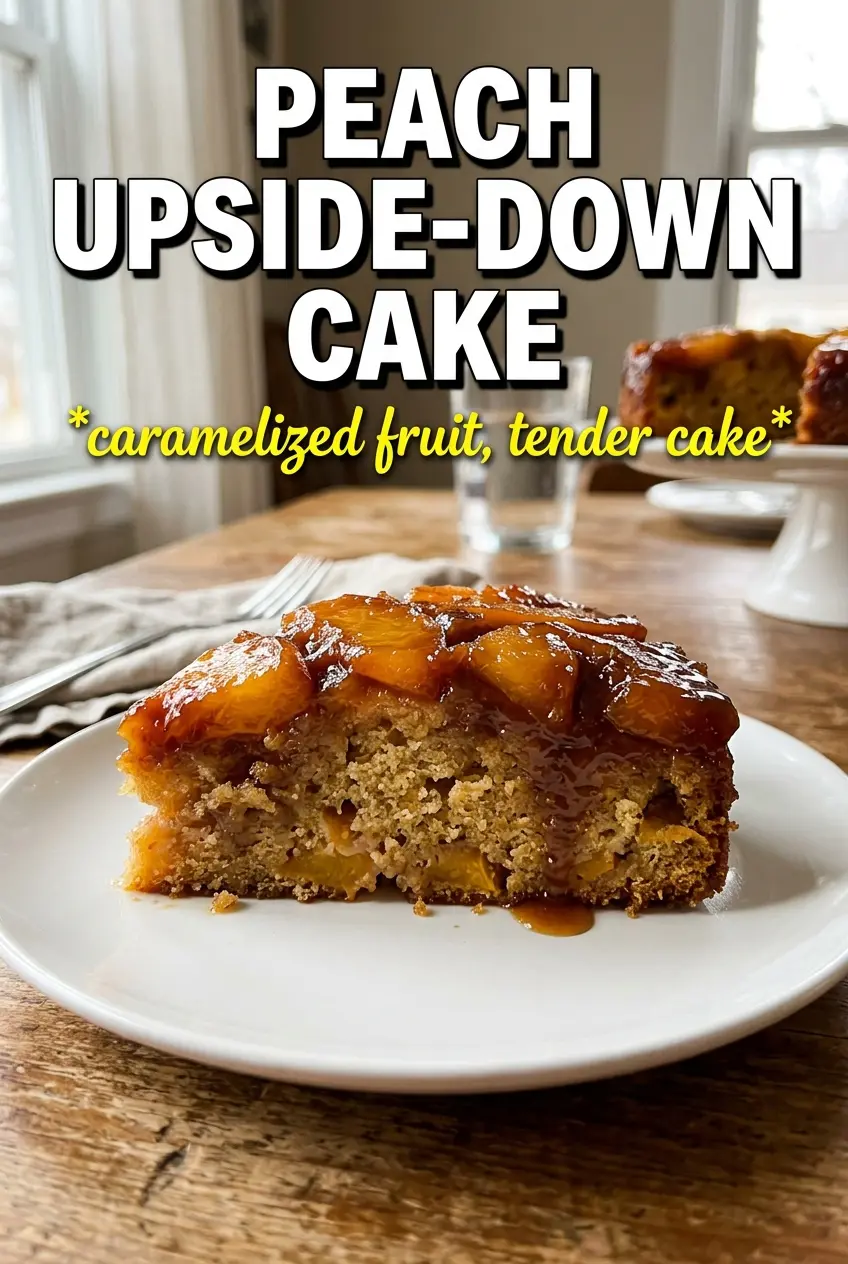
Peach Upside-Down Cake
Ingredients
Equipment
Method
- Preheat the oven to 350°F and melt the butter in a 9-inch round cake pan or cast iron skillet in the oven until melted and glossy.
- Swirl the pan to coat evenly, then sprinkle the brown sugar and cinnamon evenly over the butter so it forms an even layer.
- Arrange the peach slices in overlapping concentric circles over the brown sugar layer and set aside while you mix the batter.
- Beat the softened butter and granulated sugar until fluffy, about a few minutes, so the mixture looks lighter in color.
- Add the eggs and vanilla and mix just until smooth, with no visible streaks.
- Alternately mix in the flour mixture (flour, baking powder, salt, cinnamon) and the milk/sour cream, starting and ending with the flour, until a thick batter forms.
- Pour the batter gently over the peach arrangement and smooth the top so the peaches stay packed in concentric rings.
- Bake for 38-42 minutes at 350°F until a toothpick comes out clean and the cake pulls away from the sides, with the top lightly golden.
- Cool in the pan for exactly 10 minutes, letting the caramel set to a shiny amber glaze.
- Invert onto a plate and serve warm, with the caramelized peaches revealed in concentric amber rings and the glaze glistening.