Red, white, and blue fruit kabobs disappear fast because they hit the sweet spot between cute and genuinely useful: they’re cold, hand-held, and easy to serve without a mess. The strawberries bring the bright pop of color and juice, the blueberries add little bursts of tartness, and the marshmallows soften the whole thing into a playful party bite.
The key here is choosing fruit that’s dry and firm enough to hold its shape on the skewer. If the strawberries are wet, they slide around and make the kabobs look sloppy. If they’re too large, halve them so each bite stays balanced and the pattern repeats cleanly. Marshmallows work best when they’re fresh and soft; they anchor the fruit without tearing it.
Below, I’ve included the small details that keep these looking crisp on the platter, plus a few smart swaps if you want to use grapes instead of marshmallows or make them ahead for a crowd.
The pattern stayed neat, and chilling them for an hour made the strawberries taste extra fresh. I swapped in grapes for half the marshmallows and they were gone in minutes.
Love these red, white, and blue fruit kabobs? Save them for an easy patriotic appetizer with no baking, no fuss, and a lineup that looks party-ready in minutes.
The Pattern That Keeps These Kabobs Looking Sharp
The biggest mistake with fruit kabobs is loading the skewer in a way that looks random once it’s on the platter. A repeating pattern does more than make them pretty. It keeps each bite balanced so you don’t end up with one skewer that’s all marshmallow and another that’s all fruit.
Use fruit that’s similar in size across the batch. Large strawberries should be halved so the kabobs sit flat and don’t wobble. Dry berries thread cleanly; wet berries can slip and break the pattern. If you’re using bamboo picks instead of long skewers, cut the fruit smaller so the proportions still look neat.
- Strawberries — Hull them first, and halve the large ones. That gives you a flat side that sits better on the skewer and keeps the kabobs from tipping.
- Blueberries — Fresh, firm blueberries hold their shape best. Soft berries can split when threaded, so sort through the box before you start.
- Marshmallows — Large white marshmallows give the brightest contrast and a soft bite. If you want a less sugary version, use white grapes; they stay firmer and bring a fresh snap.
- Wooden skewers or bamboo picks — Shorter picks work for appetizer portions, while longer skewers are better if you want a fuller, more dramatic platter. Soak the ends briefly only if you’re worried about splintering; there’s no cooking, so don’t overcomplicate it.
What Each Ingredient Is Doing on the Skewer
- Strawberries — They carry the red color and give the kabobs their juicy sweetness. Pick berries that are ripe but still firm, because overripe strawberries collapse the clean look of the skewer.
- Blueberries — They add little pops of tartness and help the pattern stay tight. Their size makes them the easiest fruit on the skewer, which is why they work well as a repeating spacer.
- Marshmallows or white grapes — Marshmallows give a softer, dessert-like bite and make the kabobs feel festive. Grapes are the best swap if you want something less sweet and a little sturdier for a longer serving window.
- Skewers — Wooden skewers are easiest to arrange in a fan on a tray. If you’re serving kids, use shorter bamboo picks so the kabobs are easier to grab and less likely to roll around.
Building the Kabobs So They Hold Up at the Party
Prep the Fruit First
Wash the strawberries and blueberries, then dry them well. Any extra moisture makes the fruit slippery and can turn the platter into a mess by the time guests arrive. Hull the strawberries and halve the larger ones so they fit the skewer without crowding the rest of the pattern.
Thread in a Repeating Rhythm
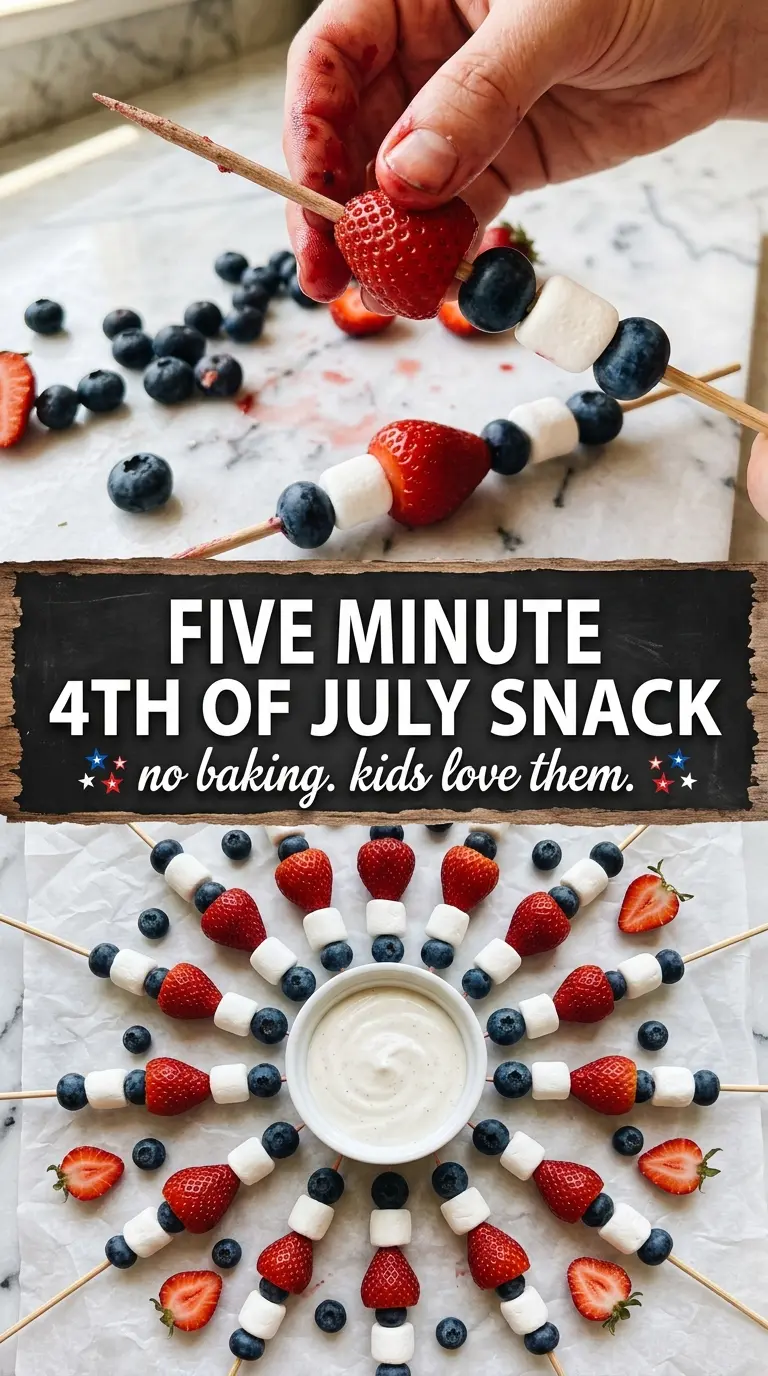
Start each skewer with a blueberry, then add a marshmallow, then a strawberry. Repeat that sequence two or three times depending on the length of your skewers. Keep the fruit snug but not packed so tightly that the strawberry splits or the marshmallow tears.
Chill Before Serving
Line the finished kabobs on a tray and refrigerate them until you’re ready to serve, up to 2 hours ahead. That brief chill helps the fruit stay crisp and gives the marshmallows a nicer bite. Don’t leave them uncovered too long in a warm room or the berries start to sweat and lose their clean look.
Ways to Change the Mix Without Losing the Patriotic Look
Use White Grapes Instead of Marshmallows
Grapes make the kabobs less sweet and a little fresher tasting, and they hold up better if the tray sits out for a while. The look stays patriotic, but the texture shifts from soft and playful to crisp and juicy.
Make Them Dairy-Free and Gluten-Free Without Changing Anything
As written, these kabobs already fit both diets. That makes them a useful last-minute option when you need a party dish that works for a mixed crowd without extra labels or special handling.
Swap in Raspberries for a More Tart Bite
Raspberries bring a brighter, sharper flavor, but they’re softer than blueberries and can bruise if you handle them too much. Use them only if you’re serving soon after assembling and want a slightly more grown-up fruit skewer.
Storage and Reheating
- Refrigerator: Best the same day, but they’ll hold for up to 24 hours. After that, the strawberries soften and the marshmallows start to dry out.
- Freezer: Don’t freeze these. The fruit loses its texture and the marshmallows become sticky and strange after thawing.
- Reheating: No reheating needed. Serve them cold straight from the fridge, and if they’ve been out for more than a couple of hours, replace the tray rather than trying to refresh it.
Answers to the Questions Worth Asking
Red, White & Blue Fruit Kabobs
Ingredients
Equipment
Method
- Wash and prep all fruit — hull the strawberries and leave the blueberries whole. Pat fruit dry so the skewers stay clean and the layers thread easily.
- If strawberries are large, halve them so each piece fits neatly between the marshmallows and blueberries. Keep sizes fairly even for a uniform patriotic look.
- Thread each skewer in a repeating pattern: 1 blueberry, 1 marshmallow, 1 strawberry — repeat 2–3 times per skewer depending on skewer length. Keep spacing tight so the sequence lines up like little flags.
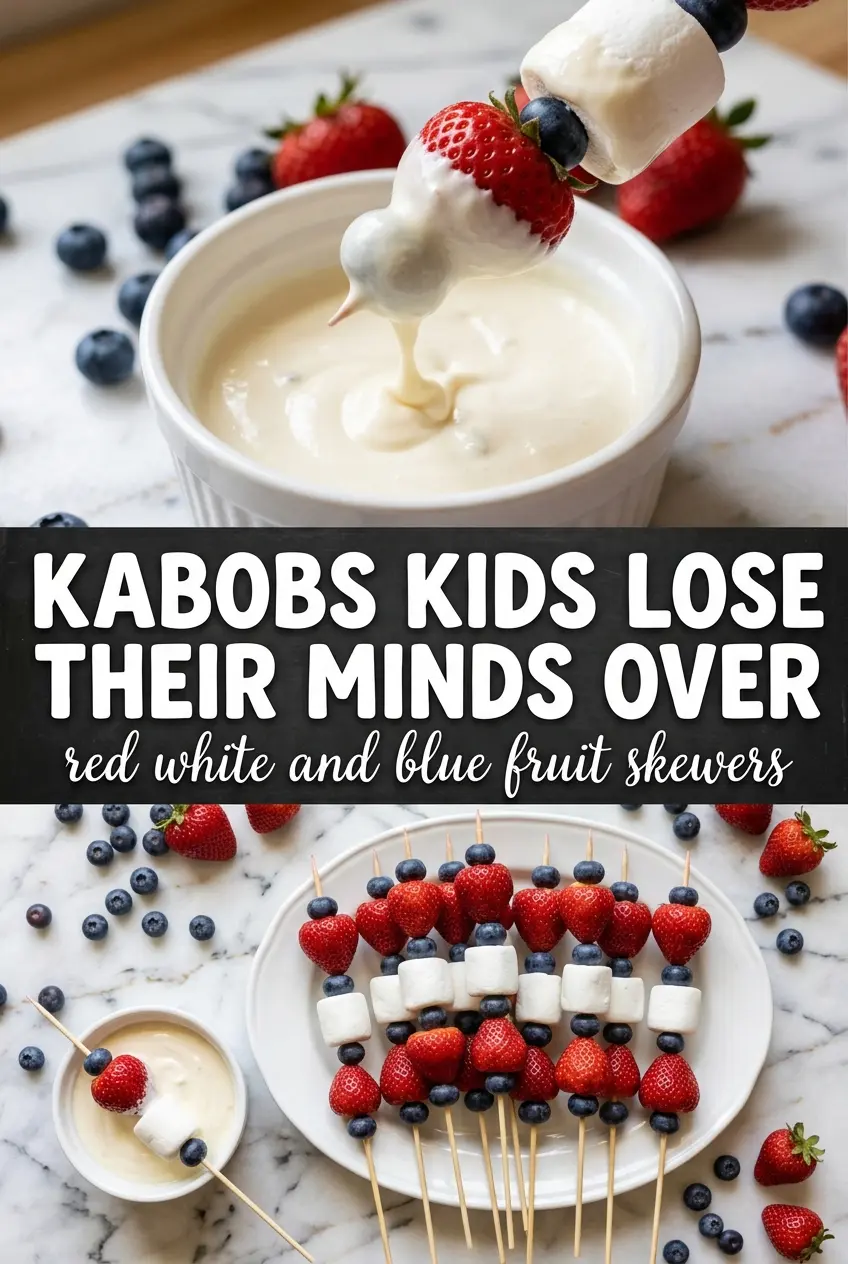
- Line completed skewers on a serving platter or tray and arrange them in a row or fan pattern for an easy display. Aim for consistent layering so each kabob looks identical.
- Refrigerate until ready to serve, up to 2 hours ahead. This helps the kabobs hold their shape and tastes best served chilled.
- Serve chilled as a grab-and-go party appetizer or dessert. Keep them cold until serving time for the best texture.